29 October, 2018

Czech Philharmonic Semyon Bychkov

Image result for bychkov czech nytReview: Cezch Philharmonic - Semyon Bychkov

In the West, the once glorious Czech Philharmonic has been off the map for far too long. Its instability since the Velvet revolution meant a rapid succession of stop-gap directors, none of whom left much of a mark (see wiki entry). Aside from continual close performing and recording ties with Japan, its profile was lower than many more stable "newly" ascendent orchestras (like the Budapest Festival under Ivan Fischer, the Russian National under Pletnev, the Mariinsky under Gergiev, the Staatskapelle Berlin under Barenboim, even Academia di Santa Cecilia under Antonio Pappano). That just goes to show the importance of a strong and visionary director.

The tide started to turn when Jiri Belohlavek resumed leadership in 2012, culminating with a Decca contract and acclaimed recordings, which were put into uncertainty in 2017 by Belohlavek's sudden passing. Semyon Bychkov, a regular guest since 2013, was recently appointed the director (over two Czech principal guest conductors). However, although it seems Bychkov has been positively received, his Decca Tchaikovsky recordings had garnished only mixed reviews.

It has been the longest time been I heard the Czech PO, and I was ultra eager, especially since they are reported to be on the rise again. Though my expectations were largely fulfilled, they were not unmarred by question marks.

Saturday, October 27, 2018, Carnegie Hall, 8 PM
All - Dvorak with Alisa Weilerstein

I had heard Alisa Weilerstein live twice before in Elgar and own her recordings, and thus know her well. Much of what I said about her style still rings true for this performance. For my taste, the Cello Concerto was just too much on the indulgent, soft and "feminine" side - tenderness abound, but there was not much muscle. What bothered me even more was her tendency to scoop a little and the mildly, perhaps intentionally applied, portamenti. To me, The Dvorak is not like the Elgar, and needs more discipline. The orchestra played beautifully, in great detail, and with great feeling.

Like the Cello Concerto, the Symphony No. 7 was on the stately side. There are many approaches to this symphony, and obviously Bychkov preferred not to drive too hard nor rely on sheer "brilliance". Instead, he sculpted patiently and built structurally, resulting in a classically proportioned and lyrical performance. The orchestra sustained the journey, and every little detail, every little solo, was played with great insight, telling and delectable. Even if the big moments were not the "biggest", it was a winning performance.

For encores, two Slavonic Dances were played fastidiously, models of refinement rather than oomph.

Sunday, October 28, 2018, Carnegie Hall, 2 PM
Mahler 2nd Symphony
Elizabeth Kulman, Mezzo
Christiane Karg, Soprano
Prague Philharmonic Choir

Bychkov conducted Mahler's 2nd Symphony much as expected - patient, meticulous and, dare I say, somewhat dispassionate. Tempi were broader than usual. Again, lyricism is emphasized over grotesquerie.

The great satisfaction and anticipation derived from the previous evening was sustained for the first half of the work. The first movement's discourse was well planned out and the crescendos and climaxes well crafted. The orchestra's sonority was burnished - how the lower brass blended with the lower strings; and the fine horns and the exquisite winds. Never was there an ugly sound, which some would say is not the way for Mahler. The next three movements fared the best, Bychkov finding much beauty and fresh details, though contrast was less than usual.

As the gargantuan finale unwounded, the good feeling started to dissipate. I did not time it, but it just felt slow - almost excruciatingly so. The Prague Philharmonic Choir were superb in both soft and loud moments, and both soloists were excellent. However, the orchestra, particularly the brass, seemed to have tired and Bychkov seemed to be dragging things along. For me, there was little feeling of transcendence; the climaxes felt rather empty and the "resurrection" came too late.

The massive force deployed had seemed excessive for the deliverance. Perhaps I was alone, as the audience seemed wildly enthusiastic. One notes Bychkov had received almost universal praise in his performances of this piece, one of his calling cards, with many top orchestras. I'd be curious what teh NYT would say.

This was an afternoon concert and the orchestra had played a full program the previous night. I love the orchestra's sonority and wish to hear them any time. However, it did seem the CPO/Bychkov relationship would need a little more time to mature.

30 September, 2018

Jaap Conrad Tao Bruckner

Review: Jaap and Conrad Tao

Sept 27, 2018, Geffen Hall
New York Philharmonic - Jaap - Conrad Tao
Tao - Bruckner

Jaap programs more or less the same things in HK and in NYC, and so this NYC Bruckner's 8th was preceded by last year's HKPO concert (which I did not attend). Pianist/Composer Conrad Tao had appeared before in HK. This night premiers his newest commission, a sort of appendage before the start of Bruckner's 8th (for details, see the NYT review).

Everything Must Go uses the same orchestra as Bruckner's, with a third harp (desired by Bruckner) and extra percussions. It is fine by itself, though I do not find it particularly relevant. It ends quietly as the Bruckner begins.

As in many other Jaap concerts, as well played and meticulously dissected and planned as the Bruckner 8th is, it lacks mystery and grandeur. The first two movements fare better. I find the slow movement singularly lacking in feeling and the finale has no apotheosis. The low brass is awesome, probably the best I have heard - indeed organ-like. But I have trouble with the coarse tone of the horns and Wagner tubas. I miss Philip Meyers and I think the horn section was much more musical under his leadership.

The audience went wild, but I was non-plussed.

26 September, 2018

Roxy Coss Quintet, Niklas Sivelov


Two Events Around Flushing

Downtown Flushing is now basically a large Chinatown. Culturally speaking, Queens has always been lacking in comparison with other outer boroughs, like Brooklyn. However, occasionally, there are some worthwhile events.

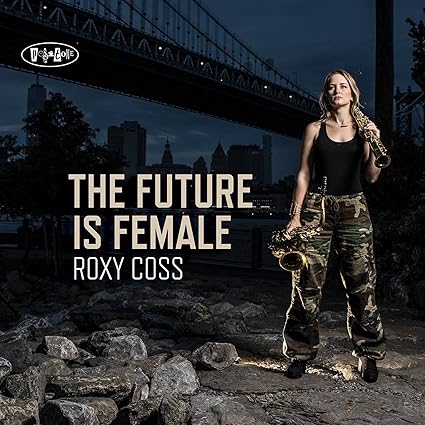
The Future Is FemaleSeptember 23, Flushing Town Hall
Roxy Coss Quintet
Original Compositions

The Flushing Town Hall has particularly interesting jazz events this year, especially its Lioness series showcasing women artists. First up was Roxy Coss (event listing), an accomplished saxophonist and composer noted for her stand on gender equality in jazz (see her Blog).

The band played only Coss' original compositions, and they were varied and interesting, particularly the rather "progressive" (rhapsodic and dissonant) number composed after the election of Trump, which is on her latest album, The Future is Female (allaboutjazz review). Her sax sound has finesse, and is rich toned and powerful. I particularly enjoyed the sophisticated guitar playing of the other lead, guitarist Alex Wintz. Bassist Rick Rosato plays soulfully. The small gallery (L-shaped) is nice but I found the sound mix to be a little bass heavy, and the guitar and bass overwhelms the excellent piano playing of Miki Yamanaka, who can only be heard well in her few solo's. The drums of Jimmy McBride were rather too literal to my taste. Overall, the quintet makes great music, and the $5 admission was hard to beat! I am going to other events in this series!

September 24, LeFrak Concert Hall, Queens College
Niklas Sivelov, piano
Bach-Beethoven-Scriabin-Bartok

Wonders never cease! Here is a Danish pianist (also composer) who has been completely off my radar; indeed even Google does not tell you much. And yet, this is one of the best piano recitals I have heard.

Right from the declamatory start of the Bach Partita No. 2 one knows this is a pianist of substance. Dramatic, finely spun, yet with nothing forced (an absolute no-no in Bach for me), the opening set the tone for the piece. the dance rhythms are naturally rendered, yet at times spontaneous and almost jazzy. The counterpoints and the balance between the two hands are always perfect. This is Bach playing of the highest order, and I have never heard better, live or on record.

The Beethoven Op 111 is equally awesome, opening also in a dramatic declaration. Sivelov's excellent technique ensures there is no ugly struggle, yet the uncommonly inventive music is deeply probed and hugely satisfying. The program I have to say is highly intelligent, and his playing makes us aware of the dance and jazzy elements common to both pieces. Bravo!

After a brief intermission, Sivelov plays a group of Scriabin, Sonata-Fantasy No. 2, Deux Morceaux (Op 57 and 59), and Feuillet d'album, Op 58. which are all rendered with the utmost color; the sometimes abruptly shifting vistas always sound interesting and never drifting, as they can be in lesser hands. The last piece was stirring account of Bartok's Sonata. As before, Sivelov's rhythmic command is unassailable.

The pianist is a bit of an eccentric (perhaps that accounts for his obscurity). His soft shoes do not go with his tux, but one understands why he wears them, as he is prone to tap on the floor. Even more unusually, he vocalizes extensively, but the sounds are not the usual sing-along type (Glenn Gould), nor moaning (Keith Jarrett), rather hoarser and closer to hissing and forceful exhalation. These antics can be distracting, but I'd gladly put up with them when the playing is on such lofty grounds.

This was a free lunch time recital on campus; the small LeFrak Hall is beautiful and cosy, and acoustically excellent. The program is going to be repeated at Town Hall today (also free); I almost feel like going again.


19 September, 2018

Inner Mongolia Performing Arts Troupe

Sept 15, 2018, Flushing Town Hall
Inner Mongolia Performing Arts Troupe

The Flushing Town Hall is a historic building that presents cultural events at affordable prices, focused mostly on upcoming ensembles in Jazz and World Music.

The ensemble is a Chinese government sponsored institution. While the music and dance are undoubtedly authentically Mongolian, the choreographed presentation is not without influence from the Soviet (Chinese) and other models. Indeed some numbers could pass for Russian folk dance or flamenco! World Music indeed.

For description of the program, read this cached link. From internet pictures it seems the ensemble is larger that what we saw on the day. Despite the small stage, the dancers gave energetic performances, and the band was excellent. It was hugely enjoyable and the audience (few Chinese) was highly enthusiastic.

06 August, 2018

Concert Review: Asian Youth Orchestra 2018

Concert Review: Asian Youth Orchestra 2018

As I bid farewell to HK, I managed to attend this year's AYO concerts, and I am happy to report it is one of the strongest yet.

August 4, 2018, CCCH
AYO - James Judd - Yu-Chien Cheng
Enescu - Barber - Rachmaninov

Compared to the previous night, from the first note, it was obvious the orchestra is a tighter ensemble under the direction of James Judd.

The opening Enescu Romanian Rhapsody No. 1 was well played and  a crowd pleaser. The Barber Violin Concerto that followed was fluidly played by Yu-Chien Tseng and received idiomatic support from the orchestra. Oddly, despite his fine Guarneri, I find the top registers a little too sharp.

The all-Rachmaninov second half opened with a restrained vocalise, which managed to tuck at the heart string at the last moment. But nothing prepared me for the sheer glory of the Symphonic Dances, which bettered the two performances (HKPO and RNO) I have heard in the last two years (here).

Judd's mastery of the long and tricky score is absolute - there was not a dull moment. Amazingly, the all-important winds played with immense character (unlike the HKPO) and the brass was refined. Before I forget, kudos to the most amazing saxophone solo (a kid from HK)! More importantly, even if the last degree of orchestral power is missing, the sentiment and sometimes wistful character of the score was captured to perfection. Tears rolled down my cheeks - it was that good. The previous night's Russian soloist Anna Tsybuleva, who was sitting with Richard Pontzious in the orchestra, was clearly moved and agitated by the performance, and I saw her wiping away her tears at one point. There can be no higher accolade.

August 3, 2018, CCCH
AYO - Richard Pontzious - Anna Tsybuleva
Wagner - Prokofiev - Rachmaninov - Gershwin

I am not sure why anyone would want to open a concert with Wagner's Die Meisteringer Overture. It is just a hard piece to keep together and keep flowing. On this occasion, the performance was decent, but not exceptional. Ditto Prokofiev's Romeo and Juliet, which never fails to please, but a bit more poetry would not have been amiss.

The second half raised the temperature. Pianist Anna Tsybuleva delivered a glittering account of Rachmaninov's Rhapsody on a Theme by Paganini. Although her tone was just a little light, her rhythmic finesse carried the piece. To Pontzious' credit, the accompaniment was excellent, tight and fluent. Gershwin's An American in Paris crackled with energy, a piece well suited to Pontzious' usual driven style.

13 July, 2018

Two Wonderful Concerts in Shenzhen

These two wonderful concerts in Shenzhen's acoustically magnificent hall both unfortunately have low attendance. The artists deserve better!

Image result for repin korobeinikovpic from the Strad.

July 4th, 2018, Shenzhen Concert Hall
Vadim Repin - Andrei Korobeinikov
Debussy - Prokofiev - Grieg - Tchaikovsky

Last time I heard a Vadim Repin recital, he was partnered by Nikolai Lugansky (my Blog entry here). This concert instead featured his other regular partner, Andrei Korobeinikov, and I reckon it is an even better match.

The same Debussy Sonata received a very refined reading. Though very fine, again, like with Kyung Wha Chung, I wished for a little more abandon. The same can be said about the Prokofiev Sonata No. 2, which was meticulously played and styled, ironically not so "Russian" in feeling. In both, Korobeinikov proved an equal partner in every sense.

After Kyung Wha Chung's performance of the Grieg Sonata No. 3 in 2013 (entry here), I thought I would never hear its equal, but that happened here! The partnership raised the temperature in the second half and gave a disciplined but impassioned reading. This immensely satisfying reading of the masterpiece was bookended by equally meritorious readings of Prokofiev's Five Melodies and two miniatures, Tchaikovsky's Meditation and Valse Scherzo.

The substantial encore is familiar, likely by Sarasate, but I am not sure what it was. Virtuosity in full flight!

July 13th, 2018, Shenzhen Concert Hall
Shenzhen SO - Yang Tianwa - Peter Wilson
Lalo - Prokofiev

The current standard of violin playing is so high that there are many ladies with seemingly everything, technique, looks, you name it. It is almost like a beauty contest!

Yet, despite the parade of Beauty Queens, Yang Tianwa, rather plain and even somewhat awkward, has become my favorite, and I make sure to hear her whenever possible. To me, this lady is not only the best Chinese violinist (yes, even better than Ning Feng), but simply one of the top violinists, male or female, in the world! For more info on her, read an old entry of mine.

Here she played Lalo's Symphonie Espagnole, not so often heard in concert these days, which she has recorded for Naxos. Yang's greatest strength, her fluid phrasing that so captivated me in Sarasate, is in plentiful evidence here. Small moments and transitional passages were just natural. On the other hand, she also has the penchant to underplay the big themes (she is not one to play to the galleries). Together with her meticulous playing (one hears more notes than usual), this reading came across as jewel-like rather than a virtuosic vehicle. In some ways, Peter Wilson's conducting, somewhat brash and four square, was not fully complimentary, though there were fine moments, like the Wagnerian brass of the andante. An inward looking and meticulously dissected Bach encore was calming.

In Prokofiev's Romeo and Juliet, Wilson conducted with minimal fuss and efficiency, but the score could have used a little more tone-painting and shaping. The orchestra was big boned, though on this night the winds were a little raucous and the brass somewhat wobbly. No matter, this is a masterpiece that is impossible to ruin!

15 June, 2018

Geneva Camerata Greilsammer Mullova

Concert review: Geneva Camerata Greilsammer Mullova

June 14, 2018, HKU Grand Hall
Geneva Camerata - Victoria Mullova - David Greilsammer
Mendelssohn - Beethoven

After many years' absence (around 20 in fact) Victoria Mullova returned to HK. These days she has ventured into period performances, jazz and other things, so no wonder she was here partnered by the Geneva Camerata, a 5-year old ensemble under the leadership of the eclectic pianist David Greilsammer.

Each half opened with a recomposition by the Israeli composer Keren. The better was Debussy's Fireworks, from the Preludes. The orchestration reveals how "orchestral" the score is; indeed, many places revoke La Mer. Much less effective was the Variations on Gershwin's Porgy and Bess - not much swinging feeling, and the solo cello part felt perfunctory.

Mendelssohn's Violin Concerto was played in Mullova's usual literal manner, technically impeccable but without much tonal shading, not to mention the elan so needed in this work. The HIP styled accompaniment was way too lean for this work. In my opinion, the luxuriant style of Mendelssohn is much less suited to HIP styled performances than his more classical forbearers Beethoven and Mozart (as borne out by the second half). Indeed, this performance mirrors that of the Ibragimova recording with the period Orchestra of the Age of Enlightenment under Jurowski. Mendelssohn should be a well made Riesling rather than a very dry but colorless white.

While I was not thrilled, the audience gave Mullova a great ovation. As an encore she played a composition by her son Misha Abbado (what a name; son of Claudio), Brazil. It is actually an interesting piece, redolent of Bach and Villa-Lobos, but, again, Mullova was too literal.

Beethoven's Symphony No. 8 fared much better. Despite its reputation of New Age, the orchestra was obviously much more at home here. The playing was lean and mean, yet with verve and elan. Ditto the encore, last movement of Mozart's Prague.

Throughout, the young and excellent players played with great enthusiasm. Obviously, there was not the classic blend. The small string section (5, 4, 3, 3, 2) sounded seriously deficient in the Mendelssohn, less so in Beethoven and Mozart. Thus configured, the winds and brass were prominent. The wind players were characterful but a bit loose, and the valveless horns were a matter of taste. I cannot really assess Greilsammer's conducting, such a hell-fire bent! For myself, when it comes to chamber orchestras, I like a more mellifluous blend, such as those achieved by some of the Czech ensembles.

11 June, 2018

Artemis QuartetConcert Review: Artemis Quartet

June 7th, 2018, CH
Artemis Quartet
Beethoven-Janacek-Schumann

I have followed the Artemis Quartet (on CD) for a long time. However, this iteration of the Artemis Quartet is not one I am familiar with. The library has a lot of their EMI/Virgin recordings, which were all led by the formidable Natalia Prishepenko. Since she left in 2012, there have been no new recordings until relatively recently (on Erato). In the interim, like the Alban Berg, the ensemble also suffered death of a member (see wiki entry).

It must have been a tall order to be Prishepenko's successor but, judging from this concert, Latvian Vineta Sareika has done an excellent job. The ensemble plays with well-nigh perfect intonation and integration, with not a hair out of place. No wonder they are still an ensemble of top standing.

Beethoven's Op 18/3 was stylish and fluid. Janacek's No. 1 and Schumann's No. 3, both difficult works to carry off, were exemplarily played - in fact, I'd prefer a little more struggle and vehemence in both of these pieces.

One thing I found interesting about this ensemble. They possibly have the most blended sound I have heard in a quartet. In most quartet's (and other ensembles too) the lead violinist almost always sound just a little sharper and stand out more, but not this Artemis ensemble. Though she leads faultlessly, Sareika simply does not dominate the sound picture.

29 May, 2018

Dang Thai Son

Concert Review: Dang Thai Son

A pianist who is famous for not being famous
This is what the Montreal Gazette calls Dang Thai Son in an early and very perceptive article that tells you quite a bit about the low-keyed artist (much better than our recent SCMP coverage).

Ever since I heard Dang more than 10 years ago (maybe close to 20; can someone fill in the year?) in HK, I have become one of his fans. But trying to find his CDs is quite a task.

Recordings of Limited Circulation
I have his very first and only recording for DG (LP) with his frail frame on the cover, and it is unfortunate this recording is not in international circulation.

Dang has been well known among the connoisseurs in Japan and Taiwan. If you browse Dang's Official Site, he has actually recorded a lot of Chopin for JVC (Japan), and these used to be appear in PRC incarnations (Polo Arts), but I am not sure about availability now. They are excellent.

The Library also has his excellent Polish Chopin Institute recordings of the Nocturnes and the Piano Concerti.

May 26, 2018, CH
Dang Thai Son Recital
Schubert - Chopin - Paderewski - Liszt

More a master pianist of great patience and inner strength, Dang is not a pianist who wears his heart on his sleeve. So in rather stately and inward readings there was no great sturm und drang in Schubert's Allegretto in C minor, not to mention 12 German Dances.

The Chopin numbers again reveals why Dang is regarded as a master Chopin pianist. Tempos were again on the slow side, but in the Barcarolle, one marveled at the motion and clearness, while the Andante spianato et Grande polonaise brilliante was positively stately and built to true grandeur.

After intermission, five Paderewski pieces were played with crystalline clarity, and each had its own character. I liked Liszt's Reminiscences de Norma ever better, as it unfolded leisurely but grandly.

For encore, Dang played some Schubert at very slow tempo, and here the intimations and undercurrents were captivating.

26 May, 2018

Concert Review: Vladimir Ashkenazy and Esther Yoo

Image result for yoo glazunovConcert Review: Vladimir Ashkenazy and Esther Yoo

May 25, 2018, CCCH
HKPO - Ashkenazy - Yoo
Glazunov - Beethoven

I have always enjoyed every concert of Vladimir Ashkenazy with the HKPO. And so I awaited this concert eagerly, more so since I have recently also discovered Esther Yoo. I was captivated by her Sibelius/Glazunov disc (DG) from the library.

Ashkenazy conducted in his typical no-nonsense, even somewhat mechanical fashion, yet the results he obtained from the HKPO were astonishing. Glazunov's Chopiniana, a pleasant piece, was lyrical and relaxed, tinged with a Russian feeling that the bland HKPO rarely could produce.

The team's rendition of Glazunov's Violin Concerto was much like the recording, though even better in its depth of feeling. Miraculously, Yoo's violin, "Prince Obolensky" Strad, sounded just as in her recordings, rich and totally without strain. More than most of her peers, she is a natural, projecting and playing with the utmost ease and without pretense. There was not a hint of "trying to be different". With such gorgeous playing, there is no need to. Her encore, a solo Bach (sarabande), was similarly divine.

TCHAIKOVSKY Violin Concerto / YooBut in some ways, the second half, Beethoven's Pastoral Symphony, was even more amazing. HKPO has never really done great Beethoven, but this effort ranks with their very best. Ashkenazy coaxed a marvelously detailed, yet fluid and stylish performance out of the HKPO.

Those enamored of Yoo should investigate her more recent release of Tchaikovsky, for me even morememorable than her Glazunov/Sibelius disc. Since I borrowed it from the library, I could not stop playing it!


11 May, 2018

Nathalie Stutzmann and Orfeo 55

Quella Fiamma: Arie AnticheConcert Review: Nathalie Stutzmann and Orfeo 55

May 11, CH
Nathalie Stutzmann and Orfeo 55
From Venice to Versailles

We were fortunate to have heard this concert, part of Le French May festival. The program blends largely obscure Italian baroque contralto arias from Parisotti's collection Arie Antiche with a few instrumental pieces. Everyone will recognize the names of Handel, Vivaldi,  Scarlatti, but not so much Caldara, Cavalli, Bononcini, Conti, Durante and Falconieri.

The vocal program is largely culled from their recent CD, Quella Fiamma (details here), which has garnered much praise. But the instrumental numbers are quite different, with Lully and Rameau added to fit into the theme of Le French May, I suppose.

Nathalie Stutzmann sings very well. Her somewhat smoky voice is not particularly powerful, but it is well projected. She colors her voice as the music requires and her characterizations are vivid. There were no surprises - the best numbers were the best known, Ah! Mio cor, schernito sei from Handel's Alcina that closed the first half, and two by Vivaldi towards the end of the second.

Stutzmann is also a serious conductor (now principal guest conductor of Ireland's RTE), and it shows in how she lovingly shaped the instrumental numbers. The largely female Orefo 55 play radiantly with gut strings, with outstanding contributions from the principals, particularly the very fine cellist and first violin. I noted the violins were much better projected in the second half, likely due to tuning. The encore, the well known Plaisir d'amour, is also on the CD.

Simplement merveilleux!

01 May, 2018

Elizabeth Leonskaja and Vladimir Fedoseyev


Review: Elizabeth Leonskaja and Vladimir Fedoseyev

April 27, 2018, Shenzhen Concert Hall
Shenzhen Symphony Orchestra - Elizabeth leonskaja - Vladimir Fedoseyev
Brahms - Tchaikovsky

Utter Bliss! I still can't believe I heard the great Leonskaja!

Over the years, although I have heard quite a few of Elizabeth Leonskaja's recordings, and they have always pleased me, her true stature has actually eluded me - until 2016, when Warner re-issued all her Teldec Schubert recordings in a super-bargain box. More than any classical composer, Schubert's piano works, particularly the late works, with their constantly shifting vistas, are fathomless mines, wide open to philosophical injectures and interpretations. Heard as a whole, the box left me dumbfounded. Some of the readings were perhaps as wayward as other lauded ones (including the great Richter), but the probing behind the notes were supremely visceral and palpable, so much so that I went thorough the box several times in short succession. Desert Island material, indeed.

Imagine my excitement when I discovered this little-known concert in Shenzhen! Writing this article I went to her schedule on her website, which revealed that she had just come off a Schubert cycle in Tokyo - what I'd not have given to have attended!

Words cannot describe how wonderful the Brahms Piano Concerto No. 2 was. Although Leonskaja was more than able to pound it out when required, what greatly impressed was the teamwork in this work where the "solo" piano is more of a partner with the orchestra, but when her piano was to the fore, she displayed a cornucopia of pianistic genius - subtle rhythmic shifts and tonal shadings that I have not heard in a long time. Surprise of surprise, she gave an encore of Schubert that was even more transcendent! This is the best pianism I have heard since Elisso Virsaladzhe.

Image result for fedoseyevNo performance of a Brahms piano concerto would be complete without a sterling contribution from the orchestra, and here the SSO truly shined. The all-important first cello was magnificently fulfilled by Karen Kocharyan. Just as importantly, the winds played with great distinction, in solo and tutti, much more so than our somehow disparate HKPO counterparts. Vladimir Fedoseyev conducted without baton, with economical gestures, but was every step with the music. Simply magnificent! I have never heard a better Brahms piano concerto. The Schubert encore was icing on the cake.

Just as impressive was the second half. Long ago I had tired of Tchaikovsky's Symphony No. 4, which received innumerable performances under HKPO, usually of the bang-it-out variety, under the batons of the likes of David Atherton. But this performance renewed my faith in the piece. Fedoseyev, long a leader of German orchestras, conducted without any undue sentimentality but rendered every true sentiment present. The score was presented with the uttermost detail, yet structurally intact. The best I have heard, by a long margin.

The SSO has gone to another level. There were many changes in personnel, seemingly all for the better. The strings have a new suppleness, and the first cellist noted above was a great joy, reminding me of the great Valentin Berlinsky. The SSO always had great flutes (under Zhang Bing 張兵) and clarinets (under Yi Cheng 衣丞), but now the winds were rounded out by the recruitment of oboist Cui Xiaocheng (崔曉崢). The circle is complete. A formidable wind section that is more than the sum of its parts, unlike that of the HKPO, which is the other way around.

Bravo!

12 April, 2018

Tongyeong Festival Orchestra

Concert Review:Tonyeong Festival Orchestra

April 10, CCCH
Tongyeong Festival Orchestra - Eschenbach - Midori
Yun - Bernstein - Dvorak

The Tongyeong Festival Orchestra is sort of a Korean take on the likes of Japan's Saito Kinen Orchestra and perhaps Mito Chamber Orchestra, with recruitment of foreign nationals, in this case mostly from Japan and HK (members of the HK Sinfonietta) but also some from the UK, Europe and Australia.

A crystalline performance of Isang Yun's Bara (an early work) opened the concert. The medium sized orchestra played with verve and a very transparent texture. Bernstein's Serenade was similarly well played but too safe by half. Midori, not one of my favorites, is as usual small toned in the big moments and more affective than effective. In particular, the concluding movement sorely needed more jazz inflection, and the overly careful orchestral playing was possibly tailored not to overwhelm the soloist. Midori's Bach encore, however, was quite wonderful and fluid.

Dvorak's New World, which Eschenbach conducted from memory, received a marvelously architectural reading. The strings played with precision, power and refinement, much more penetrating and satisfying than the larger HKPO strings. Despite an occasional moment of insecurity from the horns, the brass was burnished and powerful, thanks to a full bodied and steady trombone section. The winds were considerably less satisfying, particularly in the solo's (the cor anglais was downright pedestrian) though as a whole they sounded of one piece (HKPO is the other way around). Most importantly, Eschenbach had the full measure of the piece. Overall, this was a satisfying performance, though certainly not on the level of the Budapest Festival Orchestra I heard in NYC in 2014 (here).

25 March, 2018

Russian National Orchestra

Concert Review: Russian National Orchestra

March 24, 2018, Shenzhen Concert Hall
Russian National Orchestra - Pletnev - Sladkovsky
All Rachmaninov

Just a few days ago I discovered this concert, and the surprise was that there were still reasonably priced tickets left (whereas German orchestras and LSO get almost sold out way in advance, go figure)!

Like many Russian orchestras, to earn hard currency the Russian National Orchestra are constantly on tour. Their official website shows they are in the midst of a hectic China Tour. This particular leg has 2 programs over 4 consecutive nights in 4 different (though nearby) cities - Zhuhai and Guangzhou the two nights before Shenzhen, and Nanning the night after. Poor musicians!

The concert featured RNO founder Mikhail Pletnev, who had just turned 60, as pianist, not conductor, the role of which fell to Alexander Sladovsky. The former needs no introduction. The latter is certainly not well known in the West (or East), possibly due to lack of recordings, but is apparently quite well regarded and an interesting figure (see IMG Artist website).

We all have the misconception that Russians perform their own works in a highly emotional manner. Judging from the concert, that could not be farther from the truth. The Rachmaninov Piano Concerto No. 2 was devoid of excess, fluid and richly nuanced, with beautifully shaded performance by Pletnev, who actually went out of his way to avoid bombast. The texture was remarkably transparent, aided by strings which were reduced by at least a third. The performance was not unlike that by the Moscow Philharmonic/Yuri Simonov in 2016 (here,) though surely Pletnev was the (much) better pianist. Pletnev played several encores, some of his own creations.

The full orchestra delivered an excellent account to the Symphonic Dances, again without an ounce of extra fat. Most performances concentrate on delivering brilliance, but this reading was quite subtle and illuminated from within. Rhythms were inimitable - witness the fine lilt of the waltz and the playing of the percussionists, the tam-tam in particular. The strings were very refined and the winds and brass played with fine color. Occasionally, as is wont for Russian touring orchestras, they lack the last bit of ensembleship, but the overall musicianship was of the highest order and admirable.

24 March, 2018

Concert Note: Kirill Gerstein

Feb 11, 2018, Town Hall
Kirill Gerstein Recital
Bach - Debussy - Chopin - Ades - Brahms

A short note on a concert I had forgotten to enter in this blog.

It's been a long time since I last heard Kirill Gerstein, who had many years ago appeared with the HKPO. I remember him as a barnstorming virtuoso, so this recital, part of NY's wonderfully egalitarian Peoples' Symphony Concerts, came as a surprise.

Concert opened with a rarity, Bach Four Duets, which received a controlled reading that lacked a little flair. Gerstein's very straightforward way worked wonders with Debussy's Preludes, Book I. No mist, nothing vague, but still atmospheric and well-sculpted.

The second half opened with Three Waltzes of Chopin, followed by Three Mazurkas of Thomas Ades. All were played with sensitivity and coherence. But the crowning jewel of the evening, one which revealed the towering stature of the pianist, was the marvelously architectural reading of the rarely heard Brahms Sonata No.2.

Superb!

24 October, 2017

MSO Nagano Vengerov Santa Cecilia Pappano Hannigan

Review: Two Wonderful Orchestras

It is commonly said that globalization has homogenized the world's orchestras, and I agree with that. Many orchestras, able or less so, just sound generic (including our own HKPO) and rather devoid of personality. Even at the highest level, orchestras like the BPO, LSO and the CSO, not to mention the NYPO, unless matched with a visionary conductor, play without much personality. But there are exceptions: the VPO, the various German orchestras that originated from former East Germany, the Budapest Festival Orchestra and even the Oslo Philharmonic come to mind.

So, in the span of one week in NYC, it is heartening to hear two more orchestras that, despite the trend towards homogenization, have managed to own clear identities, two that I'd gladly hear over many of their more famous brethren.

Click pic to enlarge. Note all the camouflaged loudspeakers at the periphery.

Oct 18, 2017, Carnegie Hall
Montreal Symphony Orchestra-Nagano-Vengerov
Moussa-Bartok-Brahms

Concert opened with Samy Moussa's A Globe Itself Infolding, for organ and orchestra. In my opinion, this kind of piece, where the organ is kept very busy, is not quite suitable for halls without a real organ. While the massive electronic amplification was clean enough and reached deep, it did not at all  convey the hushed atmosphere that a real organ could. The result was a bit like a film score, no bad thing, but kind of repetitive too.

Bartok's Concerto for Orchestra received a subtly detailed reading. A little slow, this was not a fire and ice reading. Rather, it carefully explored the lyrical and folk elements so often neglected in lesser performances. The orchestra, especially the winds, played very beautifully, and with great character; many passages reminded me of Debussy (La Mer; Images).

The Brahms Violin Concerto featured Maxim Vengerov. His entry surprised me by its tentativeness and smallness, but his tone expanded as things moved on, and was almost faultless throughout, though not as opulent as one would wish in this regal work. The orchestra played very well, especially the oboe solo in the slow movement.

For encore, a perfect rendition of Meditation from Massenet's Thais. The lady next to me was sobbing.

Overall, I am very impressed by the musicianship on offer; a subtle elegance pervaded everything. Wonderful!

NYT Review

Oct 21, 2017, Carnegie Hall
Orchestra dell'Academia Nazionale di Santa Cecilia-Pappano-Hannigan
Sciarrino-Mahler

The HK library has a lot of Pappano's recordings with this orchestra, and I have been an avid follower, even a fan, but hearing them live is of a much more exalted order!

Salvatorre Sciarrino's La Nuova Euridice secondo Rilke opened the program, after a speech by the conductor. Using innovative blowing techniques, helped by the strings playing close to the bridge, the winds conjured up a delicate, strange and believable picture of the underworld. New music diva Barbara Hannigan sang/declaimed by turns the altered text of Rilke. An effective piece that accomplished what it set out to do.

The Mahler 6th was astonishing in its orchestral opulence. Pappano's was a straightforward, but skillfully managed reading. The mettle of the opera conductor showed in the myriad ways the orchestra imparted great color to everything, from big climaxes to minor outbursts. Sonorities were golden and orchestral playing of utmost character, something we don't usually expect from well known Mahler conductors and orchestras, as they would usually serve up a more consciously "aesthete" approach to emphasize the angst we have come to expect. But Pappano's approach and the orchestras effort are irreproachable in their beauty and perhaps even more faithful to the score. I love it!

NYT Review

18 September, 2017


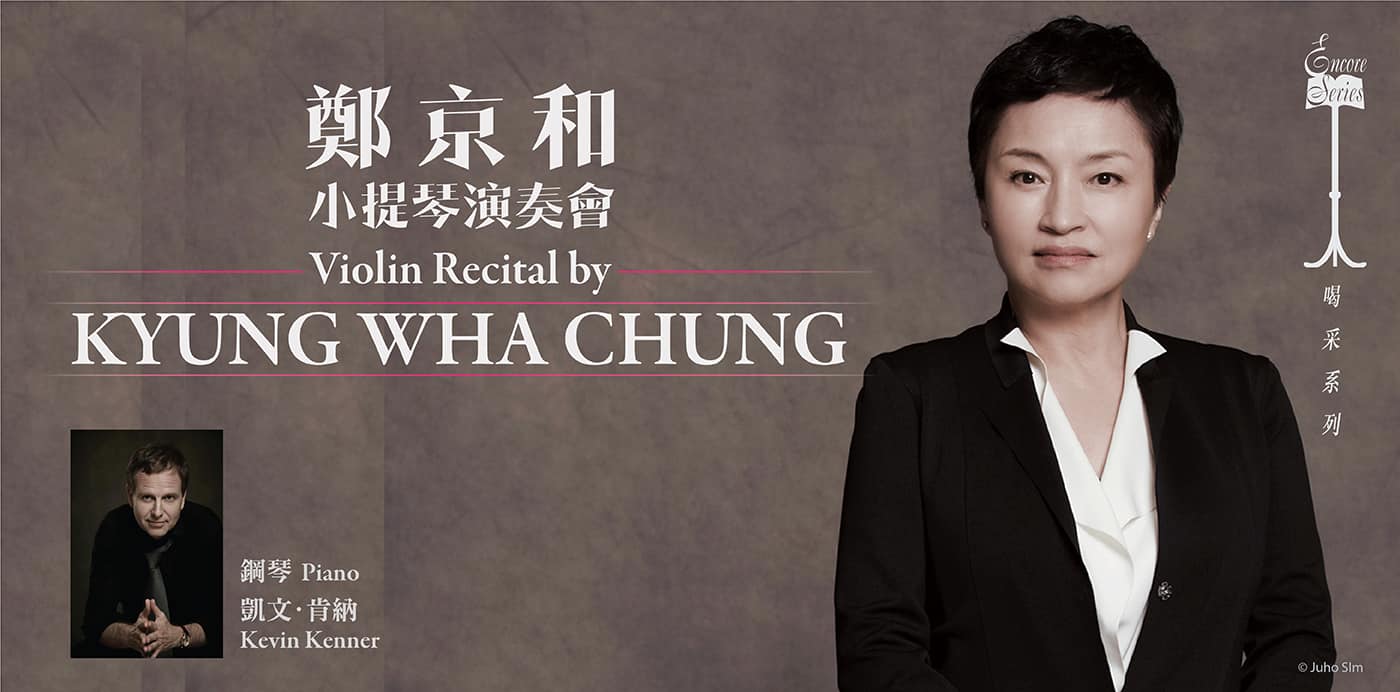
Concert Review - Kyung Wha Chung Recital

Sept 17, 2017, CH
Kyung Wha Chung - Kevin Kenner
Debussy - Faure - Brahms

How time flies! Has it really been four years since the same team's last visit (reported here)? Consider this, the last concert is still very much on my mind, which is one definition of memorability.

I'd actually urge you to read my last report, as it would almost double for how I feel about this concert. My appreciation for the sheer commitment of seventy year old Chung was one reason why I chose to attend this concert despite my current conditions, and I was even more satisfied than last time.

I sat in the balcony.

Like before, the program was not only on the heavy side, but delivered with ferocity. The first half, like last time, contained two substantial sonatas, but this time French. The opening Debussy Sonata was perfectly executed, but in this most difficult of all pieces (my opinion) I would have liked even more abandon and mercurial shifts, which the meticulously crafted performance (with Kenner a bit too safe) was just shy of. Nonetheless, a valiant effort. Like last time (Grieg), the second less often played sonata provided the highlight for the evening. I'd say there are less than a handful of violinists who would dare to program Faure's Sonata No. 1, a masterpiece without a really catchy tune (problem with this composer). Like the Grieg of four years ago, this piece separates the women from the girls, or, let's say, Chung from the rest (men and women). Chung's absolute mastery of the long line maintained coherence and revealed the piece's considerable glories. This is not to say there were no insightful highlighting (far from it); rather everything was woven into a total fabric. Kenner also played with more freedom. I'd never expect to hear a better performance.

The second half was devoted to Brahms. The F.A.E Scherzo fragment was nicely turned, but it revealed Chung had started to tire. She fought on valiantly in the Sonata No. 3. As expected, the performance was more yang than yin, which bothered some of my friends, but it was OK with me. Two Debussy small pieces closed the evening to tumultuous applause. The line for autograph was like that for a rock star.

Chung is an extremely powerful player, probably more than most of the big names today. Her sound just filled the hall and never got covered by the piano, which was not played exactly gingerly, as with "accompanists" of lesser violinists. In particular, I was mightily impressed by the slashing bowel sounds of her violin in the Brahms Sonata, which was just audibly and harmoniously at one with the piano part. In my years of concert going, I have never heard that. Surely what one may expect in a salon with an older fortepiano, but a veritable miracle in a modern concert hall! The duo must have spent countless hours working on this. My hats off.

My friends commented on her beautiful sound, but in the first half, that is not what I'd exactly call it. In the second half, though she has tired, the viloin's tone was more beautiful and different. I wonder what made the difference; tuning? a different violin, who knows!

Chung's teachers were the best, in my opinion. Ivan Galamian was the pedagogue par excellence. He made relatively few recordings, but I have always regarded his quartet's Debussy and Ravel Vanguard recording as a hidden gem. As for Szigeti, little need to be said. At the same age, Chung's technique is vastly superior to his teacher's. But Chung made me curious, so I pulled out her teacher's Schubert recordings, and they are superb! Technique is not everything, it must be put to the service of the music. I did find the imprint of Szigeti in Chung.

Also, after this concert, I re-listened to her latest recordings of the solo Bach works. They are growing on me.

1989 Chung Strad Interview

12 September, 2017

Concert Review: HKPO-Jaap-Yuja Wang

Concert Review: HKPO-Jaap-Yuja Wang

Sept 9, 2017, CCCH
HKPO-Jaap-Yuja Wang
Beethoven-Mahler


I kind of suspect, in a way, perhaps young and flamboyant Yuja Wang, one of my favorites, is trying to ape Martha Argerich, in her repertoire, that is.

Beethoven's Piano Concerto No. 2 is an Argerich staple, and she has recorded it at at least three times. I am delighted Yuja Wang elected to play this, for otherwise we would not get to hear the piece.

Yuja Wang played the piece in her customary virtuosic but non-sentimental manner, just what this classical piece needs. The orchestral contribution was secure but a little too heavy and over-inflected for my taste.

Yuja Wang played two encores. It was the first time I heard the Volodos-Say re-composition (arrangement doesn't come close to what it is) of Mozart's Turkish Rondo, and it was a delight. Then, a beautiful Gluck-Sgambatti Melodie closed the program.

I did not stay for the Mahler.

Note: I came across this excellent New Yorker article on Yuja Wang, worth a read! 

29 June, 2017

Concert Review: HKPO-Jaap-Renaud Capucon

June 17, 2017, CCCH
HKPO-Jaap-Renaud Capucon
Berg-Schubert

Renaud Capucon is a reliable violinist with secure intonation and good tone, but passion is not his strongest suit. It showed in the Berg Violin Concerto, which needs more fire and angst, something that can also be said of the accompaniment.

Schubert's 9th fared better, to an extent. The orchestra played well for Jaap, who as usual focused on drama, often idiosyncratically. However, as usual too, theatricality came at the expense of depth. There was no sense of Schubertian flow, languor, not to mention intimations of undercurrents. In many ways I preferred the recent performance of the same piece under Christoph Poppen (roll down below),
Concert Review: Jean-Guihen Queryas Solo Recital

June 8, 2017, CH
Jean-Guihen Queryas Solo Recital
Bach-Ivan Fedele-Jonathan Harvey-Gyorgy Kurtag

The library has many of Queryas' CD's (Harmonia Mundi), and I find them of unfailingly high standard and frequently inspiring, so it is satisfying to find that here is one artist who delivers the same high standards in the concert hall (not at all a given).

It is fashion now in recordings to pair Bach's (solo) music with shorter modern works. In this case, the concert is Part I of Queryas' Bach Project, which precedes each of the Solo Suites with a commissioned "Pre-Echo". Here, the first 3 suites were preceded by works by Ivan Fedele, Jonathan Harvey and Kurtag. Only the Kurtag was not commissioned, a short suite comprised of three short works. Of the three works, I found Harvey's the weakest, and Fedele's the most appropriate appetizer.

The Suites themselves were played with elan. Not particularly period influenced, nor indulgently romantic. Queryas played crisply, with nuance and good flow, and gave each movement good character and color, no easy task.

I enjoyed it greatly.

29 April, 2017

Concert Review: Sinfonietta-Poppen-Quero

Concert Review: Sinfonietta-Poppen-Quero

April 29, 2017, CH
HK Sinfonietta-Christoph Poppen-Ramon Quero
Cuddeford-Strauss-Schubert

An ambitious program and another triumph for the HK Sinfonietta!

The unusual opener was a Chorale Prelude by James Cuddeford, Concertmaster, which is meant to be just the first part of a larger Triptych. It is a surprisingly ambitious work and quite interesting to my ears. I'd like to hear the rest of it.

Then came Richard Strauss' Oboe Concerto, given an immaculate performance by the Principal Oboe of the esteemed Bavarian Radio Symphony Orchestra, Ramon Quero. His tone is big and full. Poppen guided the orchestra expertly and maintained a firm pulse, no easy task in this work, which lacks a good melody.

Beforehand, I had wondered how the Sinfonietta would fare in the big work that is Schubert's 9th. I hadn't need to worry! Poppen obviously know the work well, paced it absolutely masterfully, managed all the transitions with ease, and gave the work a fluidity that many lesser conductors would envy. The much exposed woodwinds and brass played very well. A bit more character and bite fromt he players would lend the work more tragic demeanor, but overall this is a tall achievement for the HK Sinfonietta, and once again I was mightily impressed by Poppen.

28 April, 2017

Concert Review: HKPO-Jaap, or Gone Largo and Sponsor's Poor Taste

April 26, 2017, CCCH
HKPO-Jaap-Storioni Trio
Beethoven-Shostakovich

The concert did not start well. In Beethoven's Triple Concerto, all of us were not satisfied with the cellist of the Storioni Trio, whose small tone was apparently not matched in volume to the other two. Their performance just did not flow well. The orchestra was obviously toned down, and the whole thing just lacked Beethovenian sweep.

Compared to the previous proceedings, the orchestra was like an awakened giant in Shostakovich's Eighth Symphony, playing with precision and power. While the climaxes were thrilling, the slow passages (many and lengthy) lacked a feeling of foreboding or lament (not a Jaap specialty) central to the music. I was particularly taken aback by the largo, which was bland and passed unduly quickly.

Attendance was very poor, at maybe 50%, which made the sound a bit aggressive.

The concert was sponsored by Macallan. Their name was projected onto the wall before concert started and during intermission. Instead of the de rigeur bouquets, I was stunned when two orchestral members went backstage to procure three bottles of scotch for the trio. At the end of concert, Jaap also received a bottle.

I have never seen this happen anywhere. If you ask me, Poor Taste on the part of Macallan and the HKPO!

03 April, 2017

HKPO Elim Chan

Concert Review: HKPO - Elim Chan

April 1, 2017
HKPO - Stephen Hough - Elim Chan
Smetana - Beethoven - Rachmaninov

When I tried to buy a ticket for this concert some time ago, I was surprised to find it sold out on both nights. Fortunately, a friend procured me one ticket, second row, center balcony. I guess many people are curious to hear this LSO conducting competition winner, who has served as assistant for the LSO and now is chief conductor of Swedish NoorlandOperan.

With Smetana's Ma Vlast, Elim Chan immediately showed her youthful energy and solid command. Being dimunitive, her highly raised arms conducted in large arcs. The river flowed a little faster than usual.

Elim Chan's conducting in Beethoven's Emperor Concerto was absolutely stunning. Impeccably timed and full of dynamic fervor, it was as it should be, and much superior to the work of most other conductors I have heard in this work. However, there was an obvious dichotomy - soloist Stephen Hough's playing, though tidy and shaped, in contrast lacked dynamic nuance and sparkle, of utmost importance in this piece. Hence, although there was no question of syncing, subjectively the strange perception was a slow piano part and a fast orchestra accompaniment. Some of my friends felt the same. Hough's strange choice of Claire de Lune as an encore did him no favor, as it was played with virtually no atmosphere.

Rachmaninov's Symphonic Dances received a well shaped performance. The waltz in the Andante was sensitively shaped yet well sprung - just marvelous. Overall, however, the performance lacked a certain Russian fervor, perhaps wistfulness. This is often true of the matter-of-fact HKPO, who do not do well in this repertoire (unless under a Russian conductor).

The Rachmaninov again illustrated the long time weakness of the HKPO - a weak wind section which played all the notes but had no wholeness. This hampered in particular the first movement. One heard the strings and the brass well, but struggled with the winds.

The center balcony is beloved by audiophiles, but imho the sound there is on the dry and sterile side. Big brass climaxes also sounded overloaded and coarse. I prefer more to the sides.

HKPO should invite Elim Chan back every year!

31 March, 2017

Review: National Theater Brno, Oslo Philharmonic

The magnificent Orchestra and Chorus of the National Theater Brno.

Concert Review: Three More Great Concerts

Previously I have mentioned why I rarely attend HK Arts Festival events: expense, conservative programming (repetitive), mainstream artists (few surprises) and a very different crowd (more glamorous but less interested in the arts; more to be seen than to see).

Happily, this year's events are truly exceptional. Aside from the artists reviewed in the last two articles, much belatedly here are more:

National Theater Brno (Orchestra and Chorus of the Janacek Opera, Jaroslav Kyslink, Conductor)
Feb 26, 2017, CCCH
Dvorak Stabat Mater

Feb 28, 2017, CCCH
Janacek Sinfonietta, The Eternal Gospel, Glagolitic Mass

Aside from the instrumental Sinfonietta, these are all choral pieces I have never quite taken to in my own home listening. Although my equipment can convey the atmosphere of large pieces with aplomb, I do think choral works, especially these in a strange tongue, ultimately stresses any home reproduction and, more than any music, demand to be heard live. More dramatic operas and Requiems fare better in the home system.

Take the Dvorak Stabat Mater as an illustration - you absolutely need the real concert hall dynamics to appreciate this piece, and I am talking about soft passages even more than loud ones. This chorus is outstanding, easily the equal of, if not superior to, the top-drawer LSO Chorus. The tonal quality, ensemble, as well as control of the softest passages to outbursts are well nigh beyond reproach. The conductor, long a choral conductor, obviously was completely in charge and brought out every nuance of the work. In comparison, home listening would be like compressed music.

For me, Janacek's Glagolitic Mass is a more exciting work than Dvorak's. It also received a perfect performance. Except for the tenor (which I prefer), the solid soloists were the same as in Dvorak. I would single out the soprano and bass for praise. However, the real surprise was The Eternal Gospel, a haunting work of rarefied beauty.

As much credit should go to the conductor and the marvelously sensitive orchestra. Although not as big as a symphonic orchestra, this opera orchestra played with great tonal allure and nuance. Everything flowed seamlessly. In terms of refinement, they yield nothing to their counterpart Czech Philharmonic, which I have heard in Rudolfinum.

Bravo! And kudos to the Arts Fest for braving this "second tier" ensemble, which obviously did not sell as many tickets as other more famous ensembles. I hope the Arts Fest shall continue to be more adventurous! We don't need the "big five" or "top ten"!

Oslo Philharmonic, Truls Mork, Vasily Petrenko
March 15, CCCH
Tveitt-Elgar-Sibelius

Concert opened with excerpts from Geirr Tveitt's 100 Folk Tunes from Hardanger. Sensitively played, they sound much more interesting than on record. Truls Mork's Elgar Cello Concerto is a known entity. The performance was solid but lacked magic, with virtually no intimation of loss or wistfulness, and that does not a success make.

The second half was a wake-up call. Vasily Petrenko shaped every phrase of the Sibelius Second Symphony with great care, particularly in the gradation of dynamics, and the orchestra was totally responsive. The Crescendos and Decrescendos were like tidal waves and no detail was glossed over. Although Petrenko did not wear his heart on his sleeve (like Barbirolli), his meticulous performance not only miraculously escaped being literal (what happens to lesser conductors and orchestra who claim "faithfulness to the score"), it kept building up in grandeur. The long and difficult finale was all of one piece. The best Sibelius Second I have ever heard live, by a substantial margin. 

What a Year!