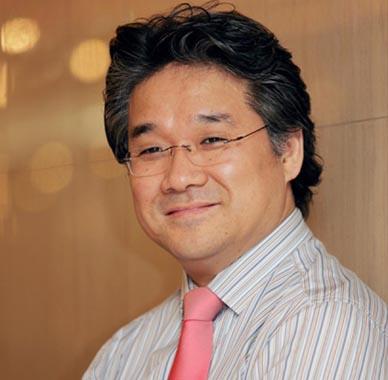
pic of Haitink from NYT
Concert Review: Mahler 9 and 5
April 14, David Geffen Hall
Bernard Haitink - New York Philharmonic
Mahler 9
A frail Haitink returned to conduct the NYPO in Mahler 9. This last completed Mahler symphony has always been one of his calling cards. I love his first recording, which received universal praise, and still have vivid memory of his unsurpassed 9th with the Berlin Philharmonic at Carnegie a good three decades ago.
As with his performance with the same forces of Mahler 3 two years ago, Haitink directed the orchestra with minimal motions and absolutely no fuss, yet a sparingly used and modest tightening and shaking of the fist could elicit a thunderous response from the orchestra in true climaxes. Haitink mostly just let the orchestra play, and they did so with great character. Haitink rarely highlights, yet I have never heard more details in the score.
Although sometimes one may have wished for a little more sardonic edge, the music could not have unfolded more organically. An important element in this type of artless approach is the contribution of the players. The brass and winds were particularly irreproachable, characterful in solo's and lucid even in the densest passages.
Haitink has aged even more since two years ago. Even the little steps up and down the podium proved laborious. I hope I shall get to hear him again.
April 16, Carnegie Hall
Marin Alsop - Baltimore Symphony Orchestra
Puts The City - Mahler 5
A new work by prize-winning composer Kevin Puts opened the program. The City was commissioned to commemorate the 100th anniversary of the Baltimore SO and 125th year of the Carnegie Hall. Alsop made a little speech. The work was three years in the making and the programmatic work unexpectedly "had to consider" the recent riots and aftermath of the Freddie Gray shooting. The music was predictable enough in a post-minimalist way. It was accompanied by a film by Robert Bartolomeo, an unending succession of shots of Baltimore Streets and old photos. I found all of this pedestrian, even tacky. To me, the work was an uninspiring transposition of Philip Glass' Koyaanisqatsi, not one of his best works and accompanied at its premiere by a boring film too.
In comparison to the NYPO of two days ago, the limitation of the Baltimore Symphony showed rather embarrassingly. Marin Alsop's all-baton manner, though fluid and non-histrionic, also contrasted with Haitink's economy. In Mahler 5, the orchestra had a good, integrated sound, but there were obvious weaknesses. The winds in particular did not project well the Mahlerian swagger. Lower strings were also a little too light to provide a foundation. The upper strings played very precisely and were well molded by Alsop, but they too lacked power in key moments. Overall, there was a lack of transparency in the playing. Alsop's interpretation was fine and straightforward, but the execution, though tidy, was not of the highest caliber.
NYT review
I have been a classical music fan for over 40 years, pre-dating my obsession with hifi by more than 10 years. Music lingers in the mind almost more than any other sensual pleasure. It's a corner you can call your own. Other non-music art events that I find enjoyable shall also receive some treatment in this page.
17 April, 2016
10 April, 2016
Brahms Piano Quartets Andsnes Ehnes Zimmermann Hagen
pic from NYT.Concert Review: Leif Ove Andsnes and Friends - Brahms Piano Quartets
April 9, 2016, Carnegie Hall
Leif Ove Andsnes - James Ehnes - Tabea Zimmermann - Clemens Hagen
Brahms The Three Piano Quartets
It is not so often one encounters one of Brahms' Piano Quartets in a program (usually performed by a string quartet with a guest pianist in the second half). To hear all three in one sitting is virtually unheard of, till now.
The players here are taking this program on tour. The original violinist was Christian Tetzlaff, who had to cancel the North American leg since his baby is due any day. They are lucky to have as replacement James Ehnes, equally internationally renowned violinist. Their first stop was 2 nights ago, at North Carolina (excellent local review here). So the players has had some time together before this concert.
ALL of the players are very experienced chamber music players. Leif Ove Andsnes have previously played with all the other musicians of the night, and on recordings serve as pianist to many a string quartet. James Ehnes has his own self-named String Quartet; Tabea Zimmermann is a founding member of the (excellent) Arcanto Quartet; Clemens Hagen is cellist of the Hagen Quartet. Their collective experience shone brightly in this program. Quartet No. 1 occupied the first half; the second half was lengthy as it had to accommodate the remaining two quartets, a total of about 90 minutes, taxing both the performers as well as the audience.
Heard in succession, even if separated by an intermission, the first two quartets, written in the same year, certainly sounded stylistically similar. Both received impeccable readings, but initially the first half, as the NC reviewer mentioned, sounded a bit tight. Sonically, the quartet opened up more in the second half - the piano sound was more lucid, and Ehnes' violin had more rosin. No. 3, written 20 years later, is a more enigmatic work; it was equally well played, its mercurial quality well caught, but the last once of pathos was not quite evident (for those who like it tat way).
There was not a whiff of indulgence. Andsnes' playing, as usual, was straightforward, but not strait-laced. Rhythms were finely sprung, and accents were strong when needed, providing a firm fulcrum for the strings to balance on. Yet, Andsnes could be poetic, colourful and atmospheric when needed. The intonation of the three string players were remarkable, never wavering. Ehnes' sound was very smooth and his phrasing always superbly musical; only occasionally a little more risk taking was desired. Hagen was superbly colourful and nuanced, better than I remember him with the Hagen Quartet. Most amazing of all was Zimmermann - no bones about it, the best violist I have ever heard. Most violist struggle to be heard; not Zimemrmann, who has a big tone, and here more often than not seemed to prompt, challenge and lead with a particularly strong phrase. Spellbinding! Most impressive was the unison - when the strings doubled, one could not tell them apart!
The reception was tremendous. At the intermission, I told the nice lady next to me that I could leave then - because it felt like a climax had been delivered, and I was thoroughly satisfied. Well, by the end of the concert, I felt like that three times! One of the best concerts that I have attended in the past decade.
p.s. after this article was published, the NYT review came in.
24 January, 2016
pics: Shelton and MeltonConcert Review: Die Walkure
Jan 23, 2016, CCCH
HKPO - Jaap van Zweden and Soloists
Wagner Die Walkure
My review of the Ring's First Installment - Das Rheingold
This second installment of Wagner's Ring showed improvements over the First, yet was also let down somewhat by the same deficiency, namely Matthias Goerne's under-powered Wotan.
In terms of nuance, Goerne showed considerable sensitivity in emotive passages, such as those to Brunnhilde and Fricka; yet in more prosaic and long-winded passages (admittedly one of Wagner's problems), such as the endless recounting of the past and history of Valhalla, he gave the impression of sight-reading and making-do (he uses a score at all times), thereby not able to help the listener through. Goerne wisely saved his limited firepower for key declamatory moments, but there is no denying that his output barely filled this not very large hall.
A Thought Given my misgivings about Goerne's Wotan in Das Rheingold last year, I was surprised that the recording (Naxos) received general acclaim (see here). As an audiophile and avid consumer of recordings, I know too well the difference between the live act and the recording. IMHO, Goerne would never make a good Wotan on a real operatic stage, but could be good in a recording. Note that he has only sung Wotan in Hong Kong.
Everybody loves the first act of Die Walkure (Wagner at his most amorous, as warm as anything in Tristan und Isolde), and here we got the absolute best. It is hard to imagine a better sung or characterized Siegmund or heldentenor than Stuart Skelton; or a better Sieglinde than Heidi Melton. Skelton effortlessly conveyed vulnerability, naivety, and yearning; Melton, the first cautious, then increasingly effectuated aspects of her character. Both were heroic in their singing, and their sound filled the hall with what Wagner intended, love. Falk Struckmann is obviously a seasoned Hunding.The second act, particularly the eventful ending, does not favor a concert performance, but even the energy at the start dropped a little. Michelle DeYoung's Fricka was a just a little under-characterized, not quite noble enough. The Brunhilde of Petra Lang was short of vocal opulence, but she made up for it partially with acting and apt pointing. In some ways, she reminds me a little of Hildegarde Behrens, not the most formidably equipped but a great actress.
The third act was the weakest, having to rely on the less than heroic Wotan and Brunhilde. But praise to the great cast of the other Valkyries (Sarah Castle, Karen Foster, Katherine Broderick, Anna Burford, Elaine McKrill, Aurehlia Varak, Okka von der Damerau and Laura Nykanen). But here, Jaap van Zweden's conducting carried the day. The HKPO's playing was a cut above that of last year. Zweden, not at all a man who wears his heart on his sleeve, showed more tenderness than in all of his concert performances I have heard. Overall, the orchestral playing was refined, coherent and fluent. A joy!
18 November, 2015
Concert Review: Benjamin Grosvenor Recital
Concert Review: Benjamin Grosvenor RecitalNovember 17, CH
Benjamin Grosvenor Recital
Mendelssohn-Chopin-Ravel-Liszt
I first came to know Benjamin Grosvenor through a library CD (Decca) of Saint Saens, Gershwin and Ravel. While I marveled at the playing I wasn't brought quite into the music. I must say hearing him live was much more of an exciting event, and no matter how good the recording was, it did not really faithfully portray his pristine sound, particularly in the treble; nor did it truthfully reflect his spontaneity.
One month ago, much of this program was played in Carnegie Hall, and the NY Times critic called him "Boy-Lord" of the Piano (here)!
One word about the program. It was very intelligently planned, with many interlocking elements. The two halves were symmetrical, each beginning with a master's tribute to a moyen age; then moving on to two closely related composers, linked by music inspired by the water.
Two of Mendelsohn's Preludes and Fugues (Op 35) opened the program. These are almost never heard, and they proved stimulating. As played, as much as the Preludes were chiseled jewels (you'd not expect less of this composer), the Fugues were more solemn edifices (though I personally am not fond of fugues).
Chopin's Bacarolle was not quite the romantic thing some conjured. The waters seemed to be under a well-lit sky. Personally I prefer Chopin's miniatures, and I loved the Two Mazurkas (Op 63/2 and 30/4), well sprung and poetic. But most impressive was the Andante Spianato et Grand Polonaise Brilliante. The lovingly molded Andante did not prepare me for the very personal "Polonaise" that followed, which unlike the title was not conceived in a grand manner (as most play it); instead it was by turns coquettish, whimsical, even jazzy or jaunty! This pianist is his own man.
Second half started with Ravel's strangely beautiful Le Tombeau de Couperin, for me a piece that has tripped many a pianist (including many so-called Ravel "specialists"). Grosvenor brought a very original and fresh perspective to the work. A friend remarked that he played the Toccata like Prokofiev, which is as it should be.
Liszt's Venezia e Napoli concluded the program brilliantly. While the Gondoliera and Canzone were meticulously textured, the Tarantella showcased the pianists awesome bass power and concentration.
Grosvenor's playing does not lack at all in light and shade, but misty and mysterious it never was. Here is a young man reveling in his own power, yet a master at tone-painting and not afraid to bend a few things along the way. Perhaps some may miss some depth, but his showmanship more than makes up for it. His Chopin is completely different from that of Nelson Freire (see review below), yet I am glad I have heard it. A man to watch.
24 October, 2015
Oct 24, 2015, CH
HK Sinfonietta - Penderecki
Penderecki - Shostakovich
Penderecki is for some reason well connected with HK (and elsewhere in Asia) and makes not infrequent appearances, usually well received.
The composer's Violin Concerto No. 2 is a rarity even on records. Mutter, who first played and recorded it, commented on its elegiac tone and "a sense of burial", which I found elusive in this performance, well played by concertmaster James Cuddeford, an excellent violinist.
Penderecki is a very good conductor too. I remember a perfectly paced performance of Prokofiev's Classical Symphony many years ago. This time, he delivered a lucid account of Shostakovich's Symphony No. 15. Although short on mystery and drama, the piece was tightly argued and well played, though more characterful playing from the soloists would have contributed more (like the magnificent performance of Shenzhen Symphony under 張國勇I heard five years ago).
10 September, 2015
Concert Review - Nelson Freire Recital
Sept 8, 2015, CCCH
Nelson Freire Recital
Mozart-Beethoven-Prokofiev-Granados-Chopin
Although I had known Nelson Freire from his early Columbia recordings (now on Sony), somehow he slipped off my radar until a few years ago, when his Decca recordings, many available from the library, started to catch my attention again. All of them revealed greatness: rock-solid technique, golden tone and interpretive integrity. My considerable expectation for this concert was amply fulfilled.
Freire sat very still, almost frozen, for the entire concert. No theatrical movements, no agitated nor agonizing looks, yet what incredible sound came out of the piano! Sound that enriches, comforts, soothes and heals. A characteristic of Freire is that he never artificially highlights any melody or moment; everything is in its place, part of a balanced whole.
Mozart's Sonata No. 11, K331, received an unusually operatic performance, appropriately so as it stems from the same time as the Abduction of the Seraglio. One could mistake a few coquettish moments for Scarlatti. This is certainly not a performance where one keeps looking forward to the ending, the Turkish Rondo; instead one revels in every moment, in all its splendor.
Beethoven's Sonata No. 32, Op. 111 was perfectly judged. Many pianists produce/adopt a rather lean and barren tone in trying to convey the rarefied atmosphere. Not so Freire, whose tone remained bronzed and burnished throughout in a performance of great concentration and power.
Excerpts from Prokofiev's Visions Fugitives and Granados' The Maiden and The Nightingale (from Goyescas) were atmospherically played, perfect appetizers for the Chopin to come.
In my concert going experience, the popular Bacarolle is not an easy piece to carry off. Freire is among the few who managed to do so, by keeping a steady pulse and exemplary balance. The same can be said about the elusive Mazurkas; Freire offered two (Op. 17/4; Op. 56/2), both beautifully captured as few can (another master is Fou Ts'ong). The Ballade No. 4 was steady and strong, though here I'd prefer a little more fire.
But the encores of transcriptions proved even more revelatory. After its soft opening, the Bach/Siloti Prelude in G minor rang out in awesome organ-like sonority - what majesty! Then came a richly toned Bach/Hess Jesu, Joy of Man's Desiring. At the end of it, tears came to my eyes. Thank you, Nelson Freire, for a most healing moment.
07 August, 2015
Concert Review: Andris Nelsons and Yannick Nezet-Sequin
Note: I forgot about writing about these, so these are just very brief comments.
pics from NYT.
April 16, 2015, Carnegie Hall
Boston Symphony Orchestra/Andris Nelsons/Christian Tetzlaff
Shostakovich/Beethoven
I was very eager to hear Nelsons. My expectations were only partially fulfilled. Shostakovich's Pasacaglia from Act II of Lady Macbeth of Mtsensk was a crisp opener. The BSO sounded very much better than heard many years ago. I particularly loved the very refined woodwinds. The Symphony No. 10 was very well played and theatrical, but missed greatness as it did not show much angst. Beethoven's Violin Concerto was very well played by Tetzlaff, and ensemble was tight.
NYT review
May 14, 2015, Carnegie Hall
Philadelphia Orchestra/Yannick Nezet-Sequin/Emanuel Ax
Muhly/Beethoven/Rachmaninov
Again, Nezet-Sequin left me just a little short of enthusiastic. Nico Muhly's Mixed Messages was an entertaining opener. Beethoven Piano Concert No. 3 was capably played by Ax and well partnered by the orchestra. I went to hear the Rachmaninov Symphony No. 3, one of my favorite works. It was a good performance but missed greatness (think recordings by Boult and Ashkenazy), lacking wistfulness and grandeur by turn.
NYT review
Note: I forgot about writing about these, so these are just very brief comments.
pics from NYT.April 16, 2015, Carnegie Hall
Boston Symphony Orchestra/Andris Nelsons/Christian Tetzlaff
Shostakovich/Beethoven
I was very eager to hear Nelsons. My expectations were only partially fulfilled. Shostakovich's Pasacaglia from Act II of Lady Macbeth of Mtsensk was a crisp opener. The BSO sounded very much better than heard many years ago. I particularly loved the very refined woodwinds. The Symphony No. 10 was very well played and theatrical, but missed greatness as it did not show much angst. Beethoven's Violin Concerto was very well played by Tetzlaff, and ensemble was tight.
NYT review
May 14, 2015, Carnegie HallPhiladelphia Orchestra/Yannick Nezet-Sequin/Emanuel Ax
Muhly/Beethoven/Rachmaninov
Again, Nezet-Sequin left me just a little short of enthusiastic. Nico Muhly's Mixed Messages was an entertaining opener. Beethoven Piano Concert No. 3 was capably played by Ax and well partnered by the orchestra. I went to hear the Rachmaninov Symphony No. 3, one of my favorite works. It was a good performance but missed greatness (think recordings by Boult and Ashkenazy), lacking wistfulness and grandeur by turn.
NYT review
27 February, 2015
Concert Review: Dresden Staatskapelle-Thielemann
Feb 27, CCCH
Dresden Staatskapelle-Thielemann
Strauss-Bruckner
I don't usually attend the HK Arts Festival concerts: there are too many people there who go for the wrong reasons; these people never attend non-glamorous events, like HKPO concerts; these people are there to be seen, not there for the music. I am sure our besieged chief executive Leung knows nothing about Bruckner (he disappeared after the first half)! The events also attract name-brand lovers, who otherwise do not care about the music scene.
I made an exception this year, not for the big names of Dresden/Thielemann, but for the Bruckner Ninth, a sacred piece of music to me.
Almost two years ago, in NYC I heard the same team in an outstanding Bruckner's Eighth (reported briefly here), but this outing proved just a little less satisfactory. In a way it went the same way as Yannick Nezet-Sequin's performance with the Philadelphia I heard in NYC a year later (reported here), tightly argued in the first two movements but lacking in coherence and spiritual journey in the penultimate third movement, surely one of the most mysterious in the classical cannon.
As mentioned in a NYT link I provided previously, the orchestra's greatest strength is its totality. The brass and woodwinds don't really stand out, but they play all of one piece. The ensemble-ship is enticing. The strings are magnificent, playing with chamber-like co-ordination and precision in Strauss' Metamorphosen. In Bruckner's Ninth, the brass dominate. In the first movement, Thielemann holds them in reserve at first, but lets them loose a bit later to good effect. His dynamic gradations are unusually smooth and powerful, sometimes a little reminisecent of Celibidache and others, sometimes just a little too consciously grand. The scherzo is well characterized. But imho the third movement falls apart a bit. There is a glacial feeling, of orchestral energy winding down. The piercing dissonance and struggle that should be there are not well conveyed. The dissolution should be in the music, not in the orchestra. In a word, for this listener, a bit of spirituality is lacking. As is appropriate for this program, no encore was offered.
A sour note. After the Strauss, some idiot (an elderly person) clapped way before the ending, but what followed after the applause was far worse, indeed pandemonium. I was sitting right beneath the organ, and all of a sudden this tall, gaunt elderly person behind me started a cacophonous diatribe against the offender (in both Cantonese and English), demanding his removal for insulting the music. Right away he was echoed by another person further up front. It was the most confrontational I have even witnessed in a concert hall, anywhere. But that is only half the story.
During the intermission, this self-righteous person behind me, and his younger female companion, circled the hall hunting for the offender. He finally got him cornered and in ferociously demanded the ushers remove him (they did not). He was still piping angry when the second half was about to commence. I heard them converse in Japanese and turned to say to them: "the other person is an idiot, but your anger is preventing you and us from enjoying the concert ..." Then he went on swearing, and I heard "fucking chink"! Imagine! Ten years ago, I'd have gotten into a fight with him, but with due respect to the performance soon to begin, I did not. I just said to them, "look, this "fucking chink" thing doesn't belong here!. Just enjoy the music!". The companion was obviously embarrassed and asked him to tone down the "nationalist" (her word) stuff.
Imagine, to ensure a good spiritual journey with Bruckner, one is willing to curse, persecute and blow hot and cold. Bruckner would not understand, but Hitler and the many Bruckner lovers in the Third Reich, would. This Japanese I encountered is the lowest of the low. That this person is obviously a educated long-time HK resident makes it more sad.
26 January, 2015
Concert Review: HKPO - Das Rheingold
January 22, 2015, CCCH
HKPO-Jaap and soloists
Wagner Das Rheingold
Note (24/01/16) Naxos has issued a recording of the concerts, to generally favorable reviews. Personally, I am surprised that Goerne's Wotan received much praise. I think multi-miking helped him seem bigger and more authoritative. In concert he was not. More on this in my review of 2016's Die Walkure.First thing first, the biggest name disappoints. The Wotan of Matthias Goerne was an outright failure. He had never sung Wotan before, and obviously he was feeling out the role far away from Europe. The singing was generic, inadequately shaded, and simply did not have the depth and breath the role required. Even his physical presence seemed rather uncomfortable.
The biggest surprise came from the Giants. While Stephen Milling (Fafner) was indeed imposing in stature, in tandem Korean Kwanchul Youn (Fasolt) was almost comically dwarfed (this would never work on the opera stage). The former sang in a well-characterized manner, but it was the singing of the latter that was the biggest surprise - big, full-throated and resonant. Simply fantastic.
The central characters of Alberich (Peter Sidhom) and Loge (Kim Begley) were well sung and portrayed, the former especially so for good acting (whatever could be done on stage). Among the rest, David Cagelosi portrayed a suitably pathetic Mime. Oleksandr Pushniak (Donner) and Charles Reid (Froh) were competent.
Among the ladies, Michelle DeYoung (Fricka) and Deborah Humble (Erda) were very good. The Freia of Anna Samuil was a shrieking hysteric. Japanese Eri Nakamura was competent as Woglinde, but Aurhelia Varak (Wellgunde) and Hermine Haslebock (Flosshilde) were much less satisfactory.
Jaap van Zweden conducted in his customary, rather brute, style, so textures were generally clean, but atmosphere was lacking. As usual, the HKPO strings were tidy and dry, failing to portray anything like the Rhein. Woodwinds also paled next to the generally very good playing of the huge, much augmented brass section.
12 January, 2015
Concert Review: HKPO - Bezhod Abduraimov - Thomas Dausgaard
Jan 9, 2015, CCCH
HKPO - Bezhod Abduraimov - Thomas Dausgaard
Mendelssohn - Rachmaninov - Elgar
I came to know this latest wunderkind through the public library, which has his excellent first Decca CD release.
For an opener, lanky Dane conductor Thomas Dausgaard delivered a lean and mean Hebrides overture.
The Rachmaninov Piano Concerto No. 3 was almost anti-romantic, but the tight partnership was enticing. Bezhod Abduraimov produced the most beautiful tone and did not just hammer it out, instead filling many passages with refreshing poetry. One of my friends who went the following night said he played just too beautifully, but I desist. The encore made me want to hear his recital. Come back soon!
Elgar's Enigma Variations has never been a personal favorite. On this occasion, it was played well. Nimrod lacked a little atmosphere. But Dausgaard played a trick by playing the original ending first (no wonder it sounded odd), and then he spoke to the audience and played the revised ending (upon urging by the publisher). Well, the publisher was right! :-)
14 December, 2014
Concert Review: HKPO - Zimmerman - van ZwedenDec 12, 2014, CCCH
HKPO - Zimmerman - van Zweden
Sibelius - Prokofiev
After his wonderful 2012 HKPO performance of Beethoven, Zimmerman returned for the Sibelius Violin Concerto (interview with Zimmerman on this piece). He played with his usual fastidiousness and "considered spontaneity", and the tone he obtained on his ex-Kreisler Strad was fabulous. Jaap's accompaniment was tidy. But the whole was dispiriting. Where were the passion and grand sweep of Sibelius? A friend who went the next day was even more dismissive, saying "it sounded like a rehearsal". The Bach encore, however, was immaculate!
Prokofiev's Fifth Symphony is one of my favorites, and I had high hopes for Jaap, whose showmanship should suit this sort of stuff. Again, the orchestra played accurately, but the result was bland. Tidiness of the violins robbed the stratospheric passages of dissonance and atmosphere. The finale, while cacophonous, lacked rhythmic swagger, and the coiled tension that should have been there was nowhere in evidence. Ah, I miss Celibidache, whose performance of this piece in HK was so incredibly lively!
Jaap has been disappointing. Aside from his stunning HK debut with the Shostakovich 8th, his Mahler 1st, 4th and now Prokofiev have all been sharply played but musically non-satisfying.
09 December, 2014
Concert Review: Ivo Pogorelich Recital
Dec 9, 2014, CCCH
Liszt, Schumann, Stravinsky, Brahms
In a way, it is not possible to review a Pogorelich concert. The pianist has his own rules and one is best to discard convention in listening.
The first half had a Fantasia theme, which was exploited in full by the pianist. Tempi were slow; gears changed abruptly; rhythms were idiosyncratic, and pauses could last an eternity. This can be said to suit the lurid world of the Liszt Dante Sonata. Pogorelich certainly made a meal of the bass ripples, while the treble was always beautiful in tone. But the same approach made the Schumann Fantasy in C thoroughly idiosyncratic, not so much Florestan and Eusebius as all-Pogorelich.
The more structural pieces of the second-half were (just) a little more straightforward. Stravinsky's 3 Movements from Petrouchka was brilliant but the rhythms did not feel Russian. The Brahms Paganini Variations is not one of my favorite pieces; I have always felt it rather straight-laced. The free rein Pogorelich gave it actually made more involving listening, for me at least. No encore was offered, as is appropriate after such a heavy program.
One thing I thought: for all the tonal beauty and pianistic display, there was not much rhythmic subtlety, nor humor.
Here is a UK comment on his 2014 London concert of the same program.
19 October, 2014
Concert Review HKPO Sinaisky
Pic of Vasily Sinaisky in SCMP interview.Concert Review: HKPO-Sinaisky
October 18, 2014, CCCH
HKPO-Vasily Sinaisky
Tchaikovsky-Mahler
Vasily Sinaisky stood in for injured Jaap. See the interesting SCMP interview.
Sinaisky conducted without a baton, and as usual with this breed, warm sound and relaxed music-making take priority over precision and drama.
I have always been lukewarm to Tchaikovsky's Suites, including the one on the program, No. 4, "Mozartiana", which received a warm reading. HKPO rarely succeeds in portraying the lighter and airy side of Tchaikovsky, and indeed the performance was somewhat earthbound. Best was the immaculate solo of concertmaster Wang Jing, which had breath and depth beside tonal beauty.
Mahler received a performance that is the antithesis of most approaches, including those of Jaap van Zweden and Edo de Waart. Eschewing tempo and dynamic exaggerations that mar many Mahler performances (such as Jaap's Mahler 1 and 4), Sinaisky's way with Symphony No. 5 was more straightforward, with generally fast tempi. The lack of lingering, and hence ruefulness and regret, gave the proceedings a much warmer hue and positive tone than usual. Largely bereft of angst, I'd think the reading will divide Mahlerians. I myself have mixed feelings.
The outer movements worked reasonably well with the fast tempi and even approach, but the sprawling scherzo could have used more characterization. The adagietto was very beautifully done, not sentimental at all, as it should be. In this performance, one noticed the warmth of strings. The woodwinds were less ideal. The brass played strongly even if the lead trumpet was shaky at first. I do not quite like the rather nervous bass drum playing of Luce (I prefer Woo).
Audience response was tremendous.
07 September, 2014
The Hong Kong International Photo Festival
Yesterday afternoon I visited Andrew,who has just returned from a photo show at Taikoo Plaza:
http://www.hkipf.org.hk/fest/2014/exhibitions-raghu-rai.php
I browsed the catalog and the photos of Raghu Rai are simply amazing. Apparently, he was assistant to Henri Cartier-Bresson and a Magnum photographer.
I was struck immediately by the semblance of his photos to the paintings of Breugel, one of which is attached below.
Of course, the experience was enhanced by Yoichi Single Malt poured over a chunky piece of ice.


Yesterday afternoon I visited Andrew,who has just returned from a photo show at Taikoo Plaza:
http://www.hkipf.org.hk/fest/2014/exhibitions-raghu-rai.php
I browsed the catalog and the photos of Raghu Rai are simply amazing. Apparently, he was assistant to Henri Cartier-Bresson and a Magnum photographer.
I was struck immediately by the semblance of his photos to the paintings of Breugel, one of which is attached below.
Of course, the experience was enhanced by Yoichi Single Malt poured over a chunky piece of ice.

02 July, 2014
Brief Concert Reviews: Mariss Jansons, Vladimir Jurowski and Ivan Fischer
Brief Concert Reviews: Jansons, Jurowski and Fischer
Belatedly, three wonderful concerts in brief, the most recent first.
pic from NYT
June 2, Avery Fisher Hall
Budapest Festival Orchestra - Ivan Fischer - Daniel Muller-Schott
All Dvorak
The Budapest Festival Orchestra travels a lot. I only just heard them in HK, and then this concert, one of a pair, in NYC. I am not complaining.
Daniel Muller-Schott played sensitively, though his tone was a little small for me. Nonetheless the account of the Dvorak Cello Concerto was still quite good under Ivan Fischer's careful leadership. But in the New World Symphony the orchestra came into their true selves. What a blazing finale! The beautiful woodwind playing and brazenly perfect brass playing also helped deliver the jewel-like Legend No. 10 and Slavonic Dance, Op 72, No. 6.
You must read the NYT Review for description of the wonderful encores.
pic from NYT
May 23, Avery Fisher Hall
NYPO - Vladimir Jurowski - Nicola Benedetti
Szymanowski - Prokofiev
Credit must be due to Nicola Benedetti, who replaced Janine Jensen at the last minute and gave a perfect performance. Together with the expert conducting of Vladimir Jurowski, the performance of the Szymanowski Violin Concerto No. 1 caught all the mercurial moods and exotic color of this great piece (a favorite of mine). The performance was even better than the one she recorded for DG. Her tone was ravishing, if just a little smaller than the regal Jensen.
One often gets to hear Prokofiev's Romeo and Juliet but not his Cinderella, and this performance of extended excerpts prove that should never have been the case. Jurowski coaxed incisive playing out of the NYPO, and the brilliant writing and graphic portrait made the characters virtually leap out of the pages. Fantastic!
NYT Review
pic from NYT
May 17, Carnegie Hall
Bavarian Radio Symphony - Mariss Jansons - Michiko Uchida
Beethoven - Shostakovich
Finally I caught up with them! A couple of years ago I bought tickets for a Sunday concert but forgot it was in the afternoon. Just like last time, it was a string of three concerts, and I heard the middle one.
Given the soloist Michiko Uchida, the performance of the Beethoven Piano Concerto No. 4 is not the yin-yang exchange it can sometimes be. Rather, her classicism and refinement was refreshing. The partnership was tight.
Mariss Jansons in Shostakovich Symphony No. 5 is a known entity. The brilliant Bavarian Radio Symphony (which gets better and better) played perfectly. In fact, the immaculate performance reminded me of Haitink's Concertgebouw reading. Emotionally, I am not sure what more can be wrenched out of this evergreen.
NY Times review
Belatedly, three wonderful concerts in brief, the most recent first.
pic from NYTJune 2, Avery Fisher Hall
Budapest Festival Orchestra - Ivan Fischer - Daniel Muller-Schott
All Dvorak
The Budapest Festival Orchestra travels a lot. I only just heard them in HK, and then this concert, one of a pair, in NYC. I am not complaining.
Daniel Muller-Schott played sensitively, though his tone was a little small for me. Nonetheless the account of the Dvorak Cello Concerto was still quite good under Ivan Fischer's careful leadership. But in the New World Symphony the orchestra came into their true selves. What a blazing finale! The beautiful woodwind playing and brazenly perfect brass playing also helped deliver the jewel-like Legend No. 10 and Slavonic Dance, Op 72, No. 6.
You must read the NYT Review for description of the wonderful encores.
pic from NYTMay 23, Avery Fisher Hall
NYPO - Vladimir Jurowski - Nicola Benedetti
Szymanowski - Prokofiev
Credit must be due to Nicola Benedetti, who replaced Janine Jensen at the last minute and gave a perfect performance. Together with the expert conducting of Vladimir Jurowski, the performance of the Szymanowski Violin Concerto No. 1 caught all the mercurial moods and exotic color of this great piece (a favorite of mine). The performance was even better than the one she recorded for DG. Her tone was ravishing, if just a little smaller than the regal Jensen.
One often gets to hear Prokofiev's Romeo and Juliet but not his Cinderella, and this performance of extended excerpts prove that should never have been the case. Jurowski coaxed incisive playing out of the NYPO, and the brilliant writing and graphic portrait made the characters virtually leap out of the pages. Fantastic!
NYT Review
pic from NYTMay 17, Carnegie Hall
Bavarian Radio Symphony - Mariss Jansons - Michiko Uchida
Beethoven - Shostakovich
Finally I caught up with them! A couple of years ago I bought tickets for a Sunday concert but forgot it was in the afternoon. Just like last time, it was a string of three concerts, and I heard the middle one.
Given the soloist Michiko Uchida, the performance of the Beethoven Piano Concerto No. 4 is not the yin-yang exchange it can sometimes be. Rather, her classicism and refinement was refreshing. The partnership was tight.
Mariss Jansons in Shostakovich Symphony No. 5 is a known entity. The brilliant Bavarian Radio Symphony (which gets better and better) played perfectly. In fact, the immaculate performance reminded me of Haitink's Concertgebouw reading. Emotionally, I am not sure what more can be wrenched out of this evergreen.
NY Times review
Subscribe to:
Posts (Atom)