29 January, 2009

HK Ballet: Faye Leung released

HK Ballet: Faye Leung released


(Amendment Feb 15, 2009)

I again read from the newsgroup 3music.classical that Leung had been apologized to and offered the post of "guest" principal:

"...受 政 府 資 助 的 香 港 芭 蕾 舞 蹈 團 出 現 戲 劇 性 解 僱 事 件。 團 中 台 柱 、 高 級 首 席 舞 蹈 員 梁 菲 , 被 舞 蹈 團 解 僱 兩 星 期 後 ,事 件 迴 路 轉 , 梁 菲 表 示 前 晚 舞 蹈 團 行 政 總 監 徐 嘉 鳴 為 粗 魯 的 解 僱 手 法 向 她 道 歉 , 並 口 頭 邀 請 她 作 「 客 座 首 席 舞 蹈 員 」, 梁 菲 暫 時 未 決 定 是 否 接 受 ...上 海 出 生 的 梁 菲 , 96 年 從 上 海 來 港 加 入 芭 蕾 舞 蹈 團 , 由 普 通 群 舞 演 員 逐 步 晉 升 至 高 級 首 席 。 香 港 芭 蕾 舞 蹈 團 每 年 受 政 府 資 助 二 千 多 萬 , 首 席 舞 蹈 員 年 薪 40 至 60 萬 元 (摘自 蘋果日報 二月五日)

But apparently all of this seems rather unofficial, and as noted in the thread, there was an article in Feb 8's Ming Pao critical of the HKB administration, and responsible officials have not stepped up to explain to the public.

(Original Post)
Today I was shocked when I read a post in the newsgroup 3music.classical:

“...Incident described in a forum:

http://www.ballet.co.uk/dcforum/news/4320.html

Official press release:

http://www.hkballet.com/2007/press/2009/0129_eng.html

I wonder if the firing and the resignation will affect their "All Bach"performances during the upcoming HKAF...."

Click here, and here, for her official site(s).

To me Faye Leung is without doubt THE classical ballet dancer in HK. Ever since I watched her as Juliet in 2007 I have become a hugh fan of hers. She is a STAR who can convey unbirdled joy and that rarest of qualities, PASSION. This is not only HK Ballet's loss, it's HK's loss.

Here is what I wrote at that time (posted in the same newsgroup then):

”...23/03/2007

HK Ballet/HKPO/Prokofiev/Romeo and Juliet

Shatin Town Hall

I attended last night's performance at Shatin Town Hall, less for watching the ballet and more for the opportunity of hearing the complete score of Prokofiev, one of my favorites. Hence I was really stunned by how the whole thing came together.

Shatin’s more humble scale meant a more crowded stage, some compression in the visual lines and a little loss in grandeur, but the gain in intimacy proved more vital. Even from my upstairs seat it was obvious this is a stunning production.

This is from choreographer van Dantzig’s 1967 work, fully 40 years ago! Despite “old” influences of Graham and Balanchine, it speaks to us eloquently and did not seem dated. Most enchanting was the detailed, psychologically and musically considered choreography for Juliet, full of exquisite details and fabulously danced by Faye Leung, who looked absolutely the part. Her acting is on the same exalted level as her dancing, conveying the girlish Juliet’s every turn of thought. This is a gem worthwhile on any stage in the world. Unfortunately, her Romeo, Zhang Yao, was tentative and wooden. The rest of the cast is excellent.

I would think the set, costumes and lighting contributed just as much to the total experience. Van Dantzig’s contemporary van Schayk’s sets were simple yet functional, and I must give special mention to his costumes which utilize the full palette. Under the splendid lighting of Alice Kwong the eyes just could not take in all the details. The set pieces and stills in the back look like paintings from the time of Romeo and Juliet and totally appropriate.

I almost forgot to mention the music, for which I went in the first place! The HKPO in the pits, aided by the excellent acoustics of the hall, played splendidly and with class, and most importantly, con amore under the conductor Richard Bernas.

This is emphatically a total experience. In its ability to “sing” it beats most opera productions. It IS a wordless opera. Watching the ballet made me learn so much more about the music I thought I knew. The final act struck me as Tristan merged into Gotterdammerung, so Wagnerian in its sweep and complete in its totality. This is even more of a masterpiece than I had thought, the most flesh and blood of classical ballets. I heard a lot of sobbing in the audience and that’s proof enough of success. My hats off to everyone.

The same cast appeared in the 2:30 performance the next day, and they danced even better. The corps were more together. Romeo was much more in his elements. Juliet was largely the same. Lighting was even better! So they had worked hard!..."

23 January, 2009

Concert Review: 2009 A HKPO Blundering Odyssey

Concert Review: 2009 A HKPO Blundering Odyssey

Jan 23, 2009
HKPO/Zinman
Webern/Mahler/Strauss
CCCH

This event marked one of the greatest blunders ever on the part of the "planners" of HKPO. A pair of concerts on two of the days when many, if not most, of the HK Chinese actually hold the all-important Chinese New Year's Eve dinner. Naturally, box office were abysmal (I suspected it when I bought tickets; not one seat in my section had been sold; something I have never seen in more than a decade of buying HKPO tickets). In desperation, HKPO sent out a hugh number of emails and gave a large number of tickets away in pairs. This of course does not make me happy, especially since this concert without soloist was priced at a higher level. More importantly, it's a complete waste of our tax money, which still funds much of HKPO's expenses.

The program was not an easy one for the HK audience. Even some classical fans whom I met at the concert (attending with free tickets) did not know Thus Spake Zarathustra. The concert name/promo was a disaster too. It shows the lack of sensitivity to local culture on the part of the HKPO administration. In English, it's A Viennese Odyssey, which is fine. In Chinese it says 2001 Space Odyssey, which means little to the majority of HK people, who have not watched Kubrick's movie. The man behind me explained to his companion: "...I guess something to do with some space event that happened in 2001... ". If you have to resort to gimmickry, do it so everyone understands! In the promotional leaflet and program notes, Kubrick's movie was not mentioned at all.

Of course, I understand tickets were desperately given away to avoid Zinman facing an empty hall. Perhaps the administration can also review how come so many people would come on free tickets but otherwise would not have attended. Perhaps HKPO has used up all of its advertising money on endlessly promoting solely EdW? There's no escape...

Shame on you, HKPO administration!

Which is too bad, since the musicians and Zinman deserved a lot better. The program was a difficult but rewarding one.

Webern's Passacaglia was beautifully played by the orchestra who, under Zinman, shed much of their nervous quality under EdW. Zinman deftly brought out the chiseled quality of the piece, as well as its occasional outburst of lyricism. Even at this early point it was clear Zinman, reputed to be an "objective" conductor, can bring out warmth when he chooses to. This vies for the best opener I have ever heard the orchestra play.

The fine, naturally breathing quality of the playing extended to the next piece, the Adagio from Mahler's unfinished Tenth Symphony. Fellow concertgoer KL described it best: "...I like the way Zinman took his time to tell the story...". While Zinman's Mahler interpretation was certainly not in the sentimental "Death in Venice" camp, neither was it anything like EdW's parched terrain. Zinman artfully balanced the heaves and sighs, yet did not forget to give us a little tone-painting while maintaining momentum. The resulting canvas was one softly colored but rich in hue and, yes, with a Viennese quality, particularly at the end, where the connection with Strauss was hard not to notice.

Among Strauss' tone poems, Thus Spake Zarathustra is definitely the one that is the most difficult to bring off, being not as obviously swaggering as Don Quixote or Ein Heldenleben; not as scenic as the Alpine Symphony; not as frothy as Don Juan or Till Eulenspiegel. Rather, allied to its subtext, its blend of the earthy and reflective can easily defeat a lesser conductor. Both the conducting and the playing here had a few lapses in concentration, yet the whole was an achievement, with Zinman mostly successful in knitting the fabric together and the orchestra cohesive though lacking a little in opulence. Zinman graded dynamics masterfully, coaxing relaxed and real crescendos out of the orchestra when needed, yet pointing out details along the way. Humor, a lilting sense of rhythm and a waltz atmosphere were also in evidence, and all of these contributed to the kaleidoscope that is Thus Spake Zarathustra, for once not a piece that just lives for the organ entry.

16 January, 2009

GRAMOPHONE: Now FREE on line

GRAMOPHONE: Now FREE on line almost in its ENTIRETY

The UK classical music magazine GRAMOPHONE, certainly by far the longest-living magazine of its class (continuously published since 1923), and an industry benchmark, has in recent years made much of its content available online, but not to the extent now.

Gramophone has recently revamped its interface, and now, after a short registration, you can read almost the ENTIRE magazine archive/back issues, except for the most recent 2 issues!

Click here for the site.

"...The Gramophone Archive has been created using a process called Optical Character Recognition (OCR). Optical Character Recognition allows a computer to 'read' scanned versions of original magazine pages...". This means (by using Acrobat) you can read the magazine page by page. For those of you with fast computers this is a breeze, but for me it's a little cumbersome. However, isn't it "great" we live in this world of free newspapers and magazines?

The text will not always be read completely accurately, but most of it is. Of course, you can still search the vast archive for whatever you like, and it's a great source of information.

Sometimes we (including me) criticize these magazines (like we do hifi magazines) for praising too much and criticizing too little, particularly regarding all things English. However, careful perusal shows they criticize as many recordings, and damn even more with faint praise. Read it for a while, compare it with your own experience and you shall find critics that you share similar taste with, and know who not to rely on. For myself, I particularly enjoy Rob Cowan's brief surveys of historical re-issues.

What is undeniable is that the magazine is a great source of information and full of talented writers who have spent their entire lives listening to music. Yes, for a salary, but also for the love of it. Use it wisely and you shall learn a lot from it.

There are a lot of young firebrands now who claim the magazines are good for nothing, and "objective" stuff is ONLY available on the internet. There is a kernel of truth in that, but the proposition is unfortunately one flawed in logic and even perilous. Writers and Editors are not paid for nothing. If someone cannot even write decent English, or Chinese or whatever language for that matter, would you like to read their stuff in the first place? Come on, just because it's free? Read some of the writing, and you shall realize the mediocrity of most of what passes for music reviews in our Chinese hifi magazines and internet.

And how does the uninitiated sift out the bad from the good, in the vast sea that is the internet? One cannot achieve that without considerable experience. There's no short-cut, no substitute for experience. In hifi, I have seen by far too many young people researching on the net what's the "best" in this and that. But how do they choose who to trust and who not to? And just what do they end up with? I can tell you, usually nothing good. Same with classical music. You have to pay your dues. How much is up to your hearing abilities, but pay you must. The collective experience is not a personal experience.

There are good internet magazines and even more bad ones, but it'd be hard to get up to the level of the Gramophone, not to mention the American Record Guide for that matter. Maybe a survey is due in the future.

Meanwhile, happy browsing.

07 January, 2009

Concert Rrview: HKPO/Chen Sa/EdW

Jan 7, 2008
HKPO/Chen Sa/EdW
Beethoven/Mahler
CCCH


This single concert can be regarded as Dress Rehearsal for HKPO's impending China Tour.

A slightly reduced orchestra played the Beethoven First Half. The opener, Coriolanus, was rather tight and non-effective, devoid of drama.

The performance of Beethoven's Third Piano Concerto (a favorite of mine) was excellent. Chen Sa's playing was meticulously detailed, yet spontaneous and poetic. Best of all, she knew when to punctuate a line in order to infuse drama, all within classical lines, except perhaps in rare moments of over-enthusiasm during runs down the keyboard. Her trills too were somewhat perfunctory (whose isn't these days?). Her playing had a rare inquisitive element, an endearing vocal quality that beckoned response. The orchestra played stylishly, and this marked the best I had heard of EdW as accompanist. More spontaneity on the orchestra's part though could have brought a greater sense of give-and-take and enhanced the fine, probing effort of Chen Sa. I had heard her Beethoven in a NY recital and this time I feel she has progressed artistically.

Chen Sa has a hugh personality, and in very high heels has an almost over-confident stride (pronounced arm swings). But she exudes charm and her stage manner is something perhaps the rather awkward Collen Lee can emulate a bit. If you compare the looks of Chen Sa during the Van Cliburn (on youtube) and her looks now, you shall realize it's a dramatic makeover, and a worthwhile one for a soloist. Make sure you visit her website for some lovely photos.

From early on in the Mahler Fifth it was apparent the orchestra had really rehearsed (like hell I'm sure) and improved on themselves significantly on the technical side of Mahler (at least for this occasion). In terms of strength and confidence in playing, this marked the pinnacle so far. The strings were still dry and sometimes rather awkward during gear changes but having the violin sections together helped a little in adding weight. It is my opinion that divided violins, for all its advantages and disadvantages in balance, do not suit the sound of this orchestra and conductor. Most amazing was the brass section, which for once rid themselves of whiteness. The horns should be singled out for excellence, a surprisingly robust sound in tutti and confident solos from Mark Vines. Kudos! The percussion had an extra sharpness and quickness that was appreciated, but I still cannot warm to Boznos' tympani. Though rather characterless when playing softly, the winds were tidy and blended well, though here I also still cannot warm to the rather pinched oboe sound of Michael Wilson. Special mention to the guest principal bassoon, Johan Steinman from the Netherlands Radio Philharmonic, who brought color, power and finesse to his instrument; a delight!

And so the Mahler was a great sonic experience of rhetorical rigor. However, the deficiencies of the "interpretation" was as equally noticeable as the great technical effort expended on the notes. Mahler himself did not believe in just delivering the notes, in his or anyone else's music. The program note noted that Mahler mused before this symphony's premiere: "What are they to make of this chaos in which new worlds are forever being engendered only to crumble in ruins the moment after? What are they to say to this primeval music, this foaming, roaring, raging sea of sound, these dancing stars, to these breathtaking, iridescent, and flashing breakers?"

I'd like to paraphrase Mahler's words to characterize the performance: "What are we to make of this proceeding devoid of a sense of chaos, in which every turn of captivating music-making are forever being endangered by prosaic and literal elements and crumble in ruins the moment after ? Where can we find the primeval music in this foaming sea that roared without rage? Beneath the surface brilliance, what are we to say to the lack of dance and the paucity of moments that illuminate and take the breath away?"

06 January, 2009

Famous Quotes and Vignettes

Little Known facts, Quotes and Vignettes (In this link I shall continuously add funny or interesting quotes by, and vignettes of, composers or musicians that I find illuminating, encountered in browsing, reading books and liner notes):

16/06/11 "...It was in April 1949 that the 18-year-old Friedrich Gulda first dared giving an all-Chopin recital in Vienna...Among the audience were Jorg Demus and Alexander Jenner...So impressed were they that Jenner still recalls his colleague exclaiming: "We can all pack it in now and go home"..." (from liner notes in DG's Gulda Chopin issue, written by his son Paul Gulda)

16/01/10"...(Erica) Morini's male colleagues respected her highly; Alan Evans' fascinating CD notes state that Heifetz studied with her to improve his staccato!...Her final appearance was in 1976 after which she became reclusive. During this period she was the victim of burglars who took her Stradivarius, scores, letters and photographs..." (from classicalcdreview)

07/09/09 "...Gilels defied labeling...in particular he resented being typecast as a Russian with some special hotline to the music of his homeland. A story is told how in a rehearsal of the Tchaikovsky 1st concerto the young Simon Rattle inadvertently urged his orchestra to play with more "Russian vigour," whereupon the touchy Gilels sprang up in anger from his piano stool..." (from Weitblick liner notes)

07/01/09 Once when a conductor spoke of Mozart's special "rococo perfume", Clara Haskil replied angrily: "...I don't wear any perfume myself - I'm not going to start perfuming Mozart! I don't play him either rococo or perfumed - I play what he wrote, that's all!" (from Westminster Liner Notes)

07/01/09 One of Horszowski's students, Cynthia Raim, recalls: "...He once commented, stopping me with a grimace, that a trill in a Chopin Nocturne I was playing for him sounded like a telephone ringing and he didn't want to answer it!..."(from Arbiter Liner Notes)

04/01/09 When legendary Finnish violinist Anja Ignatius performed Sibelius' serenades with Beecham, she drew to his attention some of the tempi indicated by the composer, to which the conductor replied: "Madam, he is mad! I know better what he wants!" (from Symposium Liner Notes)

14 December, 2008

Concert Review: HKPO/Hough/Elder in Brahms.Elgar/Shostakovich

Friday, Dec 12, 2008
HKPO/Steven Hough/Mark Elder
Brahms/Elgar/Shostakovich
CCCH

After the pedestrian performance of the Alpine Symphony by Edo de Waart, I decided to skip the Mahler 9th and put my hopes in this concert, and they were more than met by the sensational second half.

As documented in wikipedia, conductor Mark Elder has always been an interesting personality. Highly respected, his works with the ENO and the Halle have been universally acknowledged. In the second half, he gave short introductions before the two works. An elegant man and a very good speaker with a "Masterpiece Theater" type of voice, he won the audience's rapport. Music to my ears! That's a lot for HKPO presenters to learn!

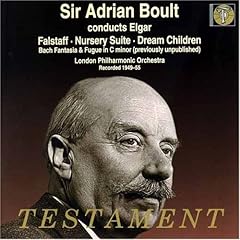
Opening the second half was Elgar's transcription of Bach's fantasia and Fugue in C minor, BWV 537, scored for a large orchestra with full battery of percussion! Make sure you read the link as the genesis of this piece is interesting! This piece is rare even on records. I first heard it on a glorious but out-of-print EMI (Studio series) CD by LPO/Boult (I think
The Sanguine Fan is also on it), at the home of a HK music/hifi fan! I loved the piece so much that when I recently accidentally came across a UK pressing of the LP, I grabbed it even at at a premium.

The performance of the Elgar was excellent. An unforced Elgarian flavor did come through, particularly in the strings, no wonder as Elder is a noted Elgar conductor. He brought out all the strands of this piece tastefully and meticulously. The climax was well built and sonorous, eminently satisfying even if it was not as full blown as in Boult's recording.

The little spiel Elder gave on
Shostakovich's Sixth Symphony was fascinating. While he told us to arrive at our own conclusions about the nature of the piece, he could not resist taking a side swipe at the programme annotator Marc Rochester, saying he disagreed completely with what the program note said about the last 2 movements of the symphony. Those who remember my writing shall remember that many times previously I took exception to what this annotator (who apparently writes for the Gramophone) said. Naturally I was very pleased! :-)

Even the excellent Elgar did not prepare me for the eletricfying reading of Shosty's 6th. The long first movement is rather elusive and not easy to bring off even on record. Elder showed his mettle in dissecting every strand, bringing out a myriad of details, yet (unlike EdW) maintaining suspense and a sense of momentum in music that can sound dis-embodied in lesser hands. Economical and gentle in gesture, without any histrionics Elder brought out everything, be it a whiff of whimsy, a moment of tenderness or blinding strength. His relaxed way must have transmitted to the orchestra, which played with beauty and full sonority; yet his concentration assured relentless progression and building of truly impressive and clean climaxes. This is a valedictory reading to put beside HKPO's performance of the 8th with Jaap Van Zweden.

The audience did their best in clapping. A friend of ours gave the only standing ovation and I yelled a bravo! I just wish more people had attended (no more than 50%). Some friends from the UK loved the performance but also lamented the attendance. The HKPO should spend more effort promoting other musicians rather than spending tons of taxpayer money in advertising incessantly (and vulgarly) about the "mastery" of no one but EdW. Well, that's the power of advertising!

I have left the lesser half of the concert for last. For the first half Steven Hough gave a thoroughly boring and ineffectual performance of the Brahms' First Piano Concerto. While trying to appear effortless and ephemeral in his playing, he came across as effete and effeminate, in this of all pieces! And that's a sin. His technique left much to be desired, gravely deficient in left hand power and metronimic when pressed. At times, the soft passages had some poetry which somehow quickly turned into affectation. No, not a pianist for me. Elder was a good accompanist but even he could do little to enliven the deadly proceedings.

Nonetheless, all's well that ends well, and gratitude to Mark Elder that it all ended very well indeed. You can draw your own lesson. For me, I go to hear an inspiring conductor galvanizing his forces, and don't want to make excuse for anyone. It's fashionable now to mention "letter of the score" and "orchestral building" to defend against interpretive blandness, but I'd think those qualities are not as important, so long as the music speaks to you? 24 microphones for recording an orchestra to me was a distraction and I wondered whether it was necessary.

Here's a limited discography of Elder based on 4 CDs that I heard.

11 December, 2008

IMPORTANT ANNOUNCEMENT: My new Blogs

IMPORTANT ANNOUNCEMENT

Dear friends:

I have created TWO new blogs.

"CD Library" A shall focus on ARTISTS, who shall be alphabetically listed by performers.

"CD Library B" shall focus on COMPOSERS and WORKS, and shall be alphabetically listed by composers.

I hope in this way I can sort out my writings on classical music better.

Hence, I have transferred the few previous CD library articles here to my new Blog (link to right). From now on, this Blog shall focus on Concert and other reviews and more casual talk, as it was originally intended to be.

DJ

29 November, 2008

Concert Review: HKPO/SaintSaens/Strauss

September 28, 2008
HKPO/Colleen Lee/EdW
SaintSaens/Strauss
CCCH

I attended mainly for the Alpine Symphony, my favorite Strauss. It requires a gargantuan orchestra, and for this concert many in the APA orchestra joined the HKPO.

The poorly attended concert opened with the "sextet" from Strauss' opera Capriccio, played by 3 HKPO members and 3 students. After the shaky start, some beauty gradually came through. However, it was not effective as an opener.

Saint Saens' 2nd piano concerto is another favorite of mine, but this performance missed much of the elan that the piece should have. That said, many recordings failed in that respect too. Colleen Lee played well, but her tone lacked the fullness of her recitals, for which she's more suited. The orchestra was tidy.

Colleen Lee needs to hone her bearings. She was fine once she played the piano, but everything else exuded an extreme nervousness. The way she walked, took bows and acknowledged her partners were plainly awkward, and I think these parameters are important for a soloist.

The Alpine symphony was a disappointment. It took a long time to right the ragged playing. Things improved by the time the "summit" was reached. Unfortunately, the following episodes were prosaically rendered. There was no forboding and the storm was not terrifying at all. The closing pages were nicely done though. I joked to my friend that I did not experience the "Alpine", instead the ascent of a much smaller hill. The concert shows that indeed Strauss shows up the deficiencies of the performers (orchestra and conductor) much more than Mahler.


19 November, 2008

Concert Review: Kirov/Mariinksy/Gergiev

November 16th, 2008
Kirov Orchestra/Mariinksy Theater Chorus/Gergiev
Prokofiev/Love for Three Oranges
Avery Fisher hall

This concert performance of the "opera" Love for Three Oranges was part of Gergiev's Fall survey of Prokofiev's theater works with the Kirov Orchestra and Chorus of the Mariinsky Theater. Too bad I had to miss the performance next day, of Ivan The Terrible and Alexander Nevsky, the latter among my favorite Prokofiev! Note that in Spring Gergiev is giving the complete symphony cycle with the LSO and I just might be able to catch that, I hope!

The orchestra is not that big, with 12 players in each violin section. Yet, they gave an awesome performance that dwarfs everything Prokofiev that I have heard before, even including Munich/Celibedache's magisterial performance of the 5th symphony some years ago in HK. Tribute must be paid to the all-encompassing conducting of Gergiev, as detailed in the
New York Times review. However, the virstuosity of the orchestra muct also be acknowledged. Every phrase was telling and meaningful. As more often than not, Russian players give you their all and in this performance the Kirov players definitely rolled up their sleeves and bared their souls. The chorus had more males than females and for sure Russian virility. There were a total of TWELVE singers, all very good. The whole was even more than the sum of its considerable parts. A triumph.

The score's greatness was fully revealed. No, listening to CDs would not do this piece justice (you'd be lucky if you make it through).

The performance makes you really ponder the empty slogans used to promote many also-run conductors and orchestras. And I don't just mean HKPO/EdW, I likely mean NYPO/Maazel too.

There is a whole contigent out there worshipping mediocrity, giving standing ovations to undeserving performances. Sign of the times. Thankfully, we still have the Russians.

18 November, 2008

Concert Review: Repin/Lugansky

September 14th, 2008
Vadim Repin/ Nicolai Lugansky
Debussy/Prokofiev/Beethoven
Avery Fisher Hall

Last time I heard Repin's recital was with Boris Berezovsky. Lugansky has been making a name for himself and I was eager to hear the partnership.
Things started off beautifully with one of the best Debussy sonata I have heard, including recordings. Repin was truly refined and his grace meant style in this piece, in my opinion a difficult nut to crack. I did not hear too much subtlety in his partner's playing, but the whole was winsome.
Prokofiev is one of my favorite composers, and I was a little disappointed by the performance. The second movement lacked the ultimate ferocity, and elsewhere much of Prokofiev's lyricism did not come through. Lugansky's playing, besides its lack of subtlety, was too forceful for me, sometimes drowning out his partner.
The "Kreutzer" was very well played. Again, it was not the most singing performance, but Repin had the full measure. Here, Lugansky started to really bother me by his lack of insight.
A mixed bag for me, but the New York Times review was more enthusiastic.

Concert Review: NYPO/Lang Lang/Eschenbach

November 7th, 2008
New York Philharmonic/Lang Lang/Eschenbach
Beethoven/Bruckner
Avery Fisher Hall

I went primarily for the Bruckner 9th, but was glad to have caught Lang Lang, my first time.

The Beethoven 1st was similar to the DG recording, though with more spontaneity. A few mannerism notwithstanding, I was impressed by Lang Lang's crisp and powerful playing, kept mostly along classical lines. The second version of the cadenza was a little too long for my taste. The New York Times review pretty much said it all.

Even more impressive was the tight accompaniment Eschenbach produced out of a moderately reduced orchestra. The two men obviously had great rapport together. The applause was thundering and there was a standing ovation (rather common these days, surprisingly). Unlike the previous day, Lang Lang did not give an encore.

I had a rather different response to Bruckner's 9th. It was marvellously played and architecturally sound. The first movement took a while to warm up but was grand by the time the coda arrived. The Scherzo was just too manic for my taste. The adagio was well anchored but two of the things I prize most in this music were glaringly missing. There was not much of a sense of struggle, usually conveyed by the dissonance, which were smoothed over by the playing. After the tumultuous music, what followed also lacked contrasting repose, not to say silver lining. Hence the performance truly felt unfinished, and not satisfying.

Sitting next to me was quite a music fan, who went on at length about how he would like to hear whatever fourth movement Bruckner did manage to complete (recorded by Harnoncourt, at least). He too was not too thrilled.

28 October, 2008

Concert Review: Juilliard Orchestra/Conlon

October 27th, 2008
Zwilich/Mahler

Juilliard Orchestra/Conlon
Carnegie Hall

Due to the renovation of Alice Tully Hall, this marked a rare venture of this orchestra out of Linclon Center. With the excellent Mahler 1st conducted by Roberto Abbado in mind, I had high hopes for this concert which were not entirely fulfilled.

The first half was the Symphony #5 of Ellen Taaffe Zwilich, conducted energetically by James Conlon. It was a pretty easy piece to digest, kind of a post-Berstein type of rhythmically strong piece with occasional percussion smorgasbord.

The first part of the Mahler 5th was excellent. Magnificent brass playing fueled the strongly played funeral march, with little sagging moment. The ensuing Scherzo was a little too straight for me, missing a lilting sense of the macabre others find here. The adagietto was perfectly suited to Conlon’s style. However, the straightforward nature of his drive deprived the finale of a little drama.

This was strongly driven Mahler in a more objective vein, balanced heavily towards the brass and bass, but aside from the Adagietto the strings did not penetrate much even when needed. Level of playing was extremely high, as usual, but the performance here and there felt a little like the efforts of EdW/HKPO, making attention wane.

Concert Review: Pollini

October 26th, 2008
Beethoven/Schumann/Chopin
Maurizio Pollini
Carnegie Hall

Last time I heard Pollini had to be more than 20 years ago, and I most remember his clean playing and the Nono piece with tape. I bought my tickets early and had great expectations for this recital. One week ago he played the Schumann piano concerto in NY with the BSO, to great critical acclaim.

Coinciding with Andras Schiff’s ongoing Beethoven cycle, the first half was all-Beethoven. The opening “Tempest” was played in much the same fastidious manner as the “Appasionata”, though the latter was more successful. Pollini’s commanding sense of structure was much the same as always. The strong left hand produced waves after waves of luxurious sound. On top of this solid foundation the right hand chants, though never really fully broke into song, as we are used to (at least) in the Adagio of the “Tempest”. Pollini has never been one to wear his heart on his sleeve, but one was able to detect a fine emotion and a sense of breathing behind the controlled façade. But fully singing, no.

After intermission, he played an excellent Fantasy in C by Schumann, somewhat more burnished and darker in hue than the excellent youthful DG account. Following were pristinely played Chopin, the 4 Op 33 mazurkas and the Scherzo #2. The applause afterwards was tumultuous, earning 4 encores of Chopin in return. Read the NY Times review.

Dance Review: Rosas (Steve Reich Evening)

Oct 22nd, 2008
Steve Reich Evening
Rosas/Anne Teresa De Keersmaeker
Brooklyn
Academy
of Music

The difference between dance and dance-theater has always been difficult to describe. The latter implies less formalistic treatment of the dance and more theatrical elements, and hence lends itself to abuse by lesser, even incompetent, “dance” and theater “personalities” (like much, if not all, of HK’s Zuni Isocahedron). Not everyone can emulate Pina Bausch, who has really excellent dancers who are actors too.

The BAM has always played host to the European dance avant-garde. Rosas is of course established now, but I have been watching them from the start. What’s impressive about Rosas is that they are more pure dance and that they are fastidiously tuned into the music they dance to, which has a heavy classical leaning, and that’s class.

This evening features basically the live music of Steve Reich, played live by the ensemble Ictus. And it was an earful. Pendulum Music and Marimba Phase had no dance. The set pieces were Piano Phase, a pas de deux for two females; Eight Lines, for the women; Four Organs, for men; and Drumming, for the ensemble.

I basically echo the sentiment of the NY Times review, and would not elaborate too much. I rather think the men were weaker and mis-represented. The choreography for women was exemplary, clean and really into the music. Strangely, some bits of it remind me of Paul Taylor, another choreographer who really understands his music.

There is still something formalistic and intellectual about the best of the Europeans, who have not forgotten their roots (the best of them I am talking about). In comparison, much modern abstract/pure dance lacks depth.

20 October, 2008

Concert Review: Mutter/Camerata Salzburg

Concert Review: Mutter/Camerata Salzburg

Oct 13th, 2008
Bach/Tartini
Mutter/Camerata
Salzburg
Carnegie Hall

I am not crazy about Mutter, but I am about Bach. I gave Mutter’s recent HK concert with the Trondheim Soloists a miss, but bought tickets for this event together with other tickets. Core of the program comprises the 3 Bach concerti, just as Mutter had recorded with the Trondheim forces on DG recently.

Mutter appeared in her maroon dress, just like in the CD cover art. The opening A minor was just too studied and drastic for my taste. Very fast in the outer movements and slow in the central one. The dynamics felt artificial and phrases don’t flow into the next quite smoothly enough.

The double violin concerto fared better. Mutter just seemd more human with the stimulus of a second violin, here Vilde Frang, a Mutter scholarship recipient, whose tone was much darker and smaller than hers, though musical.

After intermission, the E major fared better than the A minor, more romantic, though I thoroughly missed the timeless quality a better reading can bring to this (and I think of Paul Taylor’s timeless dance piece).

The ensuing Tartini “Devil’s Trill” I think I prefer in the chamber version. Mutter was quite good in this piece, but the orchestration seems neither here nor there.

Throughout, the orchestra played with great finesse and musicianship. I still remember this group with the great Sandor Vegh (heard in Taiwan). Mutter used minimal vibrato but stretched things romantically here and there, a curious combination.

Encore was Bach’s Air on G string, played by Mutter and one string from each section. Very nice.

Overall, this concert was quite a bit below the level of the unforgettable Pan Asia concert I heard many years ago in Yuen Long Town Hall. The Russian soloists then, Alena Baeva and Dimitri Kogan, got a lot more out of Bach.

08 October, 2008

Concert Review: Philadelphia Orchestra

Tuesday, Oct 7, 2008
Philadelphia Orchestra/Argerich/Dutoit
Ravel/Prokofiev/Shostakovich/Mussorgsky
Carnegie Hall

Needless to say, a full house, but I had a very good seat way up front in Dress Circle.

Dutoit has just assumed Chief Conductorship of the PO, which is in a prolonged search for Director. Thanks to him I could hear Argerich, who seems not to perform concerti without Dutoit (we heard them in Beethoven's 1st with CISMA; what happened to CISMA??). My neighbor told me she played Prokofiev's 3rd last year and Rach 3 sometime ago. Lucky NYers.

The opening Valse Nobles et Sentimentales immediately showed the quality of the playing. What a marvelous orchestra! The burnished tone is quite different from the NYPO. The brass and woodwinds are so fullsome and together they might as well define the word "ensemble". The percussion was awesome too. Strangely, the strings initially were a little coarse when pressed. Dutoit has the full measure of this score, but the performance was much like the one he gave with the NYPO back a year or two, well oiled. But I'd like a little more excitement and premonition of La Valse.

I need not say much about the Prokofiev 1st, nor the Shostakovich 1st. These suited Argerich to a T. While brilliantly percussive when needed, she was all tenderness and stillness in the slow movements. It always seems to me that she re-invents bar-lines and group notes her way, but the waywardness is subsumed to musical meaning. She brought out the best in Dutoit, who was electric. The orchestra displayed kaleidoscopic colors while delivering frenzy with plenty of excitement. If only the trumpet soloist had more sardonic wit and bite.

The Pictures at an Exhibition was impeccably played. These fellows listen to each other! However, I missed the smoky feeling and, unfortunately, grandeur.

The two concerti were separated by the intermission. Both got tumultuous ovations, and it felt like the concert had ended several times! :_P

No NYT review yet. Shall append when there is.

Concert Review: Toronto Symphony Orchestra

Saturday, Oct 4, 2008
Toronto Symphony Orchestra/Ute Lemper/Peter Oundjian
Weill/Shostakovich
Carnegie Hall

Let me state from the outset that this was a fantastic concert. I went in for the excellent programme and got more than I thought I would.

Weill's "The Seven Deadly Sins" had been treated by many people, including my favorite Marianne Faithful (the old one, not the pretty one), and has become Ute Lemper's calling card. This concert demonstrated why. Her lean voice was strongly amplified but it was clear Lemper had the full measure of the words, though I feel Eva Meier, wife of the German Council in HK, was even more magnetic as a chanteuse, judging from an RTHK performance. I had never heard of the male vocal ensemble Hudson Shad, but the quartet performed most admirably (they are Lemper's regular partner in this work). The orchestra accompanied well.

The excellent first half whetted the appetite for the second, but no one was prepared for the titantic performance. Peter Oundjian was the very fine leader of the Tokyo Quartet but he seems an even better conductor. Conducting in big and clear gestures and without histrionics, he did not wear his heart on his sleeve and build things up methodically. With an iron grip on rhythms and a flair for punctuation, various transitions were exceptionally well delineated and dynamically well graded. Many readings of the 11th symphony just fizzled out after the "massacre". Not here. The adagio that ensued was perfectly molded in the strings, which played like one instrument, with fastidious counterpointing. That held the attention, but what was most remarkable was the last movement, which he negotiated without a blink, all the way to a resounding and resolving climax.

The orchestra was terrific. Strings were in unison. The brass growling. The percussion had frightening quickness and ensembleship. Weakest were the sometimes subdued woodwinds. It's the precision of the whole that won the game, and I don't believe I had heard better balance and speed in the percussion and that helped deliver power to the thunderous moments.

For an encore, Nimrod from Elgar's Enigma Variations was played in an understated fashion.

The New York Times reviewed it. From my front balcony (half way up the hall) seat there wasn't a problem with shrillness.

Cesaria Evora with Madeleine Peyroux

Friday, Oct 3, 2008
Cesaria Evora and Madeleine Peyroux
Carnegie Hall

I play Cesaria Evora quite often and have most of her albums. My favorite is "Cafe Atlantico". Truth to tell, one album is enough; great as they are, there is not much variation in mood (just like another favorite, Madredeus).

However, ever since I watched a DVD of hers that can be gotten at dirt cheap price in SEZ, I was not sure I'd want to watch her in concert. The barefoot diva from Cape Verde off the coast of Africa usually just stands nearly immobile, swaying just slightly. Some of you might have heard her before as she had appeared in the Arts Festival.


When I saw she had as guest artist Madeleine Peyroux I jumped, and splurged for a good ticket.

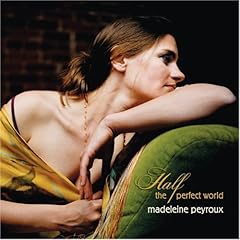
It was a strange concert and they made strange partners. There was absolutely NO interaction between the two. Peyroux was just the OPENING act, which in fact was a full 45 minutes long. Peyroux appeared with her own band (piano, guitar, bass, drums), a really swinging one, and sang a lot of the songs from all her albums. Well, there weren't that many. The program note refers to "Half the Perfect World" as the "new" album!

The crowd really came to see Evora, so it was a tough act for Peyroux. She was in a white shirt and powder-blue suit, a guitar strutted across her chest. She was calm and deadpan. As she played on the guitar, she sang into a standing mike, and her movements meant not all words were intelligible. Nonetheless, after a little warm-up, she delivered a sterling performance with even greater focus and nuance than on her albums. She is the real thing, and the crowd warmed by the half's end.

Cesaria Evora came on with her bigger band to thunderous reception. I need not had feared. The atmosphere was good and the band cracking. Even if she was largely idle, the audience swayed in their seats and some in the aisles. Much more enjoyable than the DVD ideed. Home theater is over-rated for sure. She did her usual acts, including smoking. Of course the concert eneded with "Besame Mucho".

A good if incongruent double-bill.

12 September, 2008

HKPO/EdW/Berg/Mahler

12 September, 2008

HKPO/Dagmar Schellenberger/EdW
Mendelssohn/Berg/Mahler
CCCH

For a change, I was sitting much further towards the middle. The sound of the brass and winds were fuller, but the divided strings were weaker.

The opening Midsummer Night's Dream Overture was well played, but good as the strings were, they missed the lightly ethereal quality necessary. On the whole, tidy but missing a mandatory atmosphere of fancy.

It is rare to encounter Berg's Seven Early Songs in concert. The orchestra accompanied lightly and beautifully, but from my seat the soprano Schellenberger, though a good interpreter, did not project well, her dark hue frequently lost in the midst. I asked my friends, and they all did not hear her too well.

The Mahler 1st was well played and offered many moments of insight, but again on the whole missed the mark. The first movement just did not have the dawn/earth awakening element. The second was earth bound and needed some rhythmic pointing. Things improved by the third movement, where there were some lovely playing. While the opening of the fourth was just too careful to be effective, the contrasting slow sections that ensued had moments of beauty. As the various themes returned in disguises gradually the movement lost its focus before rallying for a well-played finale. And so, sanitized Mahler.


10 September, 2008

明青眼中的明清

展览单张 (按图片放大)

王明青是城中有名的才女及节目主持人, 其亚视节目(周日 8:30 am)更是文化沙漠中的奇芭, 不用多介绍。

王
女仕家族珍藏价值连城的艺术品,这次拿出来的只是明清两朝的东西, 可是质量俱佳, 且甚有趣味性, 值得观赏。

留意一下馆内发售的
展览目录,制作精美外,有别一般地每个展品有一小段文章作介,可供细嚼。

04 September, 2008

Concert Review: Borodin String Quartet

2 September, 2008
City Hall


Borodin String Quartet Haydn/Beethoven/Mozart/Tchaikovsky

What we heard was the newest line-up of the quartet. Their previous appearances in HK and Macau still had one original member, the great Valentin Berlinsky, retired and replaced now by much younger Vladimir Balshin. So the oldest member now is the excellent second-violinist Andrei Abramenkov.

The program was unusual in that it was largely non-Russian. For the first half, Haydn's "Lark" and Beethoven's Op 18/2 were played. From the first notes, it was evident the sound of the quartet is now heading in a different direction. Previously, the inimitable Berlinsky was so strong that the quartet had a prominently rhythmic and bold bass line, countered at the top by the bright and occasionally agressive playing of leader Ruben Aahronian. That was a more dynamic sound, with relatively more recessed inner voices. Now, the new cellist, though a marvelous player, is not as bold sounding, and it seems the other members re-tailored the sound. Now, the four strings are much more blended than before, and the soft playing in unison is astonishing, the best of its kind. Leader Aharonian has tempered his forceful playing a little, and I think even reduced his dynamics, though he remains a little "sharp" for those new to this quartet. Now, a first violin statement is not played that forcefully, but the whole ensemble then raise their volume in a crescendo as if there is only one instrument.

The Haydn and Beethoven were played in an unforcful manner that leaned more towards the romantic. Broad and seamless phrasing were preferred. So while the slower movements were miraculously pure, one may have wished for a more forceful attack at times, in either the Haydn (like me) or Beethoven (like my friends). The Minuet and Scherzo were gentle, but if one listened carefully, one would have noticed a not-so-obvious rhythmic savvy, alien from the kind for display.

The second-half opened with Mozart's E-flat, K428, one of those dedicated to Haydn. The playing was much the same as the first half
, though even better, especially the andante, which was pure and singing. Aharonian was also marginally sweeter in tone. This was followed by a rare item, Tchaikovsky's String Quartet Movement in B-flat, a "quartetsatz".

But the best was saved for last, as encore, an ethereal performance of the Andante Catabile from Tchaikovsky's quartet #1. Not at all milked for its juice or sentimental, in its purity it was profound, and I'd never expect to hear it better played in my life.


23 August, 2008

Books: Chinese Bridges

Book: Chinese Bridges
(photographed by Chester Ong)

I happened to run into this book during a hifi listening session. The magnificent bridge (in Fujian) on the cover immediately caught my eyes.

This is one of a series of "coffee table" books by the same team, but I think this one may be the best one.

This series has an EXCELLENT balance between the large number of photographs and surprisingly meaty text. Both are of excellent quality and, printed in Singapore, it is very good value, particularly on the net. It is available in Page One and otehr venues in HK , I was told.

I learnt a lot about Chinese bridges just by browsing!!! A great family book!

Helsinki Philharmonic: Sallinen/Sibelius/Kamu

23 August, 2008
Helsinki Philharmonic/Okko Kamu
Sallinen/Sibelius
Shenzhen Concert Hall

The typhoon waned just in time, and it was a beautiful day to visit the spacious environs of the Shenzhen Concert Hall.

Invited by the Ministry of Culture but sponsored "privately", Helsinki's China tour can be found on the website. That did not prevent the presence of
some people (not as many as during SSO concerts) hawking tickets as well as asking to buy tickets (probably the same people). It seems you can get tickets that are a bit cheaper than at the box office (probably complimentary tickets), and I see some intervention by guards. As for the SSO at this venue, although it seems nearly sold out as seen from online booking, the hall was no more than 40% full.

I sat to the left and a little closer to the stage than last time. Acoustics was excellent. Opening the program was Sallinen's "At the Palace Gate". Surprising for this grim composer (which Finnish one is not?), it is an atmospheric piece with music of episodes of wildly contrasting moods, somber and rollicking at times. It was beautifully played. The concert was privately sponsored and had only a flimsy program note leaflet that did not elaborate on the piece. Getting on the net, I found this is the overture to his opera "The Palace". Too bad there is no recording of just this.

The Sibelius violin concerto was played by Wang Zhijiong (王之炅), who placed third in the Sibelius competition in 2000. She is a very good player, most importantly a surprisingly musical player, who payed at least as much attention to counterpoint and phrasing than showmanship. Not surprisingly, considering her teacher was the always musical Yu Lina. The only drawbacks were her smallish tone and the slowish tempo. A little more passion would have been welcome too. The orchestra accompanied quite discreetly, but Kamu's reading was full of pointing details. The opening string pianissimo was ravishing (acoustics of this hall helps immensely)
but it was the superb dynamic gradation that was truly captivating。 The rhythmic precision was astounding, subtle and springing, but those looking for a galloping sense would have been disappointed.

A feeling crept into my mind during this perfromance. Yes, it was like hearing Scheherazade. The soloists was smallish, sometimes pleading. The orchestra, though exacting in quietude, was gargantuan when unleashed. The two never did converge fully like in Rimsky's piece, but it was a different interpretation for sure.

The orchestra and Kamu displayed their full splendor in Sibelius' Fifth Symphony. The long first movement kept its focus all the way. Kamu brought out a myriad of details without ever losing sight of the full canvas (like HKPO/EdW are prone to do). The playing was not the most beautiful. but it was certainly the most concentrated. Every note of the all-important woodwinds was played with proper dynamics, giving the opening unusual power. In this hall you can also fully delineate the string sections and appreciate the impeccable pharsing and the rythmic exactitude and counterpoint which Kamu used uncannily in building. The full and accurate brass with its seemingly unlimited reserve surprised me many times and enabled Kamu to build truly impressive crescendo's that were smooth and powerful at the same time.

The second movement was a revelation. Permeating the slowly unfolding permutations was a shimmer that subtly conveyed joy and celebration, a perfect foil to the sustained building of the first movement.

Under Kamu's iron grip, the third movement brought out the full import of this piece, building to a finale of incomparable grandeur. For once, the forces did not seem too small for the emotion expressed.

The performance was one of total committment and dissecting intellect which Sibelius deserved. It was not played as a red-hot romantic piece, but something much more complex. The sound world of Mahler kept propping into my mind during the perfromance. Not surprising, given Kamu's immaculate performance of Mahler's 4th with the AYO previously.

Encore was an excellent performance of Finlandia, for once a grand piece rather than a bombastic one。

07 August, 2008

Asian Youth Orchestra/Oliveira/Judd


7 August, 2008
AYO/Oliveira/Judd
Chen/Tchaikovsky/Shostakovich
CCCH

Better weather, and the concert was packed. However, this brought with it a rather noisy audience; program books were dropped with alarming frequency and sound of
嗦鼻涕 was even more annoying.

A friend had an extra ticket and I sat with him downstairs, fourth row, rear stall center, under the balcony unfortunately. I gave up my usual seat upstairs to another friend who's a violin buff.

Program opened with Chen Yi's Momentum, which used just a little Chinese instrumental techniques and quotations. However, its craft is not immune from the usual dark colorings and fitful starts and stops that so characterize modern music. It was apparent even from the first note the orchestra was much more focused under James Judd.

Elmar Oliveira was a big surprise. He was in top form, technically better than his last showing with HKPO. His magnificent performance of the Tchaikovsky displayed his seasoned maturity and it was eminently clear that, unlike many younger firebrands and even old dogs, he had worked out every hurdle in this piece. The bars disappeared and the music had a seamless flow. He knew just when to edge on and when to be economical, and tight spots were few. His tone on the Guarneri was beautiful and he rode the orchestra comfortably. It was very much a soloist's performance as the orchestra had the same problem with partnering as the night before: they simply curiously disappeared in any passages softer than a forte. The audience roared and yells of bravo's ensued.

This was the best Tchaikovsky violin concerto I have heard live, despite the phantom orchestra.

James Judd showed his mettle in a sterling performance of Shostakovich's 5th. Much like last year's Okko Kamu, he transformed the orchestra into a much more focused, and hence more powerful ensemble. The slow opening already showed his grip, in not letting things sag by holding concentration rather than desperately driving. He built things patiently and graded his dynamics carefully. The second movement was sharply punctuated but the pride of the performance was the gem-like third movement, where the transcendental soft playing of the strings for once carried emotion. Just a slight lift of Judd's cupped left hand produced a swell in the strings, tender enough to be touching yet strong enough to be dramatic. It felt like a gentle tap on a floating balloon that sends it ascending slowly like dissipating smoke. What a marvel, something that cannot be reproduced by canned music, no matter how expensive the gears. Try playing this movement from your CD and see if you can hold on to the emotion. The rapture was unfortunately seriously marred towards the end by the intrusion of some kind of electronic device. The last movement started without pause and at a break-neck pace, which was soon moderated into an advance towards victory and for once sounds like a work of determination, not cacophony, so masterly and cleanly executed the pick-up in spirit and sound level in the march towards the finale. The thunderous applause was well deserved.

This fascinating conductor has interesting podium manner that is diametrically opposed from the tall Ponztious. Whereas the tall and lanky Pontzious frequently cowered, perhaps due to his short stature, Judd, who conducts without a baton and often with large gestures, just soars like a bird.

Despite the serious double jeopardy of underpowered double bass and brass, this was the best Shostakovich 5th I have heard. I had come to fear listening to this warhorse, played so often in a somewhat boorish manner by HKPO/Atherton. This piece now also seems a student orchestra favorite. We have heard it with CISMA/Dutoit and Verbier/Dutoit before. This subtle and thoughtful performance eclipsed them all.

The Concert will be aired on RTHK4 on 15 August at 8:00 pm.


06 August, 2008

Asian Youth Orchestra/Weilerstein/Pontzious

6 August, 2008
Asian Youth Orchestra/Weilerstein/Pontzious
Barber/Elgar/Prokofiev
CCCH

It was nice to hear again the AYO, an an old friend. The typhoon waned just in time for me to get to the CCCH. Four friends joined me for the concert. Two of them got the LAST 2 tickets, but when we went in, we found a half empty hall.

It was really nice to have heard Barber's Second Essay, richly colored and atmospheric, sometimes a little like a film score.

This is my second encounter with Alisa Weilerstein in the same concerto! Of her NYPO performance 2 years ago (in NYC) I wrote before:

"...The audience was out in full force, no doubt to catch a glimpse of the young cellist Alicia Weilerstein in the Elgar cello concerto. She came out in a pink dress and played magnificently. Wasn't DuPre frequently dressed in pink? Her tone was hugh and beautiful, though sometimes just a bit off-center. She was tempestuous and took chances, and that was good. Perhaps a bit more pathos would not be wanting but too much to ask. The Elgar seems to be in vogue and this cellist's playing was superior to the others heard recently. Zubin Mehta accompanied most tightly but one wished for some tenderness. An English Elgar this was not..."


In comparison, last night's performance was somewhat of a let down. Tempo was debilitatingly slow. This brought out many moments of pathos and reflection, and the murmuring of the cello amid the beautiful pianissimo playing of the violins was quite a marvel.
Weilerstein's playing was more nuanced and quite different from before. She is playing this on tour with the AYO and surely trying out different things. She remains a spontaneous player and that's all to the good. A widened dynamic range, sometimes going from a strong attack immediately to a whisper, proved a difficult blend with the orchestra, which was suppressed too much by Pontzious, and the overall flow was quite distorted. Nonetheless, just as before, I admire her romantic abandon and spontaneity. And her lightning fast attacks, strong phrasing and accenting constitute the kind of playing I like to hear in the cello, which can just sound too flaccid too often. For an encore she played a movement of solo Bach, in her fearlessly unrepentingly romantic way. While it made me uneasy, this is one player to watch.

Prokofiev's Romeo and Juliet excerpts showcased the orchestra's proficiency as well as its deficiencies. Overall the playing lacked the cogency of the Barber. There is no question the players have heart in spades, and this yielded many nicely characterized moments. The strings were marvelous in pianissimi, but just slightly less penetrating in fortissimi than their professional counterparts. The winds were surprisingly well blended and a joy to hear. The sometimes perilous playing of the horns had good tone. The brass, especially the low brass, was generally weak and louder passages were frequently not well supported, robbing crescendoes of heft, despite the valiant attempts of the generally good percussion section (weaker cymbal player). Part of this may be due to the conductor, who is a straight shooter. This time he got more color and tidiness out of the orchestra than his effort last year, but some roughness and seams were still showing. Last year the guest conductor Okko Kamu totally transformed the orchestra and I hope this year's James Judd can do the same. I still fondly remember the complete ballet given by the HKPO under guest conductor Richard Bernas in Shatin 。

As usual, the best was saved for last. The encore, the "Galop" from Kabalevsky's "The Comedians" was virtuosic and rousing.

The concert shall be simulcasted
on ATV World Channel and RTHK4 on 24 August at 1:55 pm.