18 May, 2014

Haitink Mahler 3

pic from NYT.
 
Concert Review: New York Philharmonic - Haitink


May 16, Avery Fisher Hall
New York Philharmonic - Bernard Haitink - Bernada Fink
Women of the New York Choral Artists - Brooklyn Youth Chorus
Mahler Symphony No. 3

This was part of the international celebration of Bernard Haitink's 85th birthday and his 60th year as conductor. This led me to contemplate how time flies! When I first heard Haitnk and the Concertgebouw in the Berlioz Symphonie Fantastique in Carnegie Hall around 30 years ago I knew nothing about him, but the incredibly natural flow of the performance gripped me and made me an instant fan of his. Since then I had avidly followed him on records, though I think, like quite a few other conductors, he is definitely better heard live. Then some years later there was a performance for the ages of Mahler's Ninth with the BPO, again in Carnegie Hall, which ranked with Karajan's performance of the same work in the same hall as two of my most cherished Mahler experiences.

All I can say is that the performance of Mahler's Third was a ear-opener, a true revelation. The first movement was a little slow, but it picked up in momentum. It is too bad the brass sound has always been a little white from my seat in the second tier (I prefer one flight up). The next two movements were startling in the alternation of light and darkness, and the NYPO, to my surprise, played with chamber-like refinement and intimacy that was breath-taking. The orchestral playing was so absorbing that I was not as receptive to mezzo Bernada Fink as some others. She sang well, but I found both the top and bottom of her range not as well delineated as I'd like. And I also think both choruses were competent but not exceptional. The orchestral contribution never let up and the last movement, surely one of Mahler's finest, was eloquent.

As usual, Haitink conducted with minimal fuss, and focused on the score in front of him, but the fluid line and tonal colors he got were simply awesome. No podium antics, no turn-on-a-dime effects, but the music speaks for itself (the last something used by lesser conductors as an excuse, but it is a completely different matter here). In fact, I have never heard so many details in any recording, and it re-opened my eyes. 

p.s. The week before, Haitink had led the NYPO in Beethoven's Eroica and the Berg Violin Concerto with Leonida Kavakos. The concert got mixed reviews.But the Mahler Third fared better with the NY Times review.

15 May, 2014

Concert Review: Philadelphia Orchestra - Sequin - Batiashvili

Concert Review: Philadelphia Orchestra - Sequin - Batiashvili

May 2, 2014, Carnegie Hall
Philadelphia Orchestra - Yannick Nezet-Sequin - Lisa Batiashvili
Barber-Bartok-Bruckner

The Philadelphia Orchestra is one of my favorites, an orchestra that consistently delivers in Carnegie Hall. Yannick Nezet-Sequin is their hot new director, someone I have heard previously only on records, so I looked forward to this concert! My feelings differ in a few ways from that of the NY Times review.

The Barber Adagio was played in a straightforward manner, which I like, yet I felt the gradation of dynamics was not the most subtle and the music lacked the last degree of flow.

Lisa Batiashvili often performs in NYC, and her popularity is well deserved. Here is someone who plays with the same strength and intelligence in concert as on records. The Bartok Violin Concerto had flair, and the orchestral contribution was wonderful too. Most importantly, her Guarnieri is golden in sound, richer than on records (which I follow closely)! The top has that smoothness allied to power, never prone to the sort of etchiness as a Strad could in the wrong hands.

I most looked forward to the Bruckner 9, and here my feelings were mixed. Nezet-Sequin's grasp was impressive for one so young, although he is occasionally prone to overdrive. But what sound he got out of the helden trombone player! It must rank among one of the most thrilling in my concert experience! The first movement moved well and erected a grand edifice. The scherzo was brilliant. Alas, the all-important third movement to me smoothed out the dissonance and failed to covey the dissolution that I deem essential to the music. Still, a very good performance. 

07 April, 2014

Concert Review: HKPO-Ashkenazy-Gabetta

 Sol Gabetta press photo 2013 / CD "Il progetto Vivaldi 3" - Photo 1Concert Review: HKPO-Ashkenazy-Gabetta

April 4, 2012, CCCH
HKPO-Ashkenazy-Sol Gabetta
Elgar-Mussorsky

I have long followed Ashkenazy and Sol Gabetta on record (many available from the library).  So I was eagerly awaiting the concert.

Vladimir Ashkenazy conducted in a matter-of-fact style that was almost mechanical, but the result he got was outstanding. The orchestra was under total control in the splendid account of Elgar's In the South, long one of my favorites. Control, yes, but what passion we got too!

Elgar's Cello Concerto received a marvellously individual account from Sol Gabetta. Her playing had an almost improvisatory feeling, which suited her just fine as the particular cello she played on is ravishing in tone and she was a superb colorist too. In comparison, the orchestral contribution was poassoibly a little too controlled. Two superb encores drove the audience crazy.

I did not stay for the second half. I was told Ashkenazy's version of Mussorgsky's Pictures at an Exhibition has its own strong points heard live. I know the record, which did not do too much to me.

23 March, 2014

Concert Review: Shenzhen Symphony Orchestra - Rosel - Ehwald

Concert Review: Shenzhen Symphony Orchestra - Rosel - Ehwald

March 21, 2014, Shenzhen Concert Hall
Shenzhen Symphony Orchestra - Peter Rosel - Christian Ehwald
All Brahms

Peter Rosel must be one of the most under-rated pianist. I have long admired his extensive recordings on Berlin Classics (see his discography); most to me are top tier, including his Rachmaninov and Prokofiev (not surprising given his Russian training with teachers like Bashkirov and Oborin). So I was really excited about the concert.

Needless to say, Rosel had the full measure of Brahms Piano Concerto No. 1, sounding unhurried and bringing out many inner details. As usual, Ehwald and the Shenzhen Symphony delivered idiomatic Brahms. Overall, however, I would have preferred a bit more drive, a more youthful perspective. The end result was just a bit on the plain side, disappointing considering what I have heard on records.

Brahms Symphony No. 2 opened with a leisurely tempo. Ehwald took his time with the next 2 movements too. Compared to his previous performance in 2010 the orchestra obviously played with more beauty (particularly in the winds) and Ehwald was able to cultivate beautiful tutti and chords (so essential in Brahms). However tension sagged a little until the last movement, which was taken at a surprisingly fast tempo, a little coarse for my taste.


11 March, 2014

Concert Review: Shenzhen Symphony - Ehwald - Li

Johnson ZHongxin LiConcert Review: Shenzhen Symphony - Ehwald - Li

March 7, 2014, Shenzhen Concert Hall
Shenzhen Symphony Orchestra - Christian Ehwald - Johnson Zhongxin Li 李仲欣
Wagner-Beethoven-Bruckner

As they say, good things come in pairs, or so I thought. It is not so often one gets to hear Bruckner in Hong Kong. But the day after the magnificent performance of Bruckner 9 in HK (see last post) there was a Bruckner 4 next door in Shenzhen! I was tired but still decided to go.

Concert opened with a straightforward Wagner Meistersinger Overture I could have done without. Nothing prepared me for the wonderful performance of Beethoven's Piano Concerto 1 by Hong Kong's own child prodigy Johnson Li Zhongxin 李仲欣. Judging from what I read on the internet, he must be 11 now, not 9 as the program bio (largely copied from other material) claimed. Although dynamics and shading were not quite comparable with good adult pianists, Li nevertheless played with verve and in a sonorous manner. The interpretation was straightforward and articulate, well supported by the orchestra.

I was quite surprised by the slow tempo Ehwald adopted for Bruckner's Symphony 4, clocking in at more than 70 minutes, and that is almost Celibidache territory. Although Ehwald had the full measure of this symphony and easily managed the tricky passages, the Shenzhen Symphony, good as they are and valiant in their effort, was only periodically successful. One could not help but feel (and endure) the glacial tempo. Not everyone is Celibidache!

09 March, 2014

Concert Review: Budapest Festival Orchestra - Ivan Fischer

Concert Review: Budapest Festival Orchestra - Ivan Fischer

March 6, 2014, CCCH
Budapest Festival Orchestra - Ivan Fischer
Mozart - Bruckner

Ever since I encountered the Budapest Festival Orchestra and Ivan Fischer on their early Hungaroton recordings, I have followed them, particularly through their Philips and Channel Classics recordings; the latter are especially splendid. I was also fortunate enough to have heard them in 2004 (Beethoven and Brahms). I was really excited when I knew they would do Bruckner this time. I googled but found little on them in Bruckner. My considerable expectations were amply fulfilled.

I cannot imagine Mozart's Symphony 40 done any better. Fischer is not a man who wears his heart on his sleeve, and conducted with economy and clarity. The interpretation did not milk the dark undercurrents, but its classicism revealed layers after layers of music, AND emotion, including a tinge of sadness where appropriate. The orchestra was so perfectly balanced that we could hear everything even behind the orchestra. The strings (divided violins) in particular were outstanding, rendering lucid counterpoints. The winds and brass (valveless horns) were likewise perfectly balanced.

Fischer had the full measure of Bruckner's Symphony 9. While the transparent reading did not emphasize angst (like the dissonance in the Adagio), there was a sense of inevitability that led one to contemplate whether Bruckner achieved peace.The seating arrangement was most unusual (but effective) in that the 5 horns were placed upfront in a semi-circle surrounding Fischer, with the 4 Wagner tubas behind them.

Encore was a blissfully serene and incredibly refined Bach Air on G String.

Gramophone had the BFO as the world's 9th best, but IMHO they are among the very top. The strings in particular are second to none, the VPO included.

20 February, 2014

Brief Concert Reviews: HKPO - 2 Concerts - Jaap and Wildner

A belated report on 2 concerts I attended.

December 19, 2013
Jaap-Jussen Brothers-Chen Reiss
Mozart-Mahler

I attended the second night. The first night of the 2 concerts was cancelled at the last minute; supposedly, the sudden death of an administrator the same afternoon caused the musicians much distress. The decision was regrettable - it is a show biz rule that the show must go on. In any case, on the second night, the HKPO played very well but the concert proved to be most uninspiring.

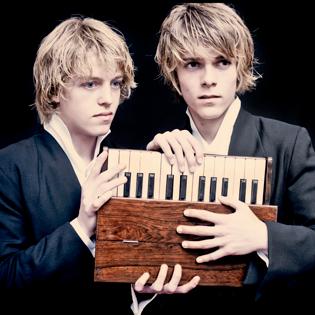
Mozart's K365 two-piano concerto is a rarity in concert, but the rendition was disappointing. I did not find the playing of the Jussen Brothers particularly inspiring. The accompaniment was dutiful but the whole was only competent.

Although Mahler's 4th Symphony had its moments and was well executed, Jaap's manipulations resulted in an episodic performance that never gelled. Chen Reiss sang well, but was unable to raise the emotional temperature by then. The performance did not even come close to the last year's sublime Shenzhen Symphony effort under Ehwald.

So far, Jaap still has to prove he is a great Mahlerian.

January 24, 2014
Johannes Wildner - Zhang Haochen
All Schumann

This turned out to be one of the best concerts I have attended.

I was eager for Wildner's return; his previous concert with the HKPO (with Ohlsson in Brahms) was impressive. If anything, he is even better this time.

Seldom have I heard Schumann symphonies played so idiomatically. The great Rhenish was by turn impetuous, mysterious and luminous. No period practice, no lumpy textures, just great music in a fluid performance of elegance and transparency. The lesser Symphony No. 4 also received an equally beguiling performance.

In comparison, Zhang Haochen did not fulfill my high expectations. The Piano Concerto was solidly played but, despite the excellent orchestral contribution, somehow did not quite take flight. Zhang's playing was a little four-square and did not show much of the tonal splendor he is certainly capable of.

13 December, 2013

Concert Review: HKPO - Jaap - Ning Feng

Dec 13, 2013, CCCH
HKPO - Jaap Van Zweden - Ning Feng
Beethoven - Shostakovich

Apparently,the same program was just played in Taipei and the HKPO was in excellent form.

In the Beethoven Violin Concerto it goes without saying Ning Feng's playing was effortless, perhaps a little too much so that serenity and beauty obscured inner depth. With Jaap's typical strong accents, the accompaniment was dramatic but similarly did not probe deep.

Shostakovich's Fifth Symphony, played so often (and usually well) by the HKPO, received a highly detailed and dramatic reading. Also typical of Jaap, the sound was finely balanced and one reveled in the felicity of details. Everything, from the snappiness of brass snarls to finely graded string swells, was finely honed. Here too, the studied aspect of the performance and emphasis on precision somewhat limited emotional expression. Although the performance did not scale the heights of Jaap's previous "Leningrad", it was wonderful on its own terms.

26 November, 2013

Concert Review: Fou Ts'ong Recital

November 26, 2013, CH
Fou Ts'ong
Haydn Mozart Beethoven Schubert

I came late to Fou Ts'ong, but after hearing his incomparably artless playing of Mozart's Piano Concerto No. 23 (a beautiful recording is available on Meridian) with the Macau Orchestra in 2010 I was an instant convert.

I was not aware of this concert until I picked up a flyer in CH. The presenter,
香港上海戲曲藝術協會 Shanghai Opera Association (Hong Kong) is unrelated to western classical music and does not have a website (but it is on Facebook). Even with no promotion, the hall was packed. For a 79 year-old, Fou Ts'ong looked very well, just a little slumped in his gait. I sat third row in the balcony.

Haydn's Sonata in F Hob XVI/29 opened the concert. Fou's distinctive touch and creative phrasing resulted in a vocal performance which at times sounded more like Scarlatti than Mozart. The same spirit imbued Mozart's Sonata in B flat major K570, but here I thought a bit of traction was lost.

Then came the magnificent set of Beethoven's Bagatelles, Op 126. In these miniatures, Fou conjured up widely different vistas, the moods by turns stormy, tender or saturnine, as only a master can (lesser pianists sound boring and colorless in these pieces).

The second half was the substantial Schubert Sonata in G D894. Unlike pianists who make a big meal out of this piece, Fou's flowing and operatic performance did not seek to uncover hidden emotions or plumb great depths. I did miss the sense of mystery, the twist and turn that great Schubert players can deliver, but the performance was solid and wise nonetheless. Three perfectly crafted encores rounded out the evening.

Fou's technique is remarkably well preserved. His inimitable phrasing and touch is intact. His left hand is perfectly lucid and the Yamaha piano sounded great from my seat.

20 November, 2013

Concert Review: Shenzhen Symphony All Dvorak

Concert Review: Shenzhen Symphony All Dvorak

November 15, 2013, Shenzhen Concert Hall
Shenzhen Symphony - Uros Lajovic - Arto Noras
All Dvorak

I just love the SZSO; they constantly surprise me with their performances under little known Eastern European conductors who are under-rated and much more worth hearing than many so-called big names (like those bores venerated in HK). This concert is one of the best examples.

Program opened with a rambunctious Slavonic Dance Op 46/8. Coarse, but the spirit was right.

Arto Noras is familiar to me from his CDs on various labels, often in rare works. However, nothing prepared me for the incredibly refined, coherent and singing performance of the Cello Concerto he delivered. His tone is not big, but his fluid phrasing ensured attention; and the top registers, though smallish in sound, were distinctive in timbre and of considerable beauty. Uros Lajovic was a most sympathetic accompanist.

The second half's performance of the New World Symphony was even of a higher order. Indeed near-perfection. To cite a few examples of the delights on offer: various rhythmic figures in the strings were finely articulated and pointed in execution, not a trace of artificiality; the performance just flowed, incandescent and tender at turns; dynamics were carefully graded - the meticulously calibrated crescendos were breathtaking and the climaxes truly thrilling. If one uses one word to describe the performance, it must be grandeur.

Bravo!!!!!


01 November, 2013

Review: Kyung-Wha Chung

Review: Kyung-Wha Chung

Kyung-Wha Chung - Kevin Kenner
October 31, 2013, CCCH
Beethoven-Grieg-Mozart-Franck

KyungWha Chung was out of the circuit for many years due to a finger injury, but according to the program she has fully recovered and has embarked on tours with Kevin Kenner, no slouch nor mere accompanist. Two friends heard this program in Macau earlier and raved about it, so we had high expectations.

I have mostly admired her recordings (my favorite is Bruch with Kempe), but have heard her only once before, in the early 80's in Chicago, with Previn in Prokofiev. Unfortunately, my student cheap seat had terrible acoustics, so it did not leave me with much of an impression.


This concert was sold out, but thanks to a bizarre twist of event I got a seat in the VIP section, where the sonics are excellent.

Chung appeared quite nervous, throwing glances at the audience and jittery to the slightest noise. The two halves both opened with a classical work, followed by a romantic one, and in both the latter fared better.

Beethoven's Spring Sonata immediately set the tone for the evening. The highly dramatic reading, with its wide dynamics, was too deliberately honed to convey the usual "youthful" feeling, but it easily held my attention. Chung's sound was very beautiful and fiercely expressive, sometimes at the expense of intonation.

This was followed by Grieg's Sonata No. 3 in a masterly performance. The duo's intensely dramatic approach brought out every nuance in the strange first movement, in a stunning performance the kaleidoscopic content of which seemed just to pour forth and overfill the hall. I found details I have never noticed before, ranging from wistfulness to foreboding, even terror. So even if elsewhere the playing was not quite lyrical I don't think I'd ever hear better.

Mozart's K379 was too deliberate and static for my taste, and I found the piano part rather square.

Franck's Sonata was quite different from her famous recording, less lyrical, more shaded and highly dramatic. The approach was equally satisfying.

One thing is for certain: Chung has things to say, and is thirsty after the dry spell of her injury. She is a tiger who has just broken out of the cage. The duo have clearly worked hard on their material and drastically rethought everything. I have the highest respect for that. Those used to classic recordings of the works here could have been troubled, but I think a little shock is good occasionally.

At the end, the duo worked the audience like the pro's they are and delivered 4 wonderful encores of Schubert, Kreisler and Elgar.

Despite technical blemishes, Chung's playing was ravishing and had a vocal quality to it - sometimes perhaps more expressive Callas than smooth Tebaldi. I hope they come back soon!

Concert Review: Dresdner Philharmonic - Michael Sanderling - Julia Fischer


Concert Review: Dresdner Philharmonic - Michael Sanderling - Julia Fischer

October 23, 2013, CCCH
Wagner - Dvorak - Brahms

Double Happiness! I was happy to hear Michael Sanderling again (I heard him give an excellent concert with the Taipei Symphony Orchestra in 2009). And I eagerly anticipated Julia Fischer, whose excellent body of recordings on Pentatone are widely available in the HKPL. And the Dresdner, though not as famous as the Staatskapelle, has had a long tradition under many illustrious conductors (many not well known in the West).

The Tristan und Isolde Prelude opened very beautifully. It was immediately apparent that this is an orchestra whose members listen to each other. The sections were balanced and there was a sheen to the strings. The music however, lacked somewhat in cumulative impact and the Liebestod in particular could have used more warmth.

Julia Fischer played beautifully in Dvorak's Violin Concerto, one of her favorites. From the highest notes to the low registers, her technique is impressively even and her tone ravishing. The accompaniment was symphonic; the winds were especially impressive. The playing of the flute in particular was heavenly. The reading as a whole excelled in precision and drive but lacked a little in "bohemian" feeling. Nonetheless, a fine effort for this concerto, which is always difficult to bring off.

I could hardly have asked for more in the rousing Brahms Symphony No. 4. Again, the woodwinds showed great strength and character. The strings caught perfectly the ebb and flow of the piece. The brass was not especially distinctive but blended in well. The difficult ending felt just right. As true for many young (German) virtuosi, Fischer participated by playing in the first string desk.

09 September, 2013

Brief Concert Reviews

Brief (late) Concert Reviews

During the period my desktop was down, I did attend a few concerts but, for the first time since the inception of this Blog, failed to write about them in timely fashion. "Reviews" so much later are admittedly only for personal archival purposes, but here they are, with the most recent first:

August 23, Cultural Center Concert Hall
Asian Youth Orchestra - James Judd - Steve Isserlis
Weber: Overture to Der Freischütz
Dvorak: Cello Concert in b minor
Sibelius: Symphony No. 2


No question about it: this iteration of the AYO was a lot better than last year's crop. The concertmaster was sensational and led strongly despite divided violins. The woodwinds were strong and blended well. The horns and brass played confidently and were much better than last year's struggling souls (which included conductor Judd in Mahler). Concert opened with a detailed and joyful Der Freischutz overture.

Steve Isserlis played fastidiously in the Dvorak Cello Concerto (he played this earlier this year with the HKPO, but I was not there), but his projection was on the small side of the scale. The symphonic orchestral part was delivered cogently by Judd. A tight partnership.

The woodwinds shone in the Sibelius Second (and they must for the symphony to sing), which received a well-shaped performance under Judd. Despite a degree of inevitable restraint, the performance must be counted a success.

Interestingly, the same AYO concert in Singapore was reviewed in this Blog.It seems to me the concert I attended was much better played, and I did enjoy it!


photo from NY Times
 
April 19, Carnegie Hall
Staatskapelle Dresden - Christian Thielemann
Bruckner Symphony No. 8

My only concert in NYC. I'd refer you to the dependable NY Times review. I was glad I finally caught up with this great orchestra. I had pretty much made acquaintance of all the great European orchestras (usually in Carnegie Hall) before the iron curtain came down, but had to wait till this year for the Staatskapelle. I have to say the wait was worthwhile.

Based on his recordings for DG, Thielemann has long divided critical opinion. I have followed him for a long time and think he is going from strength to strength. Many of his live video performances are wonderful. In the Bruckner Eighth, he showed strength and patience, and sense of overall structure. I hope to catch up with him soon.

March 8, Shenzhen Concert Hall
Shenzhen Symphony Orchestra - Christian Ehwald - Martina Ruping
Schubert Symphony No. 5 / Mahler Symphony No. 4

This very very fine concert began with a fluent reading of Schubert's Smphony No. 5, not seldom heard but rarely enticing. This was expected of Ehwald, whose greatest strength is his fine sense of line and scale.

Fluency is a word that could be equally applied to the Mahler. But it was considerably more. Aided by the fine acoustics, this was simply the most refined and detailed Mahler Fourth I have heard. The playing, especially the wonderful woodwinds and percussion, could not be faulted.

For once, the soloist was PERFECT! Soprano Martina Ruping had complete command of her material, child-like and beautifully nuanced. What an ending!


Time to Catch Up!


Time to Catch Up!

Dear friends, it has been a long while. Nine plus months of not posting is atypical of me, and some of you got to be wondering.

While it is true that I have been preoccupied by more urgent matters, there was another reason for the absence: my aged computer, with its lamented Windows XP, died on me in March, before leaving for the USA. Could not even turn it on. Until help arrive, I don't know whether it was just a power supply issue, or worse...I do hope the hard disc has survived as I have valuable photos and other material (like my entire iTunes library, and older writing) trapped inside.

Back from the US, I finally replaced it with a cheap i3-1TB Dell Inspiron. I opted for the Windows 7, but am still not quite used to it. It is a pain to set up everything again, but a real desktop is still infinitely preferable to the small notebooks and smartphones I had been using to check mail and get by (when I am in Shenzhen, I use only a Lenovo smartphone). I wonder how many people manage to write something meaningful using a touch pad. I can't - it is hard enough to make a call using a smartphone! The phone may be "smart", but I suspect a person addicted to using it usually is not!

I shall post capsular reviews of the concerts I had attended during this period of dis-connection, and update the Concert Calender in due time.

Mid-Autumn is celebrated by the Chinese with an important Festival (second only to the New Year). Hence the old rabbit, still much lovelier than all the vulgarity that pass for art during this period.

Greetings to you all. 中秋節快樂!

01 January, 2013

Happy New Year 2013

Happy New Year 2013

Greetings, my friends. The year 2012, as in quite a few others, had not been smooth sailing for many. Trials and tribulations came in all forms, and it is during these times of difficulties that we examine what are our core values, how much we can give to those in need and, most importantly, what are most valuable to us. Paradoxically, the greatest joy sometimes can follow immense stress, but that is Providence.

Family and loved ones aside, to me and those reading this, I am sure classical music is the most effective tonic for the tribulations of life. For me, I cannot now afford the time to go to many concerts, yet through my electronics I seize every opportunity to connect with the composers that I love so dearly. A Bruckner symphony can transport me, soothe me and make me wonder anew at Creativity.

I think I shall not have many concert reviews, but I am sure I shall not miss the most important ones (usually NOT big names). And I have spent a bit of time updating the Concert Calender, and sincerely hope you shall find it useful.

Hail to music and Best Wishes!

23 September, 2012

Concert Review: Hong Kong Sinfonietta - Maxim Rysanov

picture-6Concert Review: Hong Kong Sinfonietta - Maxim Rysanov

September 22, CH
HK Sinfonietta - Maxim Rysanov - Yip Wing-sie
Prokofiev - Bartok - Chan - Stravinsky

Let me not mince words: Maxim Rysanov is one of the greatest string players I have heard. From the way he phrases the opening of the Bartok Viola Concerto (completion Tibor Serly) to the Romanian (gypsy) flourish of the Finale Rysanov was a model of an utterly natural musical sense wedded to formidable technical assurance. Under his hands, the Guadagnini viola not only has great tonal allure, but is also superbly transparent, with not a hint of the lugubrious quality one finds in lesser violas, more like a violin with richer tone. The orchestra played with discipline and assurance, and the whole was eminently satisfying.

The ambitious program opened with Prokofiev's Symphony No. 1, Classical. The opening was rather guarded, but the performance lightened up as it went along. I have said previously, the current iteration of the HK Sinfonietta is much stronger than before, and it was a commendable account, even if the last degree of flourish was missing from time to time.

The second half was not quite on the same level. Chan Hing-yan's 陳慶恩 'Twas the Thawing Wind 一霎好風 for sheng 笙 and orchestra started promisingly. The sheng has a limited range of color and dynamics, but it was effectively played by Loo Sze-wang 盧思泓. The program note by the composer mentioned, among others, Dowland, but the sonic landscape reminded me rather of the works of Part, Vask and Kancheli. Ultimately, the piece is too long for its materials, and the endless repetitions, rather than adding to, ended up detracting from its supposed poetry. The composer mentioned his fixation to the wind, but for a modern (after Debussy) masterpiece of that descriptive inclination one needs to look to Kancheli's Mourned by the Wind, also for viola and orchestra, which I had the fortune of hearing in Carnegie Hall played by the St Petersburg under Yuri Temirkanov, an unforgettable experience.

The concert closed with a cautious account of Stravinsky's Pulcinella Suite. Like the Prokofiev, this is a score that is very difficult to bring to life, and the Sinfonietta was only periodically successful.

Aside from the Bartok, the HK Sinfonietta is taking the program on the road of their North American tour.