Showing posts with label HKPO. Show all posts

26 May, 2018

Concert Review: Vladimir Ashkenazy and Esther Yoo

Image result for yoo glazunovConcert Review: Vladimir Ashkenazy and Esther Yoo

May 25, 2018, CCCH
HKPO - Ashkenazy - Yoo
Glazunov - Beethoven

I have always enjoyed every concert of Vladimir Ashkenazy with the HKPO. And so I awaited this concert eagerly, more so since I have recently also discovered Esther Yoo. I was captivated by her Sibelius/Glazunov disc (DG) from the library.

Ashkenazy conducted in his typical no-nonsense, even somewhat mechanical fashion, yet the results he obtained from the HKPO were astonishing. Glazunov's Chopiniana, a pleasant piece, was lyrical and relaxed, tinged with a Russian feeling that the bland HKPO rarely could produce.

The team's rendition of Glazunov's Violin Concerto was much like the recording, though even better in its depth of feeling. Miraculously, Yoo's violin, "Prince Obolensky" Strad, sounded just as in her recordings, rich and totally without strain. More than most of her peers, she is a natural, projecting and playing with the utmost ease and without pretense. There was not a hint of "trying to be different". With such gorgeous playing, there is no need to. Her encore, a solo Bach (sarabande), was similarly divine.

TCHAIKOVSKY Violin Concerto / YooBut in some ways, the second half, Beethoven's Pastoral Symphony, was even more amazing. HKPO has never really done great Beethoven, but this effort ranks with their very best. Ashkenazy coaxed a marvelously detailed, yet fluid and stylish performance out of the HKPO.

Those enamored of Yoo should investigate her more recent release of Tchaikovsky, for me even morememorable than her Glazunov/Sibelius disc. Since I borrowed it from the library, I could not stop playing it!


12 September, 2017

Concert Review: HKPO-Jaap-Yuja Wang

Concert Review: HKPO-Jaap-Yuja Wang

Sept 9, 2017, CCCH
HKPO-Jaap-Yuja Wang
Beethoven-Mahler


I kind of suspect, in a way, perhaps young and flamboyant Yuja Wang, one of my favorites, is trying to ape Martha Argerich, in her repertoire, that is.

Beethoven's Piano Concerto No. 2 is an Argerich staple, and she has recorded it at at least three times. I am delighted Yuja Wang elected to play this, for otherwise we would not get to hear the piece.

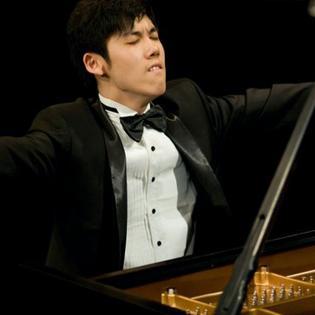
Yuja Wang played the piece in her customary virtuosic but non-sentimental manner, just what this classical piece needs. The orchestral contribution was secure but a little too heavy and over-inflected for my taste.

Yuja Wang played two encores. It was the first time I heard the Volodos-Say re-composition (arrangement doesn't come close to what it is) of Mozart's Turkish Rondo, and it was a delight. Then, a beautiful Gluck-Sgambatti Melodie closed the program.

I did not stay for the Mahler.

Note: I came across this excellent New Yorker article on Yuja Wang, worth a read! 

22 January, 2017

Concert Review: HKPO-Jaap-Siegfried

Concert Review: HKPO-Jaap-Siegfried

Jan 22, 2017, CCCH
HKPO-Jaap-Soloists
Wagner Siegfried Opera-in-Concert

Time flies! A blink and the third installment in the Ring cycle is upon us.

Three singers have appeared before in the same roles and here maintained the same standards:  Matthias Goerne's voice has darkened a little, otherwise his portrait of Wotan has remained largely the same, though it should be said that his role in this opera is a relatively small one.  Deborah Humble as Erda (this time I noticed her low notes were on the lean side); David Cangelosi as Mime gets a much larger role this time, and is indeed central to the opera.

Two singers who have appeared before have switched roles: Falk Struckmann's Fafner is just as imposing and enticing as his Hunding (Walkure); as Brunnhilde, Heidi Melton may not characterize as well as Petra Lang (Walkure), but it was hard to resist her vocal opulence. In a few passages, I did notice in her voice some gravels not previously present (as Sieglinde) - I hope she shall not be another big voice who gets burned out too soon.

Three singers are new: Werner van Mechelen's role as Alberich is a small one in this opera; Valentina Farcas may not be the definitive Woodbird, but she was very good and her stunning presence unequivocally contributed to the wonderment (call me shallow; but, yes, visuals are helpful!); Simon O'Neil, apparently a well seasoned heldentenor, was a disappointment as Siegfried - apart from his voice being not big and full enough (granted, the orchestra should have been in the pit), his diction and characterization also failed to captivate me. My seat faced the left cheek of Jaap, but I could still hear every singer well, except him.

Overall, the First Act was the best. Both the Second and Third Acts fared less well in their second halves. What should have been high drama between Siegfried and Mime, and between Siegfried and Brunnhilde, felt diluted in the long run. As Mime and Brunhilde sang very well, I put this down to my inability to respond to Siegfried. This was less damaging in the Second Act, as the interchanges are short and terse. But the same is not true for the ending to the opera: one needs to feel wave after wave of intensifying frenzy, but O'Neil was completely out-sung by Melton, not to mention drowned out by the big brass. Despite the common factor of Melton, the love and passion that we felt between Sigmund and Sieglinde in Walkure was not reproduced here. I miss Stuart Skelton! Another factor in this was the contribution of the orchestra: despite still very good playing, understandably there is less layering as the acts went on (and on).

Musing: I delightfully learnt that my friend Andrew, not to mention his wife, both harbor the same dislike for Siegfried as I. For me, this is one reason why the end of this opera is rarely as touching as Walkure, which feels more genuine (though still on Wagner's terms). Wagner envisioned the fusion between music and theater, but quite often, if I dare say, his synthesized and recycled philosophy gets in the way. Here I must say I am not the usual opera fan. Usually, even in Italian opera, I go for the orchestral part, as there is too much good music there that one would not hear otherwise in the concert hall. My personal feeling is that Wagner had not achieved his ideal, as he is greater in his music than in his theater, not to mention his philosophy. In a strange way, I count myself an ardent Wagnerian, but one almost entirely geared towards the orchestral part; any good contribution from the vocals is a plus, disappointment the usual. That said, the opera has more atmosphere in the opera house (if not ruined by the egoistic director) and the Opera-in-Concert is a compromise, even for those who have watched the proceedings before in the opera house. Funny that after the concert, in the supermarket I ran onto Luce, the percussionist, and he said: "the orchestra should have been in the pit". I agree.

Jaap Van Zweden, as before, proved himself a very good Wagnerian. The HKPO played valiantly and with feeling. All in all, a great effort!

p.s. it should be noted that among the many extra players were EIGHT brass players (mostly horns and Wagner tubas) from mostly German orchestras, a higher count than any other concert in memory. Indeed it can be said that the horn section we heard is largely NOT the HKPO. I shudder to think of the expense incurred.

13 December, 2016

Concert Review: HKPO Jaap Mahler 3

Dec 10, 2016, CCCH
HKPO-Jaap-Kelly O'Connor-HK Children's Choir-Ladies of the HKP Choir
Mahler Symphony No. 3

With NYPO/Haitink's valedictory 2014 performance of Mahler's Symphony No.3 (here) still fresh in my mind, this performance did not quite measure up, but made for an interesting contrast.

The sprawling first movement showed most of Jaap's traits. Although meticulously detailed and with powerful climaxes, there were sagging moments, mostly in softer passages. Part of this had to do with the orchestra - the strings in particular, as usual, often had a leaden quality, lacking in subtlety and color. However, much of this also had to do with Jaap's pacing, as his smelling of roses sometimes got lost in the forest. The second and third movements also did not quite achieve a natural flow. Contrast this with Haitink, who with minimal intervention let the NYPO bring out much more the light and shade of the score. Indeed, this symphony is supposed to be a paen to nature, and Jaap's rendition seemed too studied in comparison.

The movements with vocal parts always played themselves, and it was no exception here. Kelly O'Connor had a rich voice which seemed perfect for me. Both her top and bottom were more alluring than Haitink's Bernada Fink. I must say, although usually Mark Wilson's oboe playing was not to my liking (as in much of this performance), his solos were nicely turned here. Laudably and delightfully, both the Ladies of the HK Philharmonic Choir and the HK Children's Choir sang clearly and with commendable diction, better than the NYC choirs for Haitink! As one of my friends remarked, a little more zing in the boy's voices would have been perfect. Also, whoever made them up deserves credit - the ladies in particular looked lithe and elegant.

The string dominated first part of the last movement had a good flow, but subsequent development was not entirely devoid of the aforementioned problems. Again, I somehow did not like the perfromance of Luce on the bassdrum and timpani, all sharpness and no color. Nonetheless, overall it was a very fine performance and the audience reception was tumultuous.

09 December, 2016

Yuri Simonov, Vassily Sinaisky

Concert Review: Two Russian Conductors

It has taken me a long time to get to writing up these two concerts, so it will be a little briefer than usual.

November 1, CCCH
Moscow Philharmonic Orchestra/Yuri Simonov/Chen Sa

Shostakovich-Rachmaninov

Event of the year that I almost missed were it not for my friend wss!

This was NOT the usual government LCSD offering, but a presentation by the awkwardly named "Hong Kong Association for Studies of World Literatures and Arts in Chinese" 世界華文文藝研究學會 to celebrate the 50th anniversary of the monthly magazine of daily newspaper Mingpao 明報 (a publication with literary aspirations). For the longest time, there was NO publicity except for some ads in Mingpao, and NO internet info available in HK. I only learned of the concerts (I only attended the first one; there was another program the second day) from my friend wss, who saw the ad in Mingpao. SHAME!


The only internet info I found was their Shenzhen concerts a few days earlier, the same programs as in HK. I was ecstatic to find Yuri Simonov was the conductor. Simonov had appeared with the HKPO decades ago, and he GREATLY impressed me. HKPO was very uneven in those days, BUT under a great guest conductor they frequently managed to deliver visceral excitement (unlike now, better playing but less thrills). Imagine Bruckner under Russian Simonov (many orchestral mishaps, but undeniably exciting)!


One caveat. Moscow Philharmonic Orchestra does not have a website, and internet search does not turn up anything. It is well known Russian orchestras are constantly in flux and many have changed names. I remember years ago, in 2000, a so-called MPO visited HK (I did not attend) and caused a scandal (link here). So I was not without apprehension until I actually heard them.


Just a few notes of Shostakovich's Festive Overture were enough to dispel any doubts. Here was a virile orchestra with power and precision! Great stuff!

Rachmaninov's Piano Concerto No. 2 was meat and potato to the orchestra, but soloist Chen Sa lacked the last ounce of power and panache to make it really take off, despite Simonov's discrete action of toning down the orchestra.

The orchestra came into its own in Rachmaninov's Symphony No. 2, playing with considerable panache and precision. The string sections had to be among the best I have ever heard. With no more than 12/13 members, the violin sections outplayed (by far) the 16 or so members of the HKPO, playing not only with power and precision, but incredible nuance and subtlety. Simonov's fluid and natural phrasing kept one riveted by Rachmaninov's genius, with none of the longeurs that lesser conductors are wont to bring. The winds were distinctive and the brass strong - so biting, in fact, that some of my friends found them too acerbic (I didn't).

A GREAT Russian orchestra and a GREAT conductor. Come back soon!

November 25-26, CCCH
HKPO-Vassily Sinaisky-Alban Gerhardt

Dvorak-Tchaikovsky

Vasilly Sinaisky last time stepped in last minute for Mahler (here). I liked his style and looked forward to his Tchaikovsky Manfred. I was not disappointed  His Manfred was not histrionic, but rather layered and detailed, coherent and lucid, a symphonic exposition of great satisfaction. The orchestra played very well.

First half was Dvorak's Cello Concerto. I am a fan of cellist Alban Gerhardt, who had appeared in HK before (2010 AYO). But on this evening his tone seemed smaller than last time and I had trouble hearing him sometimes, even if Sinaisky had considerately toned down the orchestra. In all, a rather subdued performance shorn of grandeur.

06 July, 2016

Concert Review: HKPO - Bezhod Abduraimov - Ashkenazy

Concert Review: HKPO - Bezhod Abduraimov - Ashkenazy

July 1, 2016, CCCH
HKPO - Bezhod Abduraimov - Vladimir Ashkenazy
Prokofiev - Elgar


I was really looking forward to the return of both soloist and conductor, and I was not disappointed.

Behzod Abduraimov played a most enticing Rachmaninov 3rd last year, but this year's Prokofiev 3rd Piano Concerto was even more heaven storming. From start to finish, basically he tore up the piano. I have never heard anyone bang louder in the middle registers. In comparison, the bass was less clear and the treble somewhat monochromatic and percussive, though this is par for the course for Prokofiev. In comparison, Wang Yuja in 2010 (here) and 2012 (here) got more nuance out of this concerto. The orchestra under the Russian born Ashkenazy naturally got the full measure of this concerto, playing with power, precision, even some wit and sardonic edge when called for. In all, a fine effort. Although the piano had deteriorated sound by then, the Gluck-Sgambatti Melodie made a perfect encore.

Askenazy is a relatively late comer to Elgar, but his understanding is formidable. He has recorded much of Elgar for Exton and other labels, to almost universal acclaim. As he has delivered outstanding performances of the composer's In the South and Cello Concerto in HK in 2014 (here),  I was really looking forward to his Elgar 1st Symphony, and I was not disappointed.

The only reservation I had was the mammoth first movement, which Ashkenazy did not manage to completely hold together. The tempo was somewhat slow and from the middle on sometimes the quieter passages seemed rather episodic, not helped by HKPO's somewhat mechanical sounding strings. However, from the second movement on, the symphony went from strength to strength, with a positively thrilling finale. Ashkenazy's taut conducting and perfect balance had one's attention riveted. The brass played valiantly, even more heroic than in Bruckner. The winds' comparative weakness showed, but mattered little in this symphony.

I stood up and yelled "bravo" twice; had not felt like that in quite a while!


20 June, 2016

Concert Review: HKPO - Jaap - Karen Gomyo

Image result for karen gomyoConcert Review: HKPO - Jaap - Karen Gomyo

June 18, 2016, CCCH
HKPO - Jaap van Zweden - Karen Gomyo
Rossini - Bruch - Borstlap - Respighi

A spirited reading of Rossini's La Gazza Ladra Overture opened the program. The main attraction, Bruch's Violin Concerto No. 1 received a tidy performance from the team. Karen Gomyo has a nice tone and played smoothly, but the feeling was somewhat small-scaled. Jaap delivered an excellent accompaniment (as he always does), but wanting was the piece's sense of brooding and melancholia.

Second-half opened with a surprisingly tonal (in the twentieth century sense) newly commissioned work by Borstlap, Solemn Night Music. The program extravagantly introduces the composer as "...one of the first composers in Europe to explore the possibilities of a revival of the classical tradition...", and the music "...which absorbs the musical style of the 20th century, presents related ideas which are constantly varied and almost never repeated literally, so that we hear the same things in ever newer forms...". Unfortunately, while we hear snippets here and there reminiscent of Schoenberg's Verklarte Nacht, these were indeed "varied" to go nowhere. Borstlap's tepid "night music" is devoid of fantasy and not a patch on Schoenberg's masterpiece. One of the most boring piece of new music I have heard.

Respighi's Pines of Rome suits Jaap to a "T", who brought out every nuance in the luxurious score, and the orchestra was responsive to his every whim, though the piece remained music without much spiritual element. I wished the organ was louder.

17 June, 2016

Concert Review: HKPO Bruckner 4th

Image result for van zwedenImage result for louis lortieConcert Review: HKPO Bruckner 4th

June 11, 2016, CCCH
HKPO - Jaap van Zweden - Louis Lortie
Mozart - Bruckner

Concert opened with Mozart's Piano Concerto No. 22, which the sometimes wayward Lortie (in recordings) played surprisingly in a straight and fluid fashion. Although stylish, the last ounce of tonal and rhythmic refinement was missing, and his tone was not the biggest. The orchestral accompaniment was stylish and tight - commendable.

Bruckner's Fourth Symphony (Haas) received an excellent performance. All sections played at an elevated standard. Even more than the strings, the woodwinds seemed more fortified than usual. The brass was largely excellent, with steady and atmospheric horns. More importantly, Jaap van Zweden, an acknowledged Bruckner conductor, mostly had the right feeling of ebb and flow so important to Bruckner. He was also able to coax a full and truly thrilling sound in the climaxes, yet keep things tight and eventful in the equally important softer moments.

However, his approach did not fully carry the last movement. Maybe this sounds like heresy: like the Brahms Fourth, personally I have always found the ending problematic (the alternate editions too), as the ending "blaze" is to me not as thrilling as the first climaxes. Also, there are many start and stop passages, which under Jaap's literal rendition had a feeling remarkably close to the first movement of the Fifth Symphony (this is not as it should be, as the 5th inhabits a completely different world, with a less radiant, more mysterious atmosphere). Thus, in the last movement grandeur was only intermittently evident; my own feeling is you need some more shaping and stretching to achieve true atmosphere, and HKPO had achieved this before in this symphony (under Yuri Simonov and Gunther Herbig; see my write-up here). Lu Jia had also achieved more atmosphere in this symphony with his Macau Orchestra (here).

The HKPO strings are part of the problem. They played with accuracy and power, but not much radiance so important in Bruckner (which Lu Jia/Macau did well). Places like the repetitive figures in the last movement, and the Trio, just felt mechanical and earthbound. But overall, I am satisfied.

vs Philadelphia Orchestra/Yannick Nezet-Sequin's Bruckner 4th
Take all this with a grain of salt, as I did not attend the performance, having only heard it through the radio. It is pathetic that these are the only two performances of Bruckner in HK this year, that it had to be the same symphony and that they came within a month of each other!

I thought the Philadelphia rendition clearly rendered and very well played (as usual for this orchestra), but it had almost the same problem as the same team's Bruckner 9th I heard in Carnegie Hall (here), namely a lack of spiritual dimension in the last movement (Jaap did not escape from this either). In terms of flow, overall I prefer Jaap's conception.

Opinions among my friends were quite divided. Some reveled in the Piladelphia's sonority, while others found a curious lack of spiritual journey. At the HKPO concert, I ran into a dozen acquaintances - they were divided too but surprisingly the majority preferred the HKPO/Jaap performance. There is some brand loyalty and US-bashing here I think, but that is par for the course.

A thought: In the quest for precision, many performances under younger conductors to a variable degree miss the spiritual side of things. This is across the board, a world-wide phenomenon.

28 May, 2016

Concert Review: HKPO - Atherton - Koranyi

Concert Review: HKPO - Atherton - Koranyi

May 28, 2016, CCCH
HKPO -Atherton - Jakob Koranyi
All Russian program

The HKPO was in fine form. David Atherton conducted in his familiar style: literal, driven and not much subtlety, but the familiar music carried the day. Borodin's Polovtsian Dances was a tidy opener.

Swedish cellist Jakob Koranyi substituted for Jing Zhao at short notice. He had a good tone but the sound was just too small for Shostakovich's Cello Concerto No. 1, getting covered by the orchestra. One has to fill in the blanks. Principal horn Lin Jiang was flawless.

The orchestra clearly loved Rimsky Korsakov's Sheherazade and the many soloists gave their best. Concertmaster Wang Jing as usual played with commitment, although the portrait was definitely on the yang side. One wished for a little more tenderness in many episodes (only in the andantino did Atherton cared to show a little) and a little more characterization in transitions would not be remiss (though one would not expect this of this conductor).

Overall, a satisfying concert.

24 January, 2016

pics: Shelton and Melton

Concert Review: Die Walkure

Jan 23, 2016, CCCH
HKPO - Jaap van Zweden and Soloists
Wagner Die Walkure

My review of the Ring's First Installment - Das Rheingold

This second installment of Wagner's Ring showed improvements over the First, yet was also let down somewhat by the same deficiency, namely Matthias Goerne's under-powered Wotan.

In terms of nuance, Goerne showed considerable sensitivity in emotive passages, such as those to Brunnhilde and Fricka; yet in more prosaic and long-winded passages (admittedly one of Wagner's problems), such as the endless recounting of the past and history of Valhalla, he gave the impression of sight-reading and making-do (he uses a score at all times), thereby not able to help the listener through. Goerne wisely saved his limited firepower for key declamatory moments, but there is no denying that his output barely filled this not very large hall.

A Thought Given my misgivings about Goerne's Wotan in Das Rheingold last year, I was surprised that the recording (Naxos) received general acclaim (see here). As an audiophile and avid consumer of recordings, I know too well the difference between the live act and the recording. IMHO, Goerne would never make a good Wotan on a real operatic stage, but could be good in a recording. Note that he has only sung Wotan in Hong Kong.

Everybody loves the first act of Die Walkure (Wagner at his most amorous, as warm as anything in Tristan und Isolde), and here we got the absolute best. It is hard to imagine a better sung or characterized Siegmund or heldentenor than Stuart Skelton; or a better Sieglinde than Heidi Melton. Skelton effortlessly conveyed vulnerability, naivety, and yearning; Melton, the first cautious, then increasingly effectuated aspects of her character. Both were heroic in their singing, and their sound filled the hall with what Wagner intended, love. Falk Struckmann is obviously a seasoned Hunding.

The second act, particularly the eventful ending, does not favor a concert performance, but even the energy at the start dropped a little. Michelle DeYoung's Fricka was a just a little under-characterized, not quite noble enough. The Brunhilde of Petra Lang was short of vocal opulence, but she made up for it partially with acting and apt pointing. In some ways, she reminds me a little of Hildegarde Behrens, not the most formidably equipped but a great actress.

The third act was the weakest, having to rely on the less than heroic Wotan and Brunhilde. But praise to the great cast of the other Valkyries (Sarah Castle, Karen Foster, Katherine Broderick, Anna Burford, Elaine McKrill, Aurehlia Varak, Okka von der Damerau and Laura Nykanen). But here, Jaap van Zweden's conducting carried the day. The HKPO's playing was a cut above that of last year. Zweden, not at all a man who wears his heart on his sleeve, showed more tenderness than in all of his concert performances I have heard. Overall, the orchestral playing was refined, coherent and fluent. A joy!

26 January, 2015

Concert Review: HKPO - Das Rheingold

Best surprise of the show was the wonderful singing of Korean bass Kwangchul Youn.

Concert Review: HKPO - Das Rheingold

January 22, 2015, CCCH
HKPO-Jaap and soloists
Wagner Das Rheingold

WAGNER, R.: Rheingold (Das) [Opera] (Goerne, DeYoung, Begley, Sidhom, Cangelosi, Hong Kong Philharmonic, van Zweden)Note (24/01/16) Naxos has issued a recording of the concerts, to generally favorable reviews. Personally, I am surprised that Goerne's Wotan received much praise. I think multi-miking helped him seem bigger and more authoritative. In concert he was not. More on this in my review of 2016's Die Walkure.

First thing first, the biggest name disappoints. The Wotan of Matthias Goerne was an outright failure. He had never sung Wotan before, and obviously he was feeling out the role far away from Europe. The singing was generic, inadequately shaded, and simply did not have the depth and breath the role required. Even his physical presence seemed rather uncomfortable.

The biggest surprise came from the Giants. While Stephen Milling (Fafner) was indeed imposing in stature, in tandem Korean Kwanchul Youn (Fasolt) was almost comically dwarfed (this would never work on the opera stage). The former sang in a well-characterized manner, but it was the singing of the latter that was the biggest surprise - big, full-throated and resonant. Simply fantastic.

The central characters of Alberich (Peter Sidhom) and Loge (Kim Begley) were well sung and portrayed, the former especially so for good acting (whatever could be done on stage). Among the rest, David Cagelosi portrayed a suitably pathetic Mime. Oleksandr Pushniak (Donner) and Charles Reid (Froh) were competent.

Among the ladies, Michelle DeYoung (Fricka) and Deborah Humble (Erda) were very good. The Freia of Anna Samuil was a shrieking hysteric. Japanese Eri Nakamura was competent as Woglinde, but Aurhelia Varak (Wellgunde) and Hermine Haslebock (Flosshilde) were much less satisfactory.

Jaap van Zweden conducted in his customary, rather brute, style, so textures were generally clean, but atmosphere was lacking. As usual, the HKPO strings were tidy and dry, failing to portray anything like the Rhein. Woodwinds also paled next to the generally very good playing of the huge, much augmented brass section.


19 October, 2014

Concert Review HKPO Sinaisky

scmpost_16oct14_ns_russian1_46194443.jpg Pic of Vasily Sinaisky in SCMP interview.

Concert Review: HKPO-Sinaisky

October 18, 2014, CCCH
HKPO-Vasily Sinaisky
Tchaikovsky-Mahler

Vasily Sinaisky stood in for injured Jaap. See the interesting SCMP interview.

Sinaisky conducted without a baton, and as usual with this breed, warm sound and relaxed music-making take priority over precision and drama.

I have always been lukewarm to Tchaikovsky's Suites, including the one on the program, No. 4, "Mozartiana", which received a warm reading. HKPO rarely succeeds in portraying the lighter and airy side of Tchaikovsky, and indeed the performance was somewhat earthbound. Best was the immaculate solo of concertmaster Wang Jing, which had breath and depth beside tonal beauty.

Mahler received a performance that is the antithesis of most approaches, including those of Jaap van Zweden and Edo de Waart. Eschewing tempo and dynamic exaggerations that mar many Mahler performances (such as Jaap's Mahler 1 and 4), Sinaisky's way with Symphony No. 5 was more straightforward, with generally fast tempi. The lack of lingering, and hence ruefulness and regret, gave the proceedings a much warmer hue and positive tone than usual. Largely bereft of angst, I'd think the reading will divide Mahlerians. I myself have mixed feelings.

The outer movements worked reasonably well with the fast tempi and even approach, but the sprawling scherzo could have used more characterization. The adagietto was very beautifully done, not sentimental at all, as it should be. In this performance, one noticed the warmth of strings. The woodwinds were less ideal. The brass played strongly even if the lead trumpet was shaky at first. I do not quite like the rather nervous bass drum playing of Luce (I prefer Woo).

Audience response was tremendous.

07 April, 2014

Concert Review: HKPO-Ashkenazy-Gabetta

 Sol Gabetta press photo 2013 / CD "Il progetto Vivaldi 3" - Photo 1Concert Review: HKPO-Ashkenazy-Gabetta

April 4, 2012, CCCH
HKPO-Ashkenazy-Sol Gabetta
Elgar-Mussorsky

I have long followed Ashkenazy and Sol Gabetta on record (many available from the library).  So I was eagerly awaiting the concert.

Vladimir Ashkenazy conducted in a matter-of-fact style that was almost mechanical, but the result he got was outstanding. The orchestra was under total control in the splendid account of Elgar's In the South, long one of my favorites. Control, yes, but what passion we got too!

Elgar's Cello Concerto received a marvellously individual account from Sol Gabetta. Her playing had an almost improvisatory feeling, which suited her just fine as the particular cello she played on is ravishing in tone and she was a superb colorist too. In comparison, the orchestral contribution was poassoibly a little too controlled. Two superb encores drove the audience crazy.

I did not stay for the second half. I was told Ashkenazy's version of Mussorgsky's Pictures at an Exhibition has its own strong points heard live. I know the record, which did not do too much to me.

20 February, 2014

Brief Concert Reviews: HKPO - 2 Concerts - Jaap and Wildner

A belated report on 2 concerts I attended.

December 19, 2013
Jaap-Jussen Brothers-Chen Reiss
Mozart-Mahler

I attended the second night. The first night of the 2 concerts was cancelled at the last minute; supposedly, the sudden death of an administrator the same afternoon caused the musicians much distress. The decision was regrettable - it is a show biz rule that the show must go on. In any case, on the second night, the HKPO played very well but the concert proved to be most uninspiring.

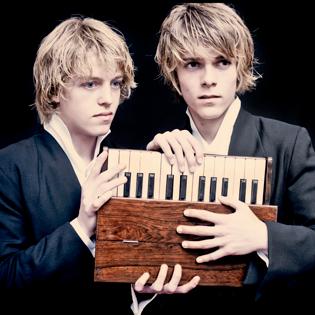
Mozart's K365 two-piano concerto is a rarity in concert, but the rendition was disappointing. I did not find the playing of the Jussen Brothers particularly inspiring. The accompaniment was dutiful but the whole was only competent.

Although Mahler's 4th Symphony had its moments and was well executed, Jaap's manipulations resulted in an episodic performance that never gelled. Chen Reiss sang well, but was unable to raise the emotional temperature by then. The performance did not even come close to the last year's sublime Shenzhen Symphony effort under Ehwald.

So far, Jaap still has to prove he is a great Mahlerian.

January 24, 2014
Johannes Wildner - Zhang Haochen
All Schumann

This turned out to be one of the best concerts I have attended.

I was eager for Wildner's return; his previous concert with the HKPO (with Ohlsson in Brahms) was impressive. If anything, he is even better this time.

Seldom have I heard Schumann symphonies played so idiomatically. The great Rhenish was by turn impetuous, mysterious and luminous. No period practice, no lumpy textures, just great music in a fluid performance of elegance and transparency. The lesser Symphony No. 4 also received an equally beguiling performance.

In comparison, Zhang Haochen did not fulfill my high expectations. The Piano Concerto was solidly played but, despite the excellent orchestral contribution, somehow did not quite take flight. Zhang's playing was a little four-square and did not show much of the tonal splendor he is certainly capable of.

13 December, 2013

Concert Review: HKPO - Jaap - Ning Feng

Dec 13, 2013, CCCH
HKPO - Jaap Van Zweden - Ning Feng
Beethoven - Shostakovich

Apparently,the same program was just played in Taipei and the HKPO was in excellent form.

In the Beethoven Violin Concerto it goes without saying Ning Feng's playing was effortless, perhaps a little too much so that serenity and beauty obscured inner depth. With Jaap's typical strong accents, the accompaniment was dramatic but similarly did not probe deep.

Shostakovich's Fifth Symphony, played so often (and usually well) by the HKPO, received a highly detailed and dramatic reading. Also typical of Jaap, the sound was finely balanced and one reveled in the felicity of details. Everything, from the snappiness of brass snarls to finely graded string swells, was finely honed. Here too, the studied aspect of the performance and emphasis on precision somewhat limited emotional expression. Although the performance did not scale the heights of Jaap's previous "Leningrad", it was wonderful on its own terms.

17 September, 2012

Concert Review: Hong Kong Philharmonic-Antoni Wit-Ingrid Fliter

Concert Review: Hong Kong Philharmonic - Antoni Wit - Ingrid Fliter
September 14,  CCCH
HKPO - Antoni Wit - Ingrid Fliter
Franck - Saint Saens - Beethoven

For years I have admired the Naxos recordings of Antoni Wit. Also, I have avidly followed pianist Ingrid Fliter's EMI recordings (most available from the library). So I went to the concert with great anticipation. My wishes were not only fulfilled, they were exceeded. Indeed, it was one of the best HKPO concerts ever.

Antoni Wit lost no time showing his true colors. Franck's Le Chasseur Maudit is a difficult piece to bring off, but Wit cajoled the HKPO players to play like possessed, which is exactly what the piece needs. Succesive waves of orchestral colors were a treat for the ears, making one forget its length and repititions.

Ingrid Fliter's playing has been familiar to me from recordings. In concert there seemed to be even more spontaneity. The extreme dynamic spread, strong accents and colors did not always work to the advantage of Saint Saens's Piano Concerto No.2. Indeed some notes sounded rather odd. One misses the patrician elegance and elan of Arthur Rubinstein. However, there was not a dull moment and one admired greatly the spontaneity. The orchestra was somewhat Germanic in response but fully in sync. The encore was a great treat: the 3rd movement of Beethoven's Tempest (just out on EMI) showed off Fliter's temperament to great effect. Indeed, one gives thanks for the masterpiece as well as the utterly fresh reading! Enjoy her youtube below, but I can assure you it was even better in concert!

Beethoven's Eroica received an appropriately grand reading under Wit, who squeezed every drop out of the HKPO. The smallish orchestra sounded big and confident. Wit brought out an incredible amount of details, yet maintained a natural flow. The dynamic contrasts were superbly shaded and climaxes truly thrilling. Here is a true master who can work the divided violins to the work's advantage (many lesser conductors fail, including EdW). This is by far the best Beethoven Symphony I have heard from the HKPO.

Come back soon, Antoni Wit! And how about a recital from Ingrid Fliter?

youtube of Ingrid Fliter playing Tempest:


Here is the seraphic Wilhelm Kempff playing the same:


And here is God Richter playing:

And here is God's teacher Heinrich Neuhaus playing (how wonderful!)