24 July, 2009

Concert Review: SZO/Ehwald/Bohorquez

Concert Review: Shenzhen SO/Ehwald/Bohorquez

July 24, Shenzhen Concert Hall

Wagner/Schumann/Brahms

I attended the middle of 3 consecutive SZSO Friday concerts in July by their wonderful director Christian Ehwald (Biography). Last year I heard him conduct one of the best Brahms 4th symphony I have ever heard (review of that concert), and so I eagerly looked forward to the Brahms 3rd this time. Again, Ehwald did not disappoint.

For this more lyrical and equally difficult symphony to bring off, Ehwald took a middle-of-the-road approach. With the well chosen tempi, the symphony unfolded in a relaxed manner and in patiently sculpted long lines that rarely buckled (no easy task in this symphony, and great strength of this conductor). Although not heart-on-sleeve, the performance did not lack in sweep when called for. Most impressive was Ehwald's patient but firm grip, allowing only true climaxes to ring out in full power, unlike many a lesser conductor (some we hear too often) who consistently over-drive music. Vitally, there was a rare refinement in the probing inner movements, reflective, serene and wistful by turns. Of course this could only be achieved with harmonious playing of the winds in solos and in unison. The remarkably beautiful blend achieved by the young wind players here is truly impressive. I am particularly captivated by the bold clarinet of 左丞 (studied in Germany), although the lead horn and 黃錚 are very good too.

The concert opened with Wagner's Meistersinger Overture, which also showcased Ehwald's ability to build a true climax. This was followed by Schumann's cello concerto played by Claudio Bohorquez. The young German cellist has previously won the Casals Prize and even played on his cello for some years. I wonder why, as his playing was not at all emulative of the old master. Technically competent and with a moderately big tone, he could have made a bolder projection than he did, partly due to his vibrato control and preference for short and quick attacks. Sometimes I heard more notes than I usually do with this piece, which is to the good, but this came at the expense of ardor and momentum. The orchestra was reduced but played with great style and textural transparency. Ehwald maintained the momentum by carefully shaping dynamics. For once, the repeated string surges big and small sounded perfectly integrated. Again, the winds really shone in concertante passages and dialogue in the slow movement was simply breath-taking. Overall, only the deliberate nature of the cellist limited the scale of the performance. Still, it was no small achievement for this piece, which can sound episodic in lesser hands. Here, just the slow movement alone should have convinced one that this is a veritable masterpiece. Bohorquez played a slow movement of solo Bach for encore. His bowing seemed rather exaggerated and I found his concept really strange, distorted and almost vulgar. No, I did not enjoy it.

Bohorquez's official website, where you can hear some of his playing for yourself.

Bohorquez plays Bach on youtube, different movement and faster, and much better than the encore.

15 July, 2009

Book: Along the Roaring River

Along the Roaring River - My Wild Ride from Mao to the Met (Wiley 2008)
Book by Tian Hao Jiang (田浩江)


Thanks to the recommendation of RC in the newsgroup 3music.classical, I picked up this book from the library. Aside from the time I had to put it aside to read another, more in-demand library book (中文解毒) , basically I read it straight through. As RC said, it's difficult to put it down.

Tian 田浩江 needs little introduction. I have heard him on the Met stage and he's professional. The website says very little but the first half of the book is filled to the brim with details of life in China, during the Cultural Revolution. Although Tian now visits and teaches in China regularly, it'd be difficult to foresee this book (2008) being translated into Chinese soon, given all its damning accounts of life in those troubled times. The second half details his odyssey in the West, filled with colorful vignettes of fellow singers (like Domingo, Plishka etc) and producers. For all Tian's perseverance and courage, I'd like to mention that the occasional assertion of being a (bass) trailblazer is not absolutely true. Before Tian, there was 斯義桂, who preceded him by many decades and who had achieved a certain renown. That was a different age (much less dissemination of information), and a different China.

Although the library copy is sure nicer, you can read the whole book at Google Books. Click on the Wiley and Amazon links for some description and review of the book.

Highly recommended and a great read for the summer.

13 July, 2009

Listening Log 11/07/09:

Listening Log 11/07/09: Treasures from the Library

Top Choice
Many people have asked me why I borrow from the library, when I have thousands of CDs. The reason I think is the library affords us an opportunity to go out of our own confines, to sample things we may not otherwise sample, for reason of cost, fear of duplication, or simply bias.

With so many Mahler CDs, these days I have to listen to one first before I even think about buying. Well, this DG Mahler Symphony No. 2 got me. It is simply the most detailed rendition I have heard. It breathes right and somehow does does not slight the spiritual dimension, as Boulez sometimes might. Needless to say the VPO's playing is a spiritual dimension in itself. With this Boulez has finished his cycle. I wonder when a bargain boxset shall be issued. I listened to this CD twice and could not get enough.

The Vegh Quartet has always been my favorite. In this live (1961 Salzburg) recording from Orfeo, you are bathed in a glow for the entire duration. Whether in Haydn, Beethoven or Debussy, the lead of Vegh is seamless in its phrasing and the ensemble creates the most beautiful soundworld. You can just leave this spinning on the tray (or on hard disc) forever. There's no more rewarding quartet playing than this.

Of current quartets I cannot think of any that is superior to the Leipziger Streichquartett, who records exclusively for MD+G. Here, members team up with pianist Christian Zacharias (another uner-rated pianist) and double bassist Ockert to deliver an account of Schubert's Trout Quintet that is truly different. At first listen rather detached, close listening reveals a rock-solid rhythmic line (helped by the recording; you shall never hear the double-bass so clearly) and a symphonic treatment. This is not a version that screams gemuchlichkeit, but rather a telling version that reveals the myriad beauty of the score, the details that one tends to not notice besides the boldness of the themes. Zacharias's playing is at once refined and unerring. This oblique review is enlightening. You can also hear some of this recording in the youtube embedded below.

Excellent:
I have always liked the passionate Natalia Gutman, who with Abbado/Mahler Chamber Orchestra delivers a version of the Schumann Cello Concerto that outstrips her teacher Rostropovich, also on DG.


03 July, 2009

Concert Review: HKPO/Zhang/Mullova

Concert Review: HKPO/Zhang/Mullova

July 3, 2009, CCCH
HKPO/Zhang Xian/Viktoria Mullova Brahms/Bartok

Star power + Brahms violin concerto = Good attendance. That never fails.

The 3 Hungarian Dances that opened the program were rather brute and driven for my taste. These are dances, not marches!

The Brahms violin concerto was a curious affair. Viktoria Mullova, always the cool soloist and whose face and body betray little inner emotion, had appeared in HK many times and needs little intorduction. Taken for granted is her superb, almost super-human technique (a few fluffs notwithstanding). What assurance and control of her instrument even in the most difficult passages; effortless attack right on the note and what double-stops! As expected though, she delivered a rather "objective" rendition. The first movement cadenza was really neat but almost deliberately shorn of display, making it much less of a rallying force. The slow movement was perhaps the finest of the three, with Mullova sounding smaller in the last movement's faster passages. Although Zhang accompanied dutifully and the orchestra played well, somehow as a whole the heaves and sighs of Brahms did not come through. Mullova played a little bit of solo Bach as encore, and splendidly. From one so attuned to period practice, I was surprised that she delivered the movement in a rather free and vocal style. Behind the impeccable line the contrapuntal elements were superbly telling, the dialogues pregnant with meaning. It was spellbinding. One wonders what strings and bows she were using. It's known on her recordings she uses gut strings.

The orchestra transformed itself in Bartok's Concerto for Orchestra, which was played for all its worth. The solo's were very good, and Zhang held a tight rein. There was plenty of color and verve on the way to a rousing finale. Although a little more tenderness and gravitas here and there would not have been amiss, I was quite satisfied.

After the concert, several of us had a long discussion on Mullova and Brahms. Most illuminating.

27 June, 2009

Concert Review: HKPO/McGegan/Simon

Concert Review: HKPO/McGegan/Simon

June 26, 2009, CH
Haydn/Mozart

It was only when I arrived in CH that I found out Isabelle Faust had a family emergency and had flown back to Germany in the morning. A bummer, as I had wanted to hear Lutoslawski's Partita, which along with the Mozart violin concerto no. 4 were ditched. This was curious, as in the morning I had listened to Isabelle Faust's nice interview on RTHK! Did I miss an announcement?

The program was re-invented. Haydn's overture L'isola disabitata opened the program. It was immediately apparent conductor Nicholas McGegan is a real stylist, who got drama aplenty out of the much reduced orchestra. Andrew Simon stepped in last minute and delivered on the bassett clarinet a nice rendition of Mozart's clarinet concerto. As in Haydn, the conducting of McGegan was stylish, brimming with verve, yet mindful of the work's lyricism.

I was surprised to see the orchestra expanded to nearly full string compliment for the 2 Haydn symphonies. This showed McGegan is no dogmatist. The sound gained some body yet remained transparent and stylish under the masetro. Symphony No. 59 Fire and No. 85 La Reine were both impeccably delivered. There were breath and drama in the alternating slow and fast moments and in the execution of hairpin dynamics. Subtle too were plenty of contrasts between the various dance movements. A sense of wistfulness sneaks in once in a while to round out the spectra that is Haydn.

What a master in this repertorie! I gave him a standing applause. The program cited the Cleveland Plain Dealer's description of McGegan: "a welcome Energizer Bunny, bringing rhythmic zest to all things baroque." Very apt; he literally rolled out onto the stage and looked the part. How lovely!

26 June, 2009

Concert Review: HKPO/Lu Jia/Perianes

Concert Review: HKPO/Lu Jia/Perianes

19 June, 2009, CCCH
HKPO/Lu Jia/Perianes
Falla/Chabrier/Debussy/Ravel

After the excellent concert the week before, I was looking forward to this second concert of Lu Jia with a Spanish theme. Alas, my expectations were not fulfilled.

The opener, Falla's La vida breve: interlude and dance, was nicely turned and atmospheric. Chabrier's Espana followed, and it's great to have a chance to hear it live. The performance was excellent, showcasing the orchestra; only a little bit of cautiousness on the part of the orchestra prevented this from being a romp with complete abandon, which is the way it should be. So far so good.

Falla's Nights in the Gardens of Spain was a major disappointment. The pianist Javier Perianes turned out to be just another of those over-promoted new artists (based on recordings) of dubious substance. His playing was pallid and small-scaled, with a monochromatic tone. Where are all those tonal colors touted in CD reviews? The orchestra did not seem responsive to him either, producing a tidy but dispassionate performance. I did not really want an encore, and the little bit of Debussy we got was just as pale as what went before. Duh!

Debussy's Images: Iberia never recovered from astonishingly discordant wind playing in the first section. The clarinets fared the best and Andrew Simon seemed to be trying hard to whip the section into shape. Even the ensuing Ravel Bolero could not re-infuse what was drained out of the audience.

25 June, 2009

斯義桂

斯義桂為中國第一個國際級的名男低音。 這裡是一點有關他的資訊。

18 June, 2009

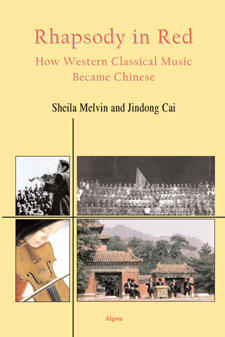
Brief book review: Rhapsody in Red (and 弦裂)

Brief book review: Rhapsody in Red

Thanks to a post by RC in the always informative usenet newsgroup 3music.classical, I learned about this book and its availability from the library.

Although it's well researched, it is quite an easy read that is immeasurably enlivened by many anecdotes from the start to the finish. I shall not detail what the book is all about, instead directing you to:

1. Publisher's website Info

2. Amazon site (where one of the customer reviews is by the NTUA piano staff Rolf-Peter Wille)

3. If you want to preview, the ENTIRE book is available on the net (Google Books). Make sure you at least look at the photos, among which my favorite is one on page 10, showing 劉詩昆, 顧聖嬰 and 殷承忠.

Some of the major characters in the book are the missionaries, MARIO PACI, 李德倫, 譚抒真, 賀綠汀, as well as 聶耳, 冼星海, etc.

Instead of writing about the book, I shall just randomly cite some passages/anecdotes I found particularly enticing:

  • Father Pedrini (page 69)
  • Paul Robeson recorded our 國歌 (as Arise) in 1941 and donated all proceeds to help China in war (page 129). I had known several of Robeson's Chinese songs (sung in Chinese, like 康定情歌) but not this one.
  • Under Japanese occupation, Asahina had conducted the Shanghai orchestra (page 149).
  • Arrigo Foa conducted the HKPO for many years and died in HK in 1981 (page 195).
  • Nikolai Anosov, the famous conductor (page 201)
  • Oistrakh appeared with and made recordings (Beethoven Concerto and a Mozart sonata) with the Central PO under 李德伦 (page 215). If anyone knows more about its availability, let me know.
  • In 1978, when BPO visited, violinist Helmut Stern, who had spent time in Harbin after fleeing Hitler's Germany, was re-united with some of his friends (page 289). This was also mentioned in Stern's own book 弦裂, which is another book I highly recommend. Some of the anecdotes, like the rehearsal of Brahms, differ a bit in the two accounts. This book is another amazing thing: the original in German (Seitensprunge) had not been translated to English, but here it is in Chinese! This book is also available from the library.
So, 2 great books available from the library! No long queues line for these and no need to hurt your eyes reading Google Books.

15 June, 2009

Concert Review: HKPO/Lu Jia/Zhu Dan

Concert Review: HKPO/Lu Jia/Zhu Dan

June 13, 2009, CCCH
Debussy/Saint Saens/Stravinsky

This is a the first of a pair of HKPO concerts of mostly French music conducted by Lu Jia 吕嘉, who is one of my favorite guest conductors and director now of the Macao Orchestra.

Debussy's Prelude a L'Apres-midi d'un faun received a lush, but not particularly languid treatment. The orchestra played well, though I was a little surprised that there were momentary lapses in the winds here and there in passages that don't "seem" particularly difficult.

I was surpised by the performance of young violinist Zhu Dan朱丹 in Saint Saens' violin concerto no. 3. Playing on a loaned 1763 Testore violin, Zhu's tone was firm and chiselled, if not particularly beautiful, and he had generally good intonation. Only in occasional transitional passages, like some that go up-and-down the sclaes, did he sound tentative, but aren't these "little" things precisely what plague even many a more famous violinists?

The most amazing thing about Zhu was his sure hand, which arose not from just technique or determination, but from a thorough grasp of the musical structure. In openings and key moments he was not averse to sacrificing some tonal beauty for a sure attack. His accents were well placed and together with his strong but fluid phrasing served only to propell the music forward. The orchestral accompaniment was well-nigh perfect, the winds here achieving marvellous dialogue with the soloist, playing that was even better than in the opener. This was, for once, a concerto that breathed as a whole. Zhu Dan played a Schubert Erlkonig transcription for an encore. It was just too coarse for me, and Zhu broke a string and had to borrow the violin of guest concertmaster Wang Bing. As a whole, Zhu is one of the most musical Chinese violinist I have heard in a great while.

Although Stravinsky was Russian to his core, Paris/France certainly nurtured him and his music. Petroushka was premiered in Paris by Diaghilev's Ballets Russes. Here it was given a most vivid performance by Lu Jia who, evidently enjoying himself, was to say the least as graceful as any dancer on the podium. The performance was thoughtfully mindful of the dance, yet held together firmly. One episode just merged seamlessly into the next. The orchestra responded by playing with great relaxation and flair. The result was far from the generic, white, metronomic and brutal Stravinsky we often encounter, instead program music with great character and color. The piece had never sounded more Russian to me than in this live performance. Sad to say, the program notes did not do a commensurate job of illuminating the complicated proceedings.

For those who missed the live broadcast, the repeat shall be on 20 June (Saturday) TVB Pearl (and RTHK4) 2:20 pm

14 June, 2009

Listening Log 15/06/09: Why lesser known?

Listening Log 15/06/09: Why lesser known?

Excellent:
It's never been clear to me why many excellent conductors, from Ansermet to von Matacic, are not so well known today. Compared to the many over-praised conductors around today, all of them are giants. One such person is Rudolf Kempe, who died an early death in 1975. I just heard his RPO Scheherazade, which blew me out of my seat, and in my other Blog I wrote a little note on some of my favorite Kempe recordings. I never heard people mentioning this recording, but it certainly is one of the best around in both performance and sound. Please refer to the link for more info.

Bjarte Engeset deserves more recognition as conductor. He also writes the best notes on Grieg that I have read. e.g. he points out the pentatonic opening of Morning Mood. No wonder I always feel the opening to sound like Butterfly Lovers (the reverse actually). His Grieg recordings for Naxos are uniformly superb. I just picked up hid Peer Gynt suites with the Malmo SO. The interpretation made me sit up straight all the way. His conducting is symphonic, maintaining all instrumental lines with a frim hand and fastidiously weighted dynamics. What a refreshing change from smoothly generic performances of this much-loved masterpiece! The orchestral songs are first-rate, and the soprano is sensationally expressive in Solveig's Song and Solveig's Cradle Song. Recording is demonstration grade. Don't forget the equally excellent companion Norwegian Dances with the RSNO, a CD I had highly recommended before. These Naxos CDs are now among my favorite Grieg recordings, fully on par with Barbirolli!
On to some lesser known choral works. Berio's Sinfonia has always been one of my favorite modern pieces. The performance on this DG issue is marvelous, helped immensely by a super recording (even TAS praised it). I actually think this CD is highly suitable for audiohphiles. It has everything, 8 voices and non-ending succession of unusual sounds, suitable even for those who don't listen to classical music.

The excellence of the chamber choir Accentus, under thier female leader Laurence Equilbey, surpised me. They made the Schonberg a capella pieces actually more beautiful than austere! The Naive recording is of course excellent.

Good:
Mercury's bargain Kubelik/CSO set is worthwhile for fans of this conductor. The early 1950's MONO sound is excellent, though there is a little overload occasionally. The Dvorak 9th and Ma Vlast, 2 of Kubelik's staples, are highly characterful and compare well with his stereo remakes. Both Kubelik and the CSO's performances are also more lively in those days than later. A fine issue.

01 June, 2009

Concert Review: 琴緣一生 震憾我的 Ruth Slenczynska

Concert Review:
Ruth Slenczynska, 露絲‧史蘭倩絲卡

May 11, 2009, NTUA
台北藝術大學音樂廳

Ruth Slenczynska 的故事, 和她的琴艺, 都太令人震憾了!

遲遲未寫, 是因為音樂會太完美了,沒什麼好寫;也因為關於鋼琴家的, 可寫得太多了。我覺得她是女版 Horszowski, 技術與音樂裡的東西, 無一忽略。

節目是驚人地重分量。 一開場, Mendelssohn Andante and Rondo Capriccioso 已令人驚艷, 84 高齡的她技術仍然爐火純青, 令人全情投入音樂裡。 下來是有板有眼的 Haydn Sonata No. 35 Hob.XVI/43。

接下來的,更令人乍舌。從來沒見人彈那麼多 Brahms 的《小品》! Op 76, Op 118, Op 79 加起來共 12 個曲目。 更令人佩服的是,每一個曲目都完整,由頭到尾一氣呵成。 有的婉轉,一個和弦可以是低聲的嘆息; 有的激昂, 指尖下是無比的力量,巾幗不讓須眉。十指緊扣著我們的心弦,釋放的是音樂,沒有半點唐突, 遠離炫耀, 是源源不絕的力量。

終場的是 Chopin Etude Op 25/12, 也是她在台北藝術大學 Masterclass 的曲目。Ruth Slenczynska 曾多次留台(及日本)任教, 晚年也不例外。

余音未了,聽到后排痛哭之聲, 是她以前學生,現東吳大學教授王潤婷 (也是她書的翻譯者)有感而發之聲, 好不感人!
琴緣一生 Forbidden Childhood

Slenczynska 在 Forbidden Childhood 一書裡記載了她悲哀的童年及青少年。此書在美已絕版,所幸的是, 中文翻譯本《琴緣一生》(聯經) 還能買得到。 第二天我就跑到師大《誠品》買了,一天就看完,感覺唏噓之余還得道謝王潤婷教授翻譯此書。想買的話,記著要買附送 CD 的,曲目是 Chopin Sonata B minor, 不知是什麼年代的,錄音並不好,有失真 (overload), 但是有歷史價值, 值得收藏。

这里可看整本《琴緣一生》但我勸你买!

此外,《指尖下 的音樂》也值得看。


National Theater and Concert Hall (Taiwan)

National Theater and Concert Hall (Taiwan) 國家戲劇院/國家音樂廳

Most tourist would only visit these two traditional architectures in the day, which is a pity as the site is simply magical after sunset. You can stand anywhere in the huge park, breathe in the evening air (considerably fresher than HK), luxuriate in the stillness or gaze at the skyline faraway (even the awful Taipei 101 looks better in the evening). It'd be hard not to feel a little envy.

The interior is another matter. Some of it reflects the polyglot influence, but others are just simply gaudy. Mo matter, it's still much more of an oasis than our own venues.

If you love music, you should try to attend one of the events here. The Concert Hall is famed for its acoustics. You can hear a pin drop onstage. This doesn't mean it's perfect; my composer friend said musicians have to learn to damp their sound a little here or else there'd be a runaway feeling. And it'd be better to sit further from the stage or upstairs in case of a full orchestra. Admire the organ here while you're there.

Official Site

Informative Wikipedia Entry

Interesting Interview with Artistic Director

29 May, 2009

Listening Log 30/05/09: Mostly Disappoinments

Listening Log 30/05/09: Mostly Disappointments

Good:
I have long been a fan of the original Takacs Quartet (on Hungaroton). Today it is international rather than Hungarian (on Hyperion) and it shows in the playing. While Edward Dusinberre is refined and the overall playing is still dynamic and spirited, the ensemble lacks weight and is less tonally blended than before. Brahm's String Quartet No. 2 comes off better here. Although a little studied, it is fastidiously detailed, with moments of springing rhythm, almost enough to offset the smaller scale (I prefer bigger-boned Brahms). The piano quintet is a more curious affair. It is a widely dynamic reading that scrutinizes the dynamic markings. It is not a bad reading, but it lacks true passion (like the Budapest/Serkin on Columbia/Sony). As before, I am not enamored of Stephen Hough's Brahms playing, rather clanging in sound and lacking in tonal heft.

Boulez and VPO in Bruckner's Symphony No. 8 is certainly a curious affair. This recording has been widely hailed. I do like many details here and there, but overall I just don't receive the grandeur inherent in the Brucknerian ebb and flow. Most unfortunately, the sublime adagio is rather devoid of sentiment. I listened to the Japanese DG and sound is not great.

Fair:
Judged by this compilation of Bach's own transcriptions and reconstructions, I don't understand why Akademie fur Alte Musik has made a reputation for themselves. The playing is excellent but rather metronomic. In these familiar works (albeit in other guises) this just doesn't work.

Even more curious is Mahler Symphony No. 5 as played by the San Francisco Symphony under Michael Tilson Thomas (from live sessions). The SACD sound is excellent but I have to agree with some Amazon readers that the playing of the SFSO, although detailed and accurate, is not in the top echelon, nor for those used to more idomatic Mahler playing (like the Concertgebouw, even NYPO and CSO). MTT's conducting is rather free-wheeling, and there are passages that sound spontaneous and interesting. However, this is certainly not a coherent reading and much of Mahler's grandeur and nightmares are missing in equal measures. This is the first MTT Mahler I have listened to.

28 May, 2009

Listening Log 29/05/09: Symphonic Heavyweights

Listening Log 29/05/09: Symphonic Heavyweights

In the last forty days I had been going back and forth between HK, Taipei and Fuzhou (mother's birthplace). Yesterday was my first real free day. From the Tsuen Wan library I obtained a stack of expensive (SA)CDs and settled down for some serious listening.

Excellent:
Dutch PENTATONE, in association with Dutch POLYHYMNIA, has been issuing a hugh number of SACDs, many in multi-channel. All their own DSD recordings that I have heard have excellent sound, though one may debate on their artistic merits. But they do have a stable of excellent musicians, like Julia Fischer, to cite just one. Pentatone has also been re-issuing older analogue PHILIPS recordings that have originally recorded third (and more) channels, but I'd skip those.

Slowly but surely, Pentatone is half-way through the Shostakovich cycle, all featuring the redoubtable Russian National Orchestra conducted by different conductors. From the two releases that I have heard, they are top-choice material, from both musical and sonic standpoints. I suspect the RNO is incapable of delivering boring Shostakovich.

Interestingly, although produced and recorded by the same team, in the same Moscow venue, the Jurowski recording has notably better sound. Fortunately for us, the interpretation is excellent. This is the first Jurowski recording that I have heard and I am really impressed. Music Web International has an excellent review that makes a great read. If the Shostakovich Symphony No. 6 does not eclipse memory of the magisterial live account delivered by HKPO/Elder recently, it does dig deep and have exemplary patience and control. I am even more impressed by the Symphony No.1, here given real gravitas by Jurowski that to me sheds new light on this early work. Jurowski's explored everything yet knit everything tightly together, remarkable for a young conductor! The RNO have this music in their blood and play magnificently. Recording is demonstration grade. I'd love to hear a multi-channel demo.

Symphony Nos 5 and 9 are conducted by Yakov Kreizberg and have received much critical praise. Perhaps because I am just a little jaded by the over-abundance of Shosty 5 (live performance and recordings) around I am less enthusiastic. This does not mean the interpretation is not good. On the contrary, it is excellent. Just to give one telling example: although the inner movements have about the same timing as Haitink/Decca, they feel more deliberate. This is because they are highly sculpted, with rhytmic emphasis that serve to impart feelings of gawkiness and, hence, protest under the jubilant surface. If you don't have a recording of the fifth, this is as good a place to start as any. The coupled No.9 (a difficult one to render right) receives yet another superbly structured reading imbued with gravitas, although the first movement does not have quite the effervescence (rightly or wrongly) of Inbal/Denon (also on Burmester CD2!).

Onto Mahler Symphony No. 1, not THAT hard to bring off but not that easy to achieve true distinction. Here are 2 live recordings. The Concertgebouw under Mariss Jansons (RCO; from the booklet, patched from 2 separate occasions) play perfectly (how can they not?) and Jansons has great structural integrity and precise articulation. Sonics too is excellent (also done by Polyhymnia), yet with all that to its credit, the recording misses just a little the all-encompassing quality that Mahler speaks of. "...the symphony must be like the world...it must contain everything...". Judged by Mahler's own words, which is as it should be, EdW's Mahler world mostly comprise only notes, sometimes with no apparent link nor direction; Jansons world has all the notes, much of it purposeful. But in Tennstedt's world (as in Kletzi/EMI) one feels a sense of journey. I prefer the Concertgebouw's playing to the Chicago, but under Tennstedt in this live recording one can feel the tremor in the heart, the calling out, the world. This live recording is only available on Japanese EMI TOCE-13107. Grab it ASAP. The sound is not as resplendent as the RCO release, but still very good. Warning: not for those who dislike slow tempi.

Good:
Much as I love Barbirolli, BBC Legends is scrapping its barrel in the issue of Beethoven Symphony No. 5 and Shostakovich Symphony No. 5, both with the Halle. The Beethoven is good but not as distinctive as his EMI Eroica. The Shostakovich is a Barbirolli curiosity, well played but not competitive today.

11 May, 2009

Concert Review: TSO/ Sanderling/Bashkirova

May 5, 2009

臺北 市立交響樂團/ Michael Sanderling / Elena Bashkirova
Shostakovich/Mozart
台北 國家音樂廳

一般來說 臺北市立交響樂團 (TSO) 水平應稍遜 NSO, 然而在好的指揮棒下,結果剛好相反。樂團好像沒有外援, 棒!

虎門焉有犬子, Kurt Sanderling 三個兒子 (Stefan, Thomas, Michael) 都是正在冒起的指揮。 Elena Bashokirova 也有來頭, 父親為名鋼琴家 Dimitri Bashkirov, 在 DuPre 病逝前就和 Barenboim 在一起,一直到現在。

第一首 Shostakovich Festival Overture 是個《大手牽小手》的演出, 有 9 間中小學參加, 幾乎每一個樂手都在帶一個學生同台演出。,陣容浩大但演奏整潔; 樓上兩側前面都塞滿了銅管,齊奏時蕩氣回腸,很是刺激。

Elena Bashkirova 琴音平滑, 平穩流暢中含自發性與戲劇性, 伴奏風格對板,齊為 Mozart Piano Concerto No. 21 帶來了新鮮感。

Michael Sanderling 指揮下半場 Shostakovich Symphony No. 15 的時候不知道有沒有想起父親的演繹 (有 Erato 錄音留下)? 一樣是個毫不煽情的演出,但好像更具張力。 樂隊控制得很好,聲音平衡度高, 較之前的 NSO 和多了。 強弱對比鮮明, 吞吐自然,條理清晰。

非常满足!! 這一次坐樓上,聲音比上次好, 但仍嫌稍為過分鮮明, 某些敲擊部分有點刺耳。

09 May, 2009

Concert Review: NSO / 簡文彬

Concert Review:

May 3, 2009
台灣 國家交響樂團 / 國立實驗合唱團 / 簡文彬
The Love Suite
台北國家音樂廳

這些年來訪台總是匆匆,也沒碰上想聽的節目。 慢慢地,一個《實驗》樂團已演化成國家交響樂團。這一次, 曲目讓我猶豫了很久, 但終於和作曲家朋友去聽了由上任總監簡文彬指揮的一場。

賴德和的《紅樓夢》交響曲是由雲門同名舞蹈劇原創音樂加編的。作為配樂可能比較適當, 作為 45 分鐘的交響曲就顯得重複; 演繹正規,但沒有神來之筆去抵消冗長的感覺。

下半場是 Ravel 全本的 Daphne et Chloe。簡文彬是個 showman, 向觀眾作了個雖長但挺具娛樂性的介紹。 樂隊的水準很高,但簡文彬戲劇性的演繹幾乎完全忽略了曲子的美感,聲大過於和, 造句與節奏流於平板, 沒有驚喜之下強勢的吞吐壓抑了任何纏綿的表現機會。 這跟大廳本身的音效也不無關係; 坐在樓下第 12 排,聲音過於明亮,而後排些的敲擊與銅管部聲音也未能完全釋放。簡文彬在他的介紹中說的很對,此曲應有點《拉扯》的感覺,然而演繹卻沒有峰回路轉的感覺。 合唱團不錯,在這大廳裡,每一把聲音都很清楚。整體上雖然粒感較粗,像 Stravinsky 多於 Ravel,我還是聽得挺高興的。Masterpiece 就是 masterpiece; Ravel 就是 Ravel。 更高興的是樂隊幾乎沒有外援,這點值得香港學習。

簡文彬任內頗多風風雨雨,現在 NSO 很多首席位都懸空,希望未來發展順利。

06 May, 2009

Listening Log 07/05/09: Essential Bach and Worthless Beethoven

Listening Log 07/05/09: Essential Bach and Worthless Beethoven

Time flies. I have been so busy with family matters that I was a little shocked to find that my last log was published almost a month ago. Here are a few CDs I bought or heard in Taiwan. I can only play them on my cousin's computer.

Excellent:
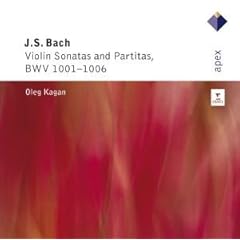
Bach's solo violin works are of course essential library material. After listening to recordings of the greatest violinists, like Milstein and Heifetz, sometimes it's not easy to find newcomers that one likes. This Oleg Kagan Erato recording, long out-of-print, is now re-issued by Warner Apex, 2 CDs for the price of one. Surely a collector's item, so grab it ASAP. This is from a 1989 live concert at the Concertgebouw, and the playing is magnificent, full of humanity. It witholds comparison with any, marred only by an over-reverberant acoustic, but afficionado's would not mind.

Even more than the solo violin works, I love the violin concerti and avidly collect different versions. This DG recording by Francescatti I already have, but when I saw the Japanese pressing (JS Bach 名盤 1200) I just had to buy one. His tone in this 1971 recording is warmer than on some Sony/Columbia recordings. Both the soloist and orchestra play and breathe together in long lines. Despite "period practice", the style here, in long singing lines, cannot be faulted. Let me add here that I have always admired the Lucerne Festival Orchestra under Rudolf Baumgartner. They have made many great discs together and their set of the Brandenberg Concertos and Orchestral Suites on Eurodisc/RCA is still top choice, and no-brainer at budget price. Don't forget, this festival orchestra, though ad hoc, has many famous soloists on its roster and had played under Furtwangler!!

While browsing at Tachung Records in Taipei, which has an excellent audio system, I was tansfixed by this hot Nonesuch (Warner) release of the Beethoven piano concertos. I actually stayed for more than 1 hr listening to the remarkable partnership. Richard Goode's pianism is spontaneous, with great tonal allure, and impeccable in its classicism. With pianism of this order, it's easy to slight the orchestral contribution which, in these of all concerti, are just as vital. I have always loved the sound of this Budapest Festival Orchestra under Ivan Fischer. One admires the beautifully phrased lines and the singing quality. The recording quality is excellent. While here, I should also mention that I recently heard the Pletnev cycle with the Russian National Orchestra on DG (mid-price). Pletnev's playing is cooler and more yang than Goode, but just as immaculate and fastidiously weighted. Highly recommended. I'd get both cyles.


Very good:
I was surprised to see this Janos Starker Cello Sonata cycle, originally issued on Erato and long oop. Now re-issued by Warner Apex, it's eminently worthwhile. The readings are "objective" and straightforward (as always with this cellist). The piano is balanced to the fore but Rudolf Buchbinder's somewhat dry style, with little pedaling, helps the integration much. The recording quality is excellent. Starker admirers need not hesitate.

Why is Beethoven worthless? Because all these Beethoven issues are being sold at bargain price. None of the new Beethoven piano concerto cycles are full price. I haven't heard the newest Pollini and the Kissin cycles.

11 April, 2009

Listening Log 10/04/09: Pianists and Fiddlers

Listening Log 10/04/09: Pianists and Fiddlers

Excellent:
In many ways the most interesting listening I had recently was to Jonathan Biss' Schumann CD, his second release after one for EMI's excellent Debut series (a series of surprisingly good curatorial choice, given the climate of classical music). Interesting because I am in general neither a fan of new artists nor Schumann's piano oeuvres. This recital captured me from the first notes. The Fantasy in C (my favorite Schumann piano work) cannot be more different from the grand Pollini, but in many ways it gets to the music even more. The Kreisleriana is even more free-wheeling but unusually stays interesting for me. The concluding Arabesque is but icing on the cake. I don't listen to a lot of Schumann piano, so I seriously got into thinking why I liked this album so much. I think I know why. Schumann's piano music is structurally difficult to grasp, and his mood swings are treated by pianists in hughly different ways, mostly unsuccessfully. Too gentle and self-effacing (Arrau comes to mind), the music becomes boring; too wild, the music becomes incoherent. Biss grades his dynamics very carefully. When he attacks he does so swiftly but with a rounded tone far removed from Lisztian ways. Yet he is certainly impestuous and there are many passages in these familiar works where eyebrows shall be raised. I was entranced and rarely felt any of his gestures to be empty ones. I haven't heard more fulfilling Schumann in a long time. He wrote his own perceptive note, which basically tells us to feel Schumann. It's easier said than done, but he has succeeded, I suspect not only with me!

I have been immersing myself in Alban Berg Quartet's TELDEC box. What immaculate playing! This is mandatory purchase for string quartet afficionados. For more discussion, see the entry in my Library A Blog.

I picked up an Angel LP of Dinu Lipatti's Mozart Piano Concerto No. 21. Despite having likely listened to more than 30 versions and over 100 times, This is my favorite version now. For more info on this performance, see the entry in my Library A Blog.


The Juilliard Quartet is an unjustly neglected quartet. Formed in the mono era it lived on long, but with innumerable personnel changes. I picked up a pristine EPIC (Columbia) set of Mozart Haydn Quartets, recorded by an early foursome (as in pic): Robert Mann (first violinist for the longest time, and excellent leader in the earlier days); Isidore Cohen (second-violinist, who went on to become more well known as violinist for the Beaux Arts Trio); Raphael Hillyer, viola; and Claus Adam, cello. The playing is clean, beautifully blended and fluent, superior to most of the "famous" quartet's before the public now. As I am in NYC, the Juilliard is probably the quartet I have heard the most LIVE, and they have never failed to deliver the meaning of the music. one of my favorite groups, musically deeper than the Cleveland, Guarneiri, Emerson etc. Indeed musically the deepest of American quartets, with the exceptions of the Budapest and the Hollywood.

Very good:
Solti's Chicago Mahler 6th (DECCA LP) is blistering and unrelenting. I was happily exhausted afterwards.

08 April, 2009

Listening Log 08/04/09: Fiddlers mostly

Listening Log 08/04/09: Mostly Fiddlers (but pianists take the palm)

Excellent:
Alexis Weissenberg's rather objective style turns off a lot of people but always had structural integrity. In the case of Chopin's minor piano works with orchestra, his playing enhanced the works. The French Orchestra play well under Skrowazewski (EMI LP).

The redoubtable Radu Lupu plays a well-nigh perfect Beethoven 3rd, and the Bucharest SO under Conta provide first-rate accompaniment. More impestuous and to be preferred to his Decca remake. Unfortunately it's oop (Quitessence LP).

I am not sure I should put Alexander Paley's performance of the Goldberg Variations here. This is not for the faint of heart. The performance is on 2 CDs and lasts almost 2 hrs. The reason is he takes ALL repeats and adds ornamentations. Not only that, you have to put up with occasional funereal processions too. I like some of it and find others rather strange but it is without doubt different and the Russian pianist (depsite his name) has what it takes! The playing is stylish and his touch is beautiful. I shall be returning to this. Who knows, maybe I shall put it under "intolerable" next time? But returning I am sure. The record label BLUTHNER (paino maker) is new to me.

Very Good:
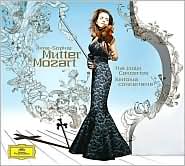
Mutter surprised me in her DG integral Mozart Concertos. Relatively free of mannerism and just a little concession to period practice, the playing is miraculously detailed and tonally tightly focused yet imbued with some sense of spontaneity and surprising rhythmic elan. The LPO, although just a backdrop in the absence of a conductor, play lively enough. Although missing the last degree of give-and-take apparent in the other DG Carmignola/Abbado set, this set is nonetheless one of the best late efforts of Mutter. She surpises sometimes, like in the very broad and romantic slow movement of the Sinfonia Concertante with Bashmet.

Good:
Aside from occasional mannerism in the last movement, Inbal's recording of Schumann's 4th Symphony with the Frankfurt SO (DENON; his first was on Philips) is tightly argued and in resplendent sound, as is the norm with this team.

Sarah Chang (EMI) is all spontaneity in a lovely recording of Mendelssohn's Violin Concerto, partnered nobly by BPO/Jansons. The coupled live Sibelius though is a little lightweight for me.

Francois-Frederic Guy's Beethoven 4th concerto (NAIVE) started off well but suffered from its smaller scale halfway on. In contrast, the more boldly projected (interpretively and sonically) Piano Quintet is quite satisfying, one of the better versions. The Radio Philharmonic France did well under Philip Jourdan.

Henryk Szeryng and Roberto Michelucci both fiddled beautifully in Vivaldi's Four Seasons (both PHILIPS), in accounts that otherwise sound a little dated in the orchestral contribution.

Concert Review: Vladimir Feltsman

Concert Review: Vladimir Feltsman

April 6th, 2009
Carnegie Hall
Bach/Beethoven/Mussorgsky

The date was for Zimerman. I walked in pretty late and was surprised that it was not a packed house. I opened the program and found out why. Feltsman was a last-minute substitution for the "indisposed" Zimerman.

I had never heard Feltsman in concert. I heard some of his early Sony recordings and they were not particularly memorable. So I was rather annoyed in the beginning. But as soon as the playing began a slow transformation took place.

The Bach Partita No. 1 was more elastic than Perahia's account only a few days back. Many passages were played in broader strokes, with less tonal allure, but the account was alert enough to raise my interest. Beethoven's Pathetique was very nicely played, not as powerful as Perahia's Beethoven, but more supple and breathing. What is going on these days? Why is every pianist programming Bach and Beethoven (Zimerman's was to have been Partita No. 2 and Beethoven's Op 111)? Some kind of undeclared war?

The real revelation came in the second half. After a straightforward opening, Feltsman launched into the Pictures at an Exhibition like few I have ever heard in any work. To talk about orchestral sonority would not be sufficient praise for the miraculous range of colors Feltsman got from his keyboard. Deft and sure in his touch, I heard absolutely nothing tentative in his notes. Add to this some remarkably devilish rhythmic manipulation and we got what could truly be said as a kaleidoscope, not only one into the music, but one into pianism. Two bejewelled Rachmaninov Preludes finished off one of the best piano concerts I have ever heard. Would it be heresy to say the rendition is as good as Richter's? But then this is live!

Serendipity! Here's a pianist one does not have to try, or even strain, to love. One just follows his fingers. I did not miss Zimerman, and I enjoyed this concert more than Perahia's.

For a somewhat different view, read the New York Times review

Concert Review: Lynn Harrell

Concert Review: Lynn Harrell

April 4th, 2009
Washington Irving High School
Stravinsky/Webern/Debussy/Bach/Dvorak/Chopin

I am not a great fan of Lynn Harrell, but I went because of the excellent program.

Stravinsky's Suite Italienne opened the program. Harrell's playing, as expected, was a little tame for my taste, especially in this piece which would benefit from more incisive playing. What was surprising was the very good support from his young accompanist, Victor Santiago-Asuncion, who got beautiful colors out of his piano, even when playing softly.

Webern's Three Little Pieces were just that, over almost immediately after they began. How is one supposed to savor a 12-bar piece of music, said to be complete in itself? The Debussy sonata that followed received a good reading. Here, both Harrell's and the pianist's range of colors helped to characterize the piece deftly.

After the intermission, Bach's Solo Suite No. 1 was fluently played in an old-fashioned way, no concession to period practice, but creditably with clear lines and no great distortion. Dvorak's Rondo Op. 94 and Chopin's Introduction et polonaise Brillante Op. 3 rounded out the program nicely.

Harrell's tone is a very warm one. While the bottom is sonorous, I personally find his high registers rather lacking in dynamics, even resolution (he plays DuPre's cello I think but sounds completely different). He plays and phrases in a rather smooth manner, even when he attacks. Personally I'd like things crisper.

07 April, 2009

Concert Review: Murray Perahia

Concert Review: Murray Perahia

March 31, 2009
Avery Fisher Hall
Murray Perahia
Bach/Mozart/Beethoven/Brahms

Read the New York Times review

Unlike the NYT critic, and like my pianist neighbors, I had mixed feelings about this recital.

Perahia prior to his hand injury was a pianist who played most things very smoothly and with beautiful sonority. I never for once doubted his pianistic mastery, but neither did I think he got very deep into the music. The Perahia now, as heard in this concert, surprised me in many respects.

The opening Bach Partita No. 1 for me came off the best. After the plainer Prelude, Perahia brought a good rhythm and refined colors to the various dance movements, even a touch of pathos in the Sarabande. The ending Gigue was magnificently chracterful. If the tempo was a little surpisingly fast here and there, I was not bothered. Overall, as in his recordings, this was fluent Bach.

The Mozart K332 was nicely played and sprinkled with deft touches, but I missed a songfulness that should be in the music. Perahia played so forcefully at times that one could have mistaken Mozart for Beethoven, and the concluding allegro assai was taken rather breathlessly. The ensuing Beethoven Appasionata was flawlessly played but, again, here one missed a sense of strife and conquest while awashed in a sea of sound.

I found the reading of Brahms' Handel Variations rather empty at the core, but then I have never attuned myself to this piece.

Judging from this concert, in the word of my neighbor, Perahia is now into the virtuoso thing, playing faster in general. While he gave us many beautiful details along the way, as a whole the interpretations were not particularly memorable. What is interesting to me is that, compared to when he was young, there's a lot more iron and steel in Perahia now, and that's good. What I'd hope for is that he finds a way to harness that strength while maintaining his poetic side.