20 February, 2010

Concert Review: Macao Orchestra - Fou T'song - Lu Jia

Concert Review: Macao Orchestra/Fou T'song/Lu Jia

February 6, Macao Cultural center, Grand Auditorium

傅聰的榮歸 Macao Orchestra/Fou T'song/Lu Jia Mozart/Bruckner

Sometime ago when I found out about this program I was quite excited. A perfect excuse to go to Macau! Although curiously titled as 傅聰的榮歸 (Fou had appeared in Macau many times before) the main part of the program, and what attracted me, was the massive Bruckner 4th. Even though I have been a fan of Lu Jia ever since I first heard him I had question in my mind how the smaller Macao Orchestra would fare in this big work. Surely they had rarely played Bruckner.

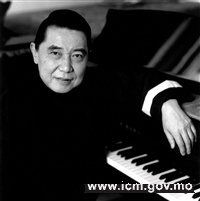
Fou T'song
The first part of the concert, Mozart's Piano Concerto No. 23, was surely Fou T'song's glory. Personally, on record I have never been fond of Fou T'song. I had always thought his late recordings of Mozart and Chopin (as evidenced by the many CDs available in the library on small labels) severely mannered. It came as a wonderful surprise that in the concert hall his playing came across as more spontaneous than mannered. His frequent rubati mostly served the musical purpose of pointing. At 76, his dynamics were necessarily compromised but his fingers were remarkably nimble in the middle third of the piano, where most of the music is. Here, he produced beautifully varied tone even with spare pedaling. At either end of the keyboard his frailty showed. Notes were dropped, treble could be brittle and forced whereas bass was rather lacking. None of this detracted from his masterly treatment of the concerto, which came across not as something perfumed nor precious, but serene contemplation punctuated by bouts of drama. The reduced orchestra accompanied beautifully, as one expected of Lu Jia. Two Chopin encores were most delectable, indeed time-stoppingly beautiful.

It would be time for me to re-visit his discography, and I hope to catch one of his recitals soon. While researching his discography I came across some great youtubes clips:

Fou T'song teaching Chen Sa

PRECIOUS footage of Chopin Competition 1955 (where Fou came third, after Adam Harasewicz and Vladimir Ashkenazy)

Bruckner Symphony No. 4 (click on pic to enlarge)
And now for the main reason of my attendance. I was not sure at all what to expect. Although a fan of Lu Jia I had only heard him as a symphonic conductor in Dvorak. Although that was a perfect performance I did wonder how he, and the orchestra, would fare in the massive Bruckner 4th. I need not have worried.

By Bruckner's standard, the 4th is modest in its requirement of orchestral force. Even then, it's stretching the Macau Orchestra (I am sure its budget too) to its limits. I was told by a former HK Sinfonietta violinist this orchestra has fewer full time musician than most. Indeed for this performance, 23/71 musicians were guest musicians. The performance was a great success due to four main factors.

Firstly, the strings (14, 12, 10, 8, 6), though smaller than usual and comprising 16/50 guest musicians (some HKPO members), played magnificently. They played with uncommon accuracy; I have never heard the duplets and triplets of the so-called Bruckner rhythm executed with such clarity. And they were able to maintain beautiful tone and penetrate even in the most massive moments. Secondly, although the horn section was not as strong as HKPO's, the rest of the brass was superb and played with great radiance and attention to dynamics. Thirdly, there were some characterful wind playing. I am happy to note that Huang Zheng (after a stint with the SZO, which is incidentally mysteriously inactive at this moment) is now principal oboist. Also present was flutist Micheal Hallit, who previously played with the HKPO and whose playing I have greatly enjoyed. Together with acting principal Jin Ta the Flute pair was formidable.

Lastly, and most importantly, Lu Jia held a tight rein over the proceedings. Although a little more mystery would have been welcome, the symphony unfolded beautifully, with coherence and inevitability. Most impressive was the breath of the last movement, which can easily sound disjointed in lesser hands. Beside the architectural grasp, Lu Jia also brought out much beauty of details. Have you ever noticed Lu Jia always coaxed beautiful string tones out of the orchestra? Ovation at the end was tumultuous. Yes, I yelled "Bravo!"

The hall also helped. From my mid-stall seat the sound was luminous and detailed. One interesting observation: the orchestra sat quite into the stage (click on pic above to see). I'm sure this was deliberate for reasons of balance.

p.s. (thanks to RC ) The concert was briefly reviewed (starting around 42:40, emphasizing Fou and little on Bruckner) by Oliver Chou in this episode of RTHK4-Cultural Vibes 創意空間. Enjoy!

19 February, 2010

CDs From The Hong Kong Public Library: Listening Log (3)

CDs From The Hong Kong Public Library: Listening Log (3)

(From Yuen Long)
I was pleasantly surprised to find new additions, the entire Chandos 30th Anniversary box no less. Lydia Mordkovitch played the Shostakovich Violin Concertos magnificently, and needs to yield to none. I have always loved the Scottish National Orchestra under Neeme Jarvi. Another gem is the coupling of a sparkling Shostakovich piano concerto No. 1 (soloist Dimitri Shostakovich, grandson, accompanied by Maxim Shostakovich, son) and the beautiful Chamber Symphony Op110a (conductor Yuli Turovsky). The I Musici de Montreal is fabulous as usual. In comparison, the objective Tchaikovsky 5th by Oslo PO under Mariss Jansons is very good but not quite top drawer.

Alexei Sultanov Live in Japan is a wonderfully fresh sounding recital. Too bad this pianist died young.

Not for everyone is the Schoenberg Piano Concerto played wonderfully by Mitsuko Uchida and the Cleveland Orchestra under Boulez (Philips). The solo pieces are spontaneous sounding as well.

Volume 1 of the Nielsen String Quartets (Dacapo) shows surprisingly sophisticated playing by The Young Danish Quartet. The SACD/CD is magnificent in sound. Wonderful! Now, I wonder if Volume 2 is around...

(From Tsuen Wan)
In contrast, The Grieg String Quartets played by the Raphael Quartet (Regis) pale in comparison. More enticing was the elegant Carmina Quartet's rendition of the Debussy/Ravel (Brilliant Classics). The original Denon recording is magnificent. This is a 2-CD set, coupled to the same composers' even more enigmatic Piano Trios, in somewhat rigid performances by Trio Rouvier/Kantorow/Muller (originally Erato).

Speaking about Grieg, the classic coupling of Grieg/Schumann Piano Concertos were given dynamic readings by the always wonderful Leif Ove Andsnes with the BPO under Mariss Jansons (EMI). Sound is wonderful.

Grigory Solkolov's Chopin's Sonata No. 2 and the Op 25 Etudes (Opus 111) took a little getting used to but I was a great believer by the end of my second listening. Read the Gramophone review.

10 February, 2010

主编的话: 虎年

主编的话: 虎年

踏入 2010 年后,虎年在即,忙七忙八,没太多时间做真正想的事。 我们中国人已要过两个年,香港人更把年底的圣诞节也纳入,忙上添乱。有些要说的在元旦日的文章里说了,不再重复。现在要出几天远门,就在此跟各位拜个年。 祝各位身体健康。

30 January, 2010

Concert Review: HKPO-Trcepski-Lu Jia

Concert Review: HKPO/Trcepski/Lu Jia

Jan 29, 2010, CCCH
HKPO/Simon Trpceski/Lu Jia
All Rachmaninov

Macedonian pianist Simon Trpceski is a star on the international circuit, and it's good that he continues his traversal of Rachmaninov here. The partnership with Lu Jia proved a match made in heaven.

The Piano Concerto No.1 was actually substantially revised after Rachmaninov's hugely successful N0. 2 and 3 (more on its history here). It's an unjustly neglected work on the concert platform. Ever since I heard the Richter recording on a cheap Monitor LP over 20 years ago I have loved it, and over the years it has eclipsed the No. 2 (but not quite the No. 3) in my esteem due to its concision. Even fresh off 2 library CDs of this concerto (Zimerman and Berezovsky; see previous post) I still found this live performance refreshing. This not so "romantic" piece quite matched Trpceski, who has all all the chops needed for anything but who prefers to hone his skills on producing chiselled tones and a sense of spontaneity. The same can be said of the Variations on a Theme by Paganini, which Trpceski played sometimes with a little injection of almost jazzy feeling. This performance far outstripped the lackluster one by Dejan Lazic and Atherton 2 years ago.

Important to the success of the 2 concerti were the contributions by orchestra and conductor. Lu Jia again proved himself a great accompanist. There was a good sense of give-and-take, enjoyment and dialogue. Except for somewhat subdued winds, orchestral playing was smart and snappy.

The wonderful program opened with the dark Prince Rotislav, a piece I have loved ever since I first heard it on a library CD. The hushed opening and soft brass playing was quite magical; so were the successive storms. Closing the program was the lesser but rousing Caprice Bohemian. In both tone poems Lu Jia showed considerable skills in moulding and color-painting.

The concert was broadcasted live by RTHK4, and the program shall be repeated on Feb 3rd (wed), at 2 pm.

26 January, 2010

CDs From The Hong Kong Public Library: Listening Log (2)

CDs From The Hong Kong Public Library: Listening Log (2)

(From Taipo)
Krystian Zimerman's Rachmaninov Piano Concerto 1+2 (DG) has garnered praise, but I find both the recording and performance poorly balanced (like his even more recent Brahms). Partnership and performance by the younger Zimerman with Boston SO/Ozawa is a lot better in Liszt's Piano Concerto 1+2 (DG). Boris Berezovsky's performances of Rachmaninov's 1+4+Paganini (Mirare) strike me as much more satisfying in performance and sound (2 of these playing this week by the HKPO). I have never heard of the Ural SO nor the conductor Dimitri Liss, but their contribution is idiomatic and first class.

Buried in the bargain 2-CD set(Capriccio) under the mundance title "Russian Violin Concertos" (filed under "RUS") are TOP performances by the seriously under-rated Bulgarian Stoika Milanova, a pupil of Oistrakh. The Prokofiev and Shostakovich concertos are all top-class. Only the Tchaikovsky is performed by Viviane Hagner. While slavic soloists rarely fail me, the rather flat Schubert CD by Russian cellist Leonid Gorokhov (AGPL) certainly was uninspiring. Partner Demidenko is rather coarse.

The library is a good starting place also to explore less known music. Julius Rontgen's 3 cello concertos (Et'cetera) are wonderfully entertaining and deserve a place in the repertorie. Many libraries have a huge series of (mostly Supraphon) Martinu, all in wonderful performances and sound. His harpsicord works (some concertante) (filed under "KNO") are curiosities but interesting.

I have never heard of Tanja Becker-Bender, but everything the reviews said of her Paganini 24 Caprices (Hyperion) is true. A wonderful CD with a fantastic cover painting (more info here). I have always liked Elizabeth Wallfisch, but in her comprehensive Locatelli "Art of the Violin" CD set (Hyperion), neither she nor the orchestra measure up to the sparkling playing of smaller offerings from the likes of Giuliano Carmignola (Sony).

(From City Hall)
On (Chandos), Valerie Polyansky has come in for a lot of bad reviews on the net, but I often find some salvation in the beautifully contoured playing of the Russian State Symphony orchestra. His Rachmaninov Symphony 2 is a bit turgid, not for those who like things to move along. Sound is somewhat murky.

(From Tsuen Wan)
Osmo Vanska's (BIS) Beethoven Symphonies 4+5 and Symphony 9 both offer wonderful playing that's full of tensile strength and rhythmic felicities. The SACD/CDs are beautiful sounding. Too bad the library does not have the rest of the cycle. BIS is offering the cycle at mid-price. I've ordered a set.

23 January, 2010

CDs From The Hong Kong Public Library: Listening Log (1)

CDs From The Hong Kong Public Library: Listening Log (1)

Note: With this post I'm creating a new series. In the past I've written more detailed "Listening Logs", but it's all too time-consuming to compose and load pics. With this new series, I shall be introducing CDs available in the HKPL libraries. I shall indicate where I have borrowed the CD, though it may be available in other branches. To save time I shall post links to pics rather than load pics of everything.

Exciting String players, mostly young
It's not easy to make a good album out of small pieces. Waxman's Carmen Fantasie opens Lara St John's Gypsy (WellTempered) (from City Hall), and it captured me immediately due to the marvelous pianism of "accompanist" Ilan Rechtman. The fiddling ain't bad either! The recording is absolutely stunning; the pizzicati just leap at you! This hugely enjoyable CD brings back memory of the wonderful Tianwa Yang's Sarasate (Naxos Volume 1; Volume 2) (available in many branches, including City Hall), all musts for violin fans. These I enjoy more than Chloe Hanslip's Bazzini (Naxos) as I find this composer a little monochromatic. It's amazing how many people only listen to the "soloist" and ignore the contribution of the accompanying musician(s). Think Heifetz: his orchestra's and conductors provide him with superb frameworks missing from much of their modern counterparts.

The library is suffused with Szymanowski CDs. Ever since I heard the magnificent (but much under-rated and neglected) Wanda Wilkomirska play the Violin Concertos (still benchmarks) I have become a fan of this composer. Ilya Kaler (Naxos) (City Hall) plays both concerti, whereas the very young and talented Nicola Benedetti (DG) (Tuen Mun) plays only the No. 1. Both CDs have excellent performances. The piano music is not to be missed either. Piotr Andreszewski's Masques and Piano Sonata 3 (Virgin) (City Hall) are spellbinding and given a superb recording.

Christian Poltera's Otmar Schoeck CD (BIS) (City Hall) shows a very fine player, and the music is rewarding. I think the library has his other BIS CDs, which I shall surely check out.

If you like baroque guitar music other than Bach (like Weiss and Pachebel etc) you might like Goran Sollscher's Eleven-String Baroque (DG) (City Hall). The sonority of the beefy instrument is interesting, but in the same repertoire I prefer the playing of lutist Hopkinson Smith (Harmonia Mundi). As for the guitar, how come few can play with the soul of Segovia?

I am not a fan of Lorin Maazel, but his VPO Mahler's 5th (Sony) (City Hall) is superb. The playing of the VPO is nonpareil; you simply hear more details. Despite occasional highlighting, sound is excellent. As you might expect, this is not a heart-on-sleeve interpretation but it's a penetrating one. Three of us listened to almost the whole thing Saturday afternoon!

01 January, 2010

主编的话:2010 看 “后 97“ 年代

在新一年的第一个早上,我继续看《七十年代》,一本令人反复反思的好书。阿城说得好:

“... 可以说,八十年代结束于1989年。八十年代早结束了一年。 1976年结束了七十年代,七十年代早结束了四年。 不过,算上1976年后的四年,八十年代有十三年。 七十年代呢,从1966年算起,有十年,所谓十年“无产阶级文化大革命”。按 decade 划分,不准确,不符合。人生不是猪肉,不可以这样一刀一刀按斤切..."

那我们香港的零零年代呢?我认为应该称为 “后 97“ 年代, 还没结束,漫长的等待但愿不会以悲剧画上句号。我是不乐观的。

回到音乐,与很多其他的东西一样,这 "十年" decade 最大的改变来自网络。也跟其他的东西一样, 这有好有坏。好的是资讯多了,人多了,联络频繁了; 坏的是不好的资讯也多了,转载泛滥, 平庸的音乐家居然会被捧为〈大师〉,分裂多了也就分薄了力量,一般素质越来越差, 更流于肤浅。 在某些网页上,有贡献的文字比恶毒攻击更稀少,场面靠一些 CD/LP 封面支撑。可叹!

在这浮华的年代,有心人只好默默地用自己的经验和方法在海里捞针, 能做好自己的就很好了!这个 Blog 开办才一年多, 没太多的时间打理,希望新的一年能更实际地为大家带来更充实的内容。 我欢迎读者给我意见 (doctorjohn@myself.com)。

我在香港的时候, 每星期都会过深圳。那里没有电脑, 没法写东西以至很多题材只能装在脑里。如果一切没变的话,我希望今年能在那里搞一台方便自己。现在是太多东西想写,时间却太少。

自 从〈掌心雷〉手写板报废了后,都在用简体拼音法输入中文, 一方面因为母语是国语能适应,另一方面也能令自己的发音更进步,一举两得。以往会用翻译器翻成繁体,可是有些字,像〈最后〉的〈后〉或 〈这里〉的〈里〉, 是翻不过来的, 只能成为繁体里的白字 (一些中英文都糟糕透的猢狲还曾为此大造文章, 煞是可笑)。其实我也嫌烦,就索性用简体吧, 反正一家,而文章重要的还是内容, 创新和表达。当然,有时间的话, 我是会想学个繁体的键盘输入法, 毕竟繁体字好看,也是传统。

在此祝各位 Happy New Year! 展望每个香港人能最后自己说了算!

附:《七十年代》按这里 和 按这里 可看部分。张郎郎〈宁静的地平线〉一篇 非看不可;里面有个死囚的爱情故事,令人看了唏嘘不止, 痛入心肺。这书最好能买下,以便慢慢细嚼。书里面有许多小故事,对于国家,个人,以及自由民主的反思与响往, 还有受害者表达出来的宽恕与宏观 , 更令人动容。反之,充斥香港网上, 用来攻击人的〈爱国〉,〈爱港〉,〈黄白〉论调, 每每显得表面, 而因缺乏对自身及历史的认知更为可怕。

19 December, 2009

Opera Review: Janacek and Salonen

Opera Review: Janacek and Salonen

November, 2009
Janacek From the House of The Dead
Metropolitan Opera, Esa-Pekka Salonen

I watched this opera just before I came back to HK. It was everything the NY Times review said it is, and more. I liked the Chereau staging, austere in the extreme, comprising a few grey cubes that change subtly in combination as the action "proceeds", much like LEGO products. The conducting of Salonen was positively one of the best I've heard in the opera house. Indeed, this opera is meant as much to be heard as seen. This is not an easy opera to listen at home, but after watching this production, perhaps I shall re-visit it one day just for the great music, way ahead of its time.

Coverage of 2007 European premiere conducted by Boulez

20 November, 2009

Concert Review: Philadelphia Orchestra Eschenbach

Concert Review: Philadelphia Orchestra - Christoph Eschenbach

November 19, 2009, Carnegie Hall
Mahler Symphony No. 7

For some reason I always run into concerts by the Philadelphia Orchestra and concerts by Christoph Eschenbach (sometimes together) whenever I'm in NYC. This time, I was not able to get tickets for the BPO/Rattle Brahms cycle, but this concert, coming hard on the heels of the BPO, was oddly satisfying. I may not always like Eschenbach's often wayward and aloof ways, but I have high regards for his considerable strengths, chief amongst which the ability to re-think warhorses and cultivated imagination.

The Philadelphia is a staggeringly good orchestra these days (has always been in fact). It really is a pleasure hearing them play anything. That aside, perhaps their Mahler credential is not as strong as some of their brethens, like the CSO, NYPO, even BSO. In the vast canon of recorded Mahler, the Philadelphia had only a small share and even fewer that are distinguished, but that is changing due to the Ondine recordings (cycle?) conducted by Eschenbach.

Their burnished tone is not just confined to their famous strings, rather to all sections. Despite their powerful playing, nothing grates the ears, and that can be a little disconcerting in Mahler, where you likely want to hear struggles. Add to the equation the cool Eschenbach, and the enigma of the 7th symphony, this was not a concert for those who want pathos, or at least a healthy dose of sturm und drang. Although it took a while for the players to warm up to their best, under Eschenbach's gripping direction the symphony unfolded fluently. Sometimes the tempo was too fast for the music not to sound dispassionate. An example was gearing up for the last part of the sprawling first movement, at a tempo that was surely allegro, but not ma non troppo. Similarly, the Rondo-Finale was taken at a clip, with occasionally odd rhythmic pointing, so the conclusion was resounding enough but stripped of some triumphal grandeur. The story-telling here portrayed mother nature as finicky, even idiosyncratic, but not at all malignant. Perhaps that is fitting enough for a symphony Mahler calls his happiest.

Eschenbach brought out a wealth of details along the way. This worked best in the three inner movements, where I savored every second of the enchanting playing. They not only played with great individuality but they listened to each other and sometimes it felt like chamber music on the grand scale, not a bad way to play Mahler's reflection on nature and man.

When it ended, the fellow behind me said: "...(Eschenbach) is all nuts in his head, but how he made them PLAY!..." The appluase was tumultous. The hall was packed and the balcony was stuffed by young students. How refreshing. Mahler's future is bright. A wonderful concert.

The Philadelphia Inquirer's review of the concert one day before

The NY Times review

19 November, 2009

Opera Review: La Damnation de Faust

pic of production from the NYT

Opera Review: La Damnation de Faust

Oct 17, 2009

Metropolitan Opera

Berlioz La Damnation de Faust


NYT review (full review of original 2008 production)
NYT review (capsular review of this 2009 revival)

I attended the last performance of this re-run of last year’s hugely popular production. This opera would not have been so successful if not for the visual wizardry of director Robert Lepage. Admittedly I have never been a fan of the music and went for the theatre part of it, and in the end I got not much more than what I had bargained for.


Although the visual alignment was not perfect for someone sitting in the family circle, one could see all the happenings and even learn how some of the visual tricks were achieved. Aligned close to the front, the simple set of evenly spaced tall support columns and planks spanning the full width of the stage divides the vertical plane into grids. Aided by video projection onto mechanized screens these were alternately transformed into rooms with windows. The rooms were populated most of the time by the chorus and dancers, less often by the main characters.


The visuals were riveting most of the time. One got busy in the futile attempt to register everything happening in every grid. The lighting was masterly, imparting much needed three-dimensionality to the relatively compressed depth of the production. Only in certain scenes, such as the ride to hell, did the compression become painfully evident. The direction gave much for the chorus and dancers to do, and that is apt as they as much as the soloists are the stars of this opera/oratorio/music drama. The chorus sang solidly and the dancers were bent on their acrobatics.


The largely successful deployment of the chorus and dancers unfortunately threw the singers into not always flattering relief. Ramon Vargas sang Faust relatively stylishly but could not fill the hall. Despite her poorer diction, Olga Borodina sang better but was visually unconvincing as Marguerite. One cringed when in the Epilogue her large body had to climb up the stairs to heaven. Better was the Mephistopheles of Ildar Abdrazakov, the real-life partner of Borodina. Perhaps fatigue had set in by the end of the run. Note that the cast was completely different from that of last year (see NYT link). James Conlon conducted efficiently and the orchestra played well, though I think the score’s lyricism was not always in abundant supply.

14 November, 2009

Theater: Robert Wilson - Quartett

Theater: Robert Wilson - Quartett

November 12, 2009
Brooklyn Academy of Music - Harvey Theater
Odéon-Théâtre de l’Europe production, starring Isabelle Huppert

NY Times review

How do you "review" the collaboration between a playwright and a director who outdo each other in deconstruction? AND, how do you review Robert Wilson ((classical fans are most likely to know him as the director of Einstein on the Beach, which employs one of Philip Glass' greatest scores) at all? Well, I think the NYT theater critic has done a brilliant job here. For myself, I'd just add some thoughts of my own and provide some links. Who knows, perhaps one day the play shall travel to HK?

To begin to comprehend the whole thing, even to read the NYT review, it is necessary to have some familiarity with the original novel Les Liaisons Dangereuse, from which this play is derived ("pilfered" is perhaps just as appropriate a word metaphorically). In the wikipedia link you shall note that several films have been made to the original story. Chinese are most likely more familiar with the Korean and Steven Frears remakes. Should you have time, check out the original film, "period" Roger Vadim (Babarella is likely his most well known film), which incidentally employs Thelonious Monk's music to great effect.

It goes without saying Wilson's production is visually stunning as much as it is austere. Most bewildering was the effect of role change, when the voice stiffens up or softens to accomodate. This is made more complicated by deliberate manipulation of the amplified voice, adding elements of uncertainty and bestiality by turns. I love the story and have watched all three films before, yet I could not most of the time make out whether the woman or the man was behind the spoken lines. One just give in to the augmented effect of music and thetrical effects on words.

In the end I think the contribution of the playright is very little, and I even wonder about its quality. I personally do not think his fragmentation adds much to the original story. What it did provide was a lot of "obscenities" in the frequency the anatomical parts and some parts of the sexual act were impassionately detailed. No wonder there was a small but constant trikling out of the audience.

A passing mention on the mesmerizing actress Isabelle Huppert, who is probably best known in Aisa for her more recent film The Piano Teacher. I first encountered her in Claude Chabrol's wonderful Violette Noziere. How time flies.

I greatly enjoyed the score by Michael Galasso, who had just died. You may know him as contributor to the film scores of 重慶森林 and 花樣年華.

10 November, 2009

Concert Review: Bruckner Orchestra Linz - Dennis Russell-Davies

Concert Review: Bruckner Orchestra Linz - Dennis Russell-Davies

November 9, 2009, Avery Fisher Hall
Bruckner Orchestra Linz - Renaud Capucon - Dennis Russell-Davies
Glass - Bruckner

Addendum: NY Times review

This little known orchestra mean something special to me and I'm ecstatic to have caught up with them in NYC this time.

In the early eighties a friend and I went to the annual Brucknerfest at the Brucknerhaus in Linz. My friend is none other than the person who introduced me to Bruckner and Sibelius, composers who have remained my favorites unto today. Imagine, mostly bored undergradute students (Chinese, Koreans etc, and a senior citizen gwei-lo ex-ranked player!) at Columbia University playing pingpong every afternoon (even when there was no class)! My friend talked to me and one day lent me some LPs and I was an instant convert.

Linz is to Bruckner as Salzburg is to Mozart. It was rather bucolic and conservative/Austrian country in those days; I don't know about now. I still remember the Bruknerhaus where we went to hear a Bruckner symphony performed by this very orchestra, very ably. Most memorable was the way the hall reminded you of show time: instead of some kind of bell and gong thing, the mighty brass opening theme of Bruckner's 5th symphony was played repetitively. Effective and appropriate.

I have always liked Dennis Russell-Davies, familiar through attending the American Composer's Orchestra and the Brooklyn Philharmonic (see wikipedia entry too). So it was not surprising that the concert opened with the Violin Concerto No. 1 of Philip Glass, whose music he has always championed. From the word go, it was clear the orchestra is superbly attuned to this music. The hall was awash in Glass' throbbing and ostinating sound. With this kind of minimal music, when it's played played routinely one is apt to find it repetitive, yet when it's well played, as it was here with the greatest attention to the pulse, it is strangely mesmerizing. In the outer movements, one heard the power in reserve, imagined looming horizons and felt the wheel of time. Unfortunately, the power of the playing frequently drowned out the soloist Renaud Capucon, who played valiantly, with good intonation and feeling, but it was too evident he has too small a tone for the large hall (one even feels that on his recordings). Only in the tender slow movement was he able to project more.

Just a few bars into the Glass piece and knowing what was to come, I began to see the logic of the programing. With its frequent crescendos and decrescendos (some rather sudden) and ostinati, Glass really is not unlike Bruckner, even if they inhabit different spiritual worlds. The realization was a wonder, something that only happens in the concert hall, in intelligently planned programs.

The Bruckner 4th Symphony was played for all its worth, with only one caveat. The 1874 version was employed (they recorded it for Arte Nova and the complete box shall appear soon). Now, I had previously heard the 1874 version by Inbal (Teldec CD) many years ago, and I remember I was rather dis-oriented by it. Now, in the live performance I was able to really sink my teeth into the original version, much more than could have been done listening to it at home, where attention usually falters. I confess I still much prefer the 1888 version (what we usually hear, more or less), but I found the performance fascinating. Davies held a tight rein and was attuned to the constant dynamic changes, keeping the rather repetitive passages fresh while maintaining the long line. With the excellent orchestral playing, the performance held together rather well, lasting almost ninety minutes! My only caveat was the accurate but piercing trumpets which in balance overwhelmed the trombones (partly an acoustic problem I guess). Otherwise the orchestra played with great verve and character, refined and robust in turns.

The concert was VERY poorly attended, with most people in the orchestra and empty tiers. As I walked up to my usual third tier box a nice usher on the first tier told us we could sit there, in the more expensive seats. Like everyone else, I took advantage of that but afterward wondered whether that was a smart move. The sound I think is not as good lower down, sometimes reverberant. Sounds familiar?

As with Bruckner, not to mention in less polished original versions, after each movement many people left. Fortunately, those who remained managed to give the orchestra and Davies the curtains calls they deserved.

I shall get the Davies Bruckner cycle when it comes out. Let us not forget Capriccio still has a complete set by this orchestra, conducted by various conductors, and a fine set that is too, though more difficult to get now.

24 October, 2009

Concert Review: HKPO-Rozhdestvensky

Concert Review: HKPO-Rozhdestvensky

October 24, 2009, CCCH
Sasha Rozhdestvensky, violinist
Beethoven-Shostakovich

Yet another HK surprise. Years ago, I was ecstatic to have caught up with the legendary Sviatoslav Richter, who had an aversion to America. That was truly a once-in-a-lifetime concert. This time I am very happy to have finally heard 78 year old Gennadi Rozdhestvensky, who is now also legendary. He must have appeared in NYC before but I had never heard him. Rozhdestvensky is very well known in the UK since early days, as chronicled in his bio and evidenced by the many BBC Legends issues of his live recordings (many available in the library). His appearances in the US was and is more sporadic. A wikipedia entry revealed some unfortunate unpleasantries with the BSO.

From the orchestral introduction to the Beethoven Violin Concerto, it was immediately apparent we're listening to a true master and not an also-run. A fragile figure, doing without the podium (apparently customary), with minimal but clear motions, and slow tempi that would have been deadly in lesser hands, Gennadi Rozhestvensky drew noble sonorities and superbly concentrated playing from the orchestra. The sound was golden, full and supple, yet louder and more powerful when released. Crescendos had a natural quality and pianissmos palpable.Unlike over-rated lesser conductors who only know to drive hard and push the orchestra to frantic and edgy delivery, the master achieved precision and delivered power effortlessly.

That said, the slow tempi were not for everyone. Clocking in a shade under an hour, one had to listen hard, particularly after dinner. Son Alexander (Sasha) is a fine violinist who has a beautiful tone, but his true and rare gift is a supple sense of the long line. One did not feel the bars, as one phrase just imperceptibly flowed into the next. At this tempo, one missed a little passion, but, occasional intonation problems notwithstanding, this was excellent playing.The Schinttke cadenzas (which involve the tympani) were played wonderfully and I wished they were playing one of Schnittke's violin works instead (Gennadi was and is the greatest champion of this composer; have you ever heard his recordings with Kremer and Tatiana Gridenko? Wow!)). I did not like the Bach encore.

The Shostakovich Symphony No. 10 was also quite slow. No detail was slighted and the performance was precise and atmospheric. In the first three movements the slow tempi did not bother me, as it allowed for much fine and insightful playing that stressed the phantasmagorical rather than the gritty, sarcastic and acidic. However, I did feel the finale could have used more force and attack. But then this Shostakovich symphony is a paradox open to interpretation, is it not? The reception at the end was tumultuous. I must mention again the very fine playing of the orchestral members. To cite just two, I have never heard Kam Shui play so loud and full, and the bassoon is an important figure here; and Mark Vines was absolutely splendid and confident in his delivery.

Hoi had also gone to the Thursday concert, which he said was even slower. He also mentioned the soloist was better last night. The Saturday concert was broadcast live by RTHK, but the program shall be repeated on 29 October at 2 pm. Make sure you tune-in (the slow tempi likely works less well on the air relay) and catch this rare moment. It is unlikely we shall get to hear him again in HK.

Below is a fantastic youtube footage of the pair performing Schnittke's Violin Concerto No. 4! Click the link and find Parts 2-4 in the sidebar.

19 October, 2009

Concert Review: Haydn Creation

Concert Review: Haydn Creation

Octorber 19, 2009, CCCH
Orchester der Klangwaltung/Chorgemeinschaft Neubeuern
Enoch zu Guttenberg, conductor

lcsd website/artist info
Official site

When the choir and orchestra came onstage I was rather excited by their unusually well-designed costumes. While the men in the choir donned Bavarian jackets (similar to Austria's loden jacket, or our Zhongshan, or India's Nehru), the ladies wore subtly patterned dresses. The orchestral ladies were even more spectacular. While their male counterparts wore the usual suits and tails, many of the women wore clothing with unusual cuts and complex non-primary colors that embrace the range from near-orange to near-purple. As in the photo in their promo material, they project a suave image.The designer behind the package should be credited!

The somewhat HIP (historically informed) orchestra used largely modern instruments and was of reduced string size (strings 10, 8, 7, 5, 3) compared to the full woodwinds. The trumpets and trombones were smaller horns than what we usually see. The continuo is unusually a painoforte.

Part I opened with a nice flourish, the vibrato-less string sound and bold tympani eerily evocative. However, as things progressed I became less engaged. The orchestral members played in a highly individual manner but did not quite gel into an ensemble that could deliver forcefully when asked to. This was partly due to the limited size of the strings (in this large venue) and partly due to the approach of the conductor (who bears some resemblance to Tennstedt), who conducted in a somewhat choppy manner, frequently clipping things, even fortissimi, in the wings. While there was much beauty in the tone-painting of the creation of light, water and animals, there was a lack of organic flow and hence, lack of momentum.

The chorus was apparently well-grilled. They sang with unison (even sounding one-voiced sometimes) and wonderful diction. But they were unfortunately placed on the stage rather then in the surrounding balcony. The sound was not as projected as I'd have liked. I say this for a reason. In 04/2004, the London Philharmonic Chorus gave a thrilling Creation with the HKPO under Samuel Wong, and the choral sound then was phenomenally full.

The soloists were excellent. The singing of bass-baritone Klaus Mertens (Raphael) was partician, beautifully projected and just about perfect. Soprano Miriam Meyer (Gabriel; and she was like an angel) has a beautiful voice, sang passionately and ravishingly and was positively beaming in her fortissimos. The Uriel of tenor Colin Blazer was slightly below their level, but still had good command of the style. In Part III, I liked the solid Adam of baritone Thosmas Scharr more than the smokily operatic Eve of soprano Elisabetta Lombardi, who also had the least clear diction.

During the intermission the performers were seen puffing away hard outside. True Europeans! And when they returned, they turned the throttle one notch up. The ensemble improved and the climaxes were more thrilling. The audience was enthusiastic.

Overall, this was a performance that shone light on many details, with meticulous attention to balance and the meaning of the words. However, in terms of coherence and overall excitement it was quite a bit behind the more traditional LPO chorus/HKPO performance mentioned earlier. That performance gave unbirdled passion and joy, and is that not more appropriate for an oratorio that glorifies God?

15 October, 2009

Concert Review: Chopin Society-Joy of Music--Oct-15

Concert Review: Chopin Society-Joy of Music festival

October 15, 2009, CH
Members of LCO chamber group-Pascal Roge
Dvorak-Faure-Shostakovich-Brahms

Official Website

This is return engagement for both pianist Pascal Roge and the London Chamber Orchestra chamber group. Previously I had heard and greatly admired their playing, and so I attended with high expectations. Attendance was rather abysmal, though the small audience was enthusiastic and informed.

The excellent cellist Pierre Doumenge was the only member left of this LCO quartet that had appeared here before. This incarnation was led by the Andrew Haveron, no sophomore given his leadership of the Brodsky Quartet! The viola Joel Hunter too was notable for his passion and big tone. Only second violin Magnus Johnston was comparatively reticent and served mostly as a subdued inner voice, sometimes difficult to hear behind the bright tone of Haveron.

The highlight of the concert was Faure's rarely heard Piano Quartet No. 2. The playing of the LCO group astonished me yet again (see below for 2007). With ensemble that was superior to many a more famous quartet (like the Emerson, Hagen etc), the threesome plumbed great depth in this piece which they likely had never played before. The ebb and flow of Faure's music were better conveyed through their kind of incisive playing than performances that are softer. Haveron was positively virile in his playing, which is appropriate in Faure's music that is imbued with (sexual) undertones. From my sixth-row-center seat the piano sound was not quite completely released but, an odd moment here and there notwithstanding, pianist Pascal Roge was caught up by the passion of the strings and delivered playing that was a little soft in volume but idiomatic. Given the difficulties in balancing a piano quartet I was very pleased by this performance. there was plenty of contrast between troubled, stormy episodes and tender moments; between drama and quiet passages of reflection.

The Shostakovich Quartet No. 1 was given another fine performance that lacked only a little in quicksilver about-turns and that sense of the macabre that Shosty's music almost always harbors. In other words, though aggresively played, it was not really gritty.

The ensuing Brahms Clarinet Trio benefitted from the excellent clarinet playing of LCO member Timothy Orpen. Although emotionally slightly cool, his tone and control left little to be desired. Here, Roge's piano playing was more troubling, almost never coming to the fore (except near the end). The ensemble hence lacked a give-and-take quality that prevented Brahms' music to be completely unfolded.

Concert opened with Two Waltzes from Dvorak's Op 54, given a slightly polite delivery.

I re-read my old notes, appended below. Despite personnel changes, much about the LCO chamber playing hold true, though I heard from 2 different sources Gary Graffman was electrifying this year.

Many audiophiles showed up, and I had a good time chatting with ken1967, icefox, jules, whlee, Hoi, sokps, Wesley (sans elegant wife this time), mansanwai, 一休大师, Robin etc. Afterwards, four of us went to have some German beer in Lan Kwai Fong. Wonderful evening!

---------------------------------------------

15/12/07

Chopin Society/Joy of Music Festival

LCO Quartet/Graffman

Scriabin/Reinecke/Schnittke/Schubert

CH


Like last year, this was a week-long festival, featuring the London Chamber Orchestra String Quartet, Pascal Roge and many others. I had really wanted to attend the Wednesday recital of Anna Vinnitskaya (First Prize, 2007 Queen Elizabeth), and the Thursday concert that featured Roge playing Faure’s piano quintet #1 and Brahms piano quartet #3. Alas, previous commitments precluded my attendance. But I was lucky to have attended the final concert.


Gary Graffman must be around 70 years old now. He opened the concert with a Scriabin etude and an obscure Reineke sonata, both left-hand pieces. His accounts were troubled. While there were some nice tonal shadings, technical failings were difficult to ignore, and the Reinecke was further hampered by a lack of flow. Quite disappointing.


Things got a lot better with the London Chamber Orchestra String Quartet. The Schnittke Piano Quintet was very well played by all parties, atmospheric, by turn funereal and nostalgic. Graffman played with both hands and had some nice sonorities.


The second half featured Schubert’s “Death and the Maiden”, played urgently. The blend of the four strings, while not perfect, was decidedly superior to many a more famous ensemble. Vasko Vassilev, first violin, stood out for his incisive, even vehement playing. He phrasing was sharp, his tone often declamatory, yet his iron grip proved the perfect foil for his softer sounding colleagues. If the playing sometimes lack a lyrical side, it was always engaging.


Attendance was not too good. Andrew Freris’ customary address at the start of the concert took almost 10 minutes. Given that now there are program notes (pretty good) I see no good reason why the audience is obliged to listen to his pedestrian delivery.


08 October, 2009

Book: The Rest is Noise

Book: The Rest is Noise - Listening to the Twentieth Century by Alex Ross

Author's own description of the book
Official Page Publisher MacMillan (Farrar, Strauss, Giroux)
Praise from The Guardian
Praise from the New York Times Book Review

Alex Ross is currently classical music critic for The New Yorker. For those not acquainted with this wonderful magazine, it's highly geared towards the arts, and has always had top writers on their staff. Ross' illustrious predecessors include the famous classical music critic Andrew Porter (referred to by Norman Lebrecht here) .

Taking advantage of the internet's audiovisual ability, author Ross has created on his Blog an AUDIO GUIDE to his book. It's quite entertaining and can stand on it's own. Some of the musical examples are quite familiar to me, but I also learnt a lot of new things. It shall take you quite a while to finish, but the effort shall be amply rewarded. Highly recommended.

Incidentally, the book is available from the library. And if you don't know the man with the gramophone, he's Klaus Kinski in Werner Herzog's masterpiece Fitzcarraldo, one of my desert island films. And if you don't know this Kinski you may want to recall his ravishingly beautiful daughter, the actress Natasha Kinski (photos), the one on the CD cover of the Paris, Texas soundtrack.


21 September, 2009

Concert Review: SZSO-Weithaas-Ehwald

Concert Review: SZSO-Weithaas-Ehwald

September 17, SZ Concert Hall
Shenzhen Symphony Orchestra-All Shostakovich

I had come across Antje Weithaas (impressive biography here) several times previously in various chamber music compilations from Lars Vogt's excellent Heimbach "Spannungen" Music Festival (EMI, some available from the library; also AVI). I also admire her perfection in leading the magnificent Arcantro Quartet, whose Bartok cycle sets new standards.

I was curious how Weithaas would fare in a big concerto. And was I surprised! She gave possibly the most accurate rendition of the Shostakovich Concerto No. 1 I have ever heard live or on records. With perfect intonation and beautiful tone (playing on a modern violin), she seemed to have played more notes than I have ever heard. More importantly, she has a natural inclination for phrasing and architectural integrity. Dynamics were also perfectly graded. I think all these reflect her considerable chamber music expertise. More surprising, unlike some chamber musicians she had enough volume for this big piece, and one can see her bio above shows appearances with many prestigious orchestras. The orchestra was with her all the way. If I have any reservation about the performance, it was that in this tightly argued performance, perhaps German reserve prevented full display of the macabre. Still, what a find, and I count myself lucky to have heard her!

A similar Germanic resilience pervaded the Shostakovich Symphony No. 10, conducted masterly and symphonically by Christian Ehwald. The complete grip of architecture and non-sentimental approach reminds me of performances of the several Shoatakovich symphonies that I have heard conducted by the excellent Gunther Herbig on record (Berlin Classics; available in the library) . As in the concerto, I'd prefer a little more abandon and sardonic wit. The orchestra tried very hard, but their grasp of Shostakovich, in contrast to Brahms, was not quite that of the HKPO (in performanecs by the likes of Jaap Van Zweden and mark Elder). I eagerly look forward to the same symphony conducted by the legendary Rozdhestventsky.

The crowd was impressively quiet, and applause warm and sustained. The vista is changing fast up North.

Concert Review: HKPO-EdW-Thibaudet

Concert Review: HKPO-EdW-Thibaudet

September 11, CCCH
Dvorak/Liszt/Elgar

Many people like me secretly love the Liszt concerti (particularly No. 1) and were honed on Richter/Kondrashin's legendary accounts (I also love Tamas Vasary). Not the "highest brow", but exciting they are when given a good performance. Which was exactly what we got in the lesser heard Concerto No. 2. Thibaudet, a surprising Lisztian, proved a strong and straightforward soloist who have the chops when demanded, much more exciting than his last appearance with the HKPO. The important orchestral contribution was disciplined, fierce and tightly integrated, quite the best EdW concerto performance I've heard. So this year we have been blessed by unusually satisfying concerti performances, which include Steuermann's AYO performances. let's hope the coming Rozdhestventsky concert shall deliver the same.

The Elgar Symphony No. 2 was more or less as expected. The orchestra was pushed to its limits and coped valiantly, but it was just not an idiomatic performance. The straightforward last movement fared the best. Elsewhere, the "ebbs and flows" of the music (this is quoting the program book, and if you know Elgar you know what the annotator is talking about) felt rather mannered. There was neither "Edwardian" splendor nor a particular breathing quality that good English conductors and orchestras convey (like Mark Elder in his excellent HKPO performance of Bach/Elgar of recent memory). Instead the music hovered closer to a kind of Wagnerian world. It has to be said this masterpiece to me is one of the most difficult to bring off even on records (replete with unidiomatic performances), and I am glad to have had a chance to hear it live.

Concert opened with a well played Dvorak Carnival overture that missed the fizz in the music.

10 September, 2009

Concert Review: SZO/Mahni/Ehwald

Concert Review: SZSO/Mahni/Ehwald

05/09/09
SZ Concert Hall
Wagner/Strauss/Brahms

Sometimes you have to make difficult choices. For this concert I had to forgo a dinner of rack of lamb! I was amply rewarded at the end.

Concert opened with a subtly inflected and atmospheric Lohengrin overture; the beautiful strings immediately conjured up the grail!

Sibyll Mahni, Solo Horn of the Frankfurt Opera, played the Strauss Horn Concerto No. 1 with great confidence and her sound just filled the hall. Laudable was the detailed and fluid accompaniment, no easy task given the conglomeration of style in this early Strauss.

I need not spend more words to praise the Brahms Symphony No. 1 given by Christian Ehwald. A rock-solid performance of great beauty, and every word said about the strengths of his accounts of No. 4 and No. 3 (click for my previous reviews) still holds true. Only one thing alrmed me, that the strings seemed diminished in number, 14, 11, 8, 9. 8 in this performance., and this is fewer in number than previously, something I hope is not permanent nor reflective of the orchestra's financial or recruitment deficiencies.

I am not sure whether Ehwald had done the Second Symphony before, but I sure would love to hear it to complete MY cycle!

30 August, 2009

Concert Review: Sinfonietta/Vassiljeva/Vassilieva/Tuggle

Concert Review: Sinfonietta/Vassiljeva/Tuggle

29/08/09, CH
Part/Beethoven/Dvorak
Program

These two excellent artists richly deserved all the applause they received from the nearly full-house (including the balcony).

Concert opened with Arvo Part's elegiac Cantus In Memory of Benjamin Britten. The combination of strings and chime was hauntingly beautiful, marred only by unquenced noise from the audience.

James Tuggle, an experienced opera and ballet conductor, proved his mettle in a gripping performance of the Beethoven Seventh Symphony. Although the winds were struggling a bit at the start, it was clear Tuggle had full command and he steadily negotiated his way. Despite the small size of the Sinfonietta, the performance was big-boned and dramatic, yet mindful of details and counterpoint. Dynamics were well graded and climaxes blazing, even acerbic at times (as good Beethoven should be). The allegretto was elegant and hushed, hinting at tragedy but with emotions reined-in. I like it that way, but some may prefer a more expansive treatment. The scherzo was delivered at quite a fast tempo, yet the players did not seem pressed as things unfolded naturally. Tuggle did not overtly emphasize the dance elements but one could feel the spring in his steps. The concluding Allegro was certainly con brio, bringly the symphony to a triumphant conclusion, and to wild applause. Here I remember the urgent Beethoven conducted by the excellent Li Xin Cao some years ago, though this performance is likely even better.

The Sinfonietta is as usual in a state of flux. In this economic downturn, it seems corporate sponsorship is down, and alarmingly one of the major sponsors this season is an individual from the board. The roster shows many changes since I last heard them (quite a while ago). The concertmaster post is vacant and the guest William Pu, from the Atlanta SO, performed steadily. More than usual, the concert had twelve "free-lance" musicians (including two from HKPO) which means fewer musicians are on full-time pay. The post of Principal Oboe is vacant, and the guest was Michael Wilson from the HKPO. As usual I am not enamored of his tone (I like Ruth Bull more), but in fast passages I could appreciate his steadiness. There were two big surprises. Although First Flute Weng Si-bei's tone is not the most mellifluous, she obviously is an excellent player who (more than Wilson) displayed great leadership during shaky ensembles (as Andrew Simon recently did for HKPO in French works) . Surprisingly confident too was the Principal Clarinet Johnny Fong Hiu-Kai. a good find. I only wish the horns and bassoons could be a little better. Again, one has to praise the strings, expressive and surprisingly penetrating in big moments, lending a feeling of the Elysian to the climaxes in the Beethoven.

Unusually, the Dvorak Cello Concerto came after intermission. From the start it was clear Tatjiana Vassiljeva is a real diva. With impeccable technique, she delivered a refined, richly nuanced and fastidiously detailed account. I was sitting in the balcony and she had enough volume for this big concerto. As usual the lower notes were somewhat lean in the balcony. Tuggle accompanied sensitively, though the orchestra's playing was below the excellent level they achieved in the last three movements of the Beethoven. Not particularly earthy ("masculine") and more "symphonic" in concept, the interpretation remained enticing . There were two encores, both movements from Bach's solo suites. These were broad in conception and played sensitively and immaculately.

This concert will be (1) broadcast on RTHK4 on Saturday, September 12th at 8:00 pm and; simulcast on RTHK4 and TVB Pearl on Saturday, September 19th, at 2:35 pm.

26 August, 2009

妹仔與主人婆

轉載:妹仔與主人婆
(= HKPO vs HK Sinfonietta)

CforCulture 是香港一本很好的藝術刊物,由政府資助,有定點贈閱, 亦可訂閱。第015 期 有幾篇很好的文章,部分可在網上閱讀。愛好藝術的人,榮念曾和茹國列的訪問值得一讀。

關心古典音樂的人,在第44-46頁有篇蕭威廉的文章,比較 HKPO 和 HK Sinfonietta, 因網上沒有, 在此附上圖片, 以供參考, 要點擊圖片以作放大才能閱讀。

15 August, 2009

Concert Review: AYO/Program B/Steuermann/Bamert

Concert Review: AYO/Program B/Steuermann/Bamert

August 14, CCCH
Brahms/Mozart/Tchaikovsky

As usual, the Asian Youth Orchestra music-making acquired much more depth with the guest conductor on the podium. Matthias Bamert had previously appeared successfully with the HKPO, long before EdW, in an era replete with excellent guest conductors who communicated the music's passion.

The concert unusually opened with the Brahms Symphony No. 4. Bamert has always had a very clear beat, which he further strengthened for the youth orchestra. The orchestra responded in no uncertain terms to his direction, sometimes even a little too determined. Under Bamert, climaxes were more assured and the strings sweeter. The performance caught all the ebb and flow of the music and was well proportioned. Although the winds cast setup (particularly oboes and clarinets) for this piece was weaker than in the second half, the big sound and passion (missing in many HKPO Brahms performances) carried the day.

After the intermission came a miraculous performance of Mozart's Pia
no Concerto No. 20 in D, surpassing even the excellent Ravel the previous night. Jean Louis Steuemann's tone was slightly more chiseled and less bronzen than the previous night. Perfectly natural phrasing and breathing informed his playing. Blissfully, the orchestra was urgent and tightly knit, a model of Mozartian style under Bamert. This was a true dialogue, a conversation between two parties, very rare in concert. Despite a very slight drop in temperature in the last movement, where Steuermann obviously relished the interplay with the (excellent) oboes, and a somewhat uncertain re-entry of the winds after the cadenza, the performance was well-nigh perfect and easily the best concerto performance of the year for both soloist and orchestra.

Tchaikovsky's Francesca da Rimini is a piece that can easily bore with all its repetitions, but Bamert had full grasp of the tone poem and, aided by a stronger winds cast, delivered a gripping performance. Only in the biggest tutti did the orchestra lack the last bit of power, only just.

The encore was a Brahms Hungarian Dance of swelling passion, which left the recent HKPO performance under Zhang Xian buried in the dust.

I thought I had seen everything with all the microphones in HKPO performances, so I was shocked to see a 4-ft tall robotic camera right in front of the conductor. Remotely controlled, it swung and swerved its head constantly. One time it even shot straight up into the ceiling! I wonder how Bamert and the orchestra put up with this. Over-miking and cameras are obtrusive to the audience and I cannot imagine that they would bring us closer to the performance.

Note: the concert shall be simulcast on RTHK4 and TVB Pearl at 2:10 pm on Saturday, August 29.

13 August, 2009

Concert Review: AYO/Program A/Steuermann/Pontzious

pic: Jean Louis Steuermann

Concert Review: AYO/Program A/Steuermann/Pontzious


August 13, CCCH
Barber/Ravel/Stravinsky

The Asian Youth Orchestra give a pair of concerts annually. Program A is conducted by co-founder Richard Pontzious and program B by the principal conductor (or substitute).

Although I am not at all fond of Pontzious, to say the least, I end up attending both concerts each year for various reasons, not least to support AYO, and because of steep discount if tickets for both concerts are purchased together, an irresistible offer.

In the context of the program, Barber's Adagio for Strings was rather incongruent as opener. It started beautifully; the violas were simply ravishing. Ponztious ruined the nice build-up by edging onto the climax rather precipitously, and the piece never really tugged at the heart. A missed chance.

Anchored by a steady snare-drum, Ravel's Bolero was nicely played. Despite occasional fluffs, the winds and brass were characterful. Again, Ponztious rather impatiently edged onto the climax, which paradoxically deprived the piece of some aplomb, kind of premature ejaculation for this piece that is often described in sexual terms.

Soloist Jean Louis Steuermann was the big surprise of the evening in Ravel's Concerto in G. Although Ponztious drove the orchestra rather roughly during climaxes in the outer movements in his best attempts to drown the soloist, Steuermann was rather unfazed and more than survived. Playing with full keyboard command, rounded tone across the octaves and seamless phrasing, he delivered a reading of great posture. Never going for surface effects nor trivial sentiments, he was elegance personified. This concerto had been played in HK many times before. IMHO, this is best performance.

The best cast was evidently saved for Stravinsky's Firebird suite. The performance was beautifully colored by the various soloists and orchestral unity was very good. Even Pontzious became steady, allowing the climaxes to unfold better than before. A resounding success and truly enjoyable.

Overall, I think this year's AYO is better than the last. There were many moments of great beauty. Most laudably, the wind and brass players played with warmth and color. With so many Asian talents, it's inexcusable the HKPO is hiring only more expat players.

Note: The concert shall be broadcast on RTHK4 at 8 pm on Friday, August 21st, and repeated at 2 pm on Wednesday, August 26th.