24 June, 2011

Recommendation: Classical
CDs from the Library

New Issues
Since I already have more CDs than I can consume in more than a life time, I don't buy many new CDs, but every year I buy the newest set of EMI Lugano. Martha Argerich plays some of the pieces but mostly the performances are from her motivated friends, and what a trove of treasury! This year's offerings are among the strongest ever.

Lola Bobesco is much under-rated and neglected. Grab this Bach concerti LP or CD (Talent) while you can. Sound and playing all first-class.

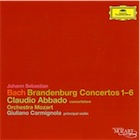
Along with his violin works, the Brandenburg Concertos are are my favorite Bach works. This version with Orchestra Mozart (DG) is not perfect but still very good. I have never quite taken to Abbado before, but his work now with Lucerne and Orchestra Mozart are wonderful. Available in CD or DVD.

Piano Recordings
This being Chopin's Centennial, the library is flooded by various Chopin recordings. Some of the most classy ones are by the under-rated Bella Davidovich, now re-issued by Brilliant Classics. No "spontaneous" or "impulsive" pulling and pushing for no reason, but well structured and everything sound inevitable. Great Chopin.

Not to be forgotten is the immaculate Orfeo recording of some of Beethoven's variations by Bruno Leonardo Gelber, a pianist whom I have always admired.


BBC Legend is highly reliable as a source of historic live performances. Two Gilels issues are of course wonderful. Gilels' Beethoven recordings rank among the greatest ever made. This live account of the Waldstein attains lofty heights. The other lesser known pieces are gems too. The 1984 Scarlatti and Debussy are even in marvelous sound.




Orchestral
I have not heard a better recorded or played version of Shostakovich's Fifth Symphony than Haitink's (Decca). The instruments are virtually 3 dimensional. Recorded by Colin Morfoot. Now available mid-priced coupled with the 9th.
Ashkenazy is a warm Sibelian, and this earlier account of Finlandia with the PO (later version with BSO) is a strong performance worthy of putting along side Barbirolli. Perfectly recorded by Kenneth Wilkinson. Now available only in budget 2CD sets.

Wonderful Prokofiev playing from the Russian duo. Krainev has previously appeared in HK under the auspices of the Chopin Society. What a marvelous musician! As usual, the Teldec recording is clear as day. Now available only in budget 2fers (Apex).

I actually prefer Shchedrin's arrangement of Carmen suite to Bizet's own. The Rozdhestventsky version is now on Melodiya, ugly cover and somewhat brittle sound, both inferior to the original LP! But the performance of the Bloshoi is wonderful and the coupling is a gem!

The spirited period instrument style suits Handel's music to a T. Wonderfully natural recording from Naxos. Top recommendation for this repertoire.

More Violin and Chamber
For me, the Smetana trio is the perfect ensemble for a difficult genre. Their perfect balance is at turns intimate and symphonic. A version of the great Tchaikovsky that offers more than any other version (Supraphon).

The Reger is is THE find of the year. I have heard some of these solo Reger violin works (Dorian) before, but none captured my heart like this one. Thanks to the HK library! I wish there are more recordings by this young violinist.

12 June, 2011

Concert Review: HKPO-Carolyn Kuan-Zhang Haochen

Concert Review: HKPO-Carolyn Kuan-Zhang Haochen

June 11, CCCH
HKPO-Carolyn Kuan-Zhang Haochen
Tchaikovsky-Prokofiev-Mussorgsky


After hearing Zhang's recital in SZ some months ago, I was eagerly waiting for this concert. The young female conductor (maestra) Carolyn Kuan, was unfamiliar to me, and she proved a sensation. Kuan, a native of Taiwan, went to the US when she was 14, studied and excelled at various things before becoming a conductor, after being a protege of Marin Alsop. Make sure you read the links I provide below; what an interesting character!

The hushed atmosphere of the opening of Tchaikovsky's Romeo and Juliet immediately grabbed my attention. Kuan conducted from memory; her simple gestures were matter-of-fact, but precise and effective. Despite occasional moments of orchestral unsteadiness, the piece unfolded naturally and revealed all its glory all the way to the very end. Perhaps the violent aspect of the score impressed more than the love music, which was not at all milked. As it is harder to make a meal of a concert overture than to impress with a full symphony, Kuan's performance was remarkable in its complete grasp of the architecture and proper release of sentiment while avoiding excess. Yet she imparted atmosphere to this piece, which has eluded many a conductor in concert or on records, no mean feat. I'd love to hear her in the even more enigmatic Francesca da Rimimi.

Kuan also conducted Mussorgsky's Pictures at an Exhibition from memory, and it was a fine performance. The orchestra sounded relaxed and having fun. Not all of the many solo's were quite memorable, but the whole was organic and satisfying. I enjoyed the many details Kuan revealed along the way but a little more mystery when appropriate and grandeur at the end would not have been wanting. The audience apparently loved her and gave her and the orchestra extended applause. Yes, I yelled my "Bravo!"

In between came what most of the audience came for (indeed many left after the first half), Prokofiev's Piano Concerto No. 2 with Zhang Haochen. I had admired Zhang since I last heard him in a Shenzhen recital (my report here), and on this night he did not disappoint. His steadfast playing was well controlled, his tone smooth and clear, and he rose to the big moments. Personally, I'd have welcomed a little more rhythmic inflection and percussive quality when called for in this masterpiece. For me, Zhang's smooth playing let Carolyn Kuan stole the show with her fastidious and rhythmically alert accompaniment. Zhang's encores were a little too smooth for my tastes.

What an exciting and accomplished conductor! I'd think someone like her would be ideal for a HKPO directorship. I hope she comes back soon.

Broadcast
The June 10th concert was broadcast live on RTHK. It shall be repeated on Wednesday, June 15th, at 2 pm.

Appendix: More on Carolyn Kuan:
Hartford Symphony official website introduction, with interview , Concert Review
Seattle Times Portrait
Northwest Asian weekly Interview

-----------------------------------------------
誰說古典音樂沒有未來?江山代有人才出,但只有少數能領風騷。我衷心希望是晚的兩位新人,能有機會全面發展,因爲他們是極具潛力的。

上次在深圳聼了張昊辰很棒的肖邦獨奏 (按 這裡) 後,就開始留意他。這次他彈 Prokofiev 第二鋼琴協奏曲,當然報到。張昊辰沒有辜負了我對他的期望,琴音自然透澈,作風平穩。要嫌的話,就是這曲子的鋼琴部,尤其快板,可以奔放許多,多點敲擊的元素,少點修飾 (兩個 encore 也是太内斂了點)。故此,對我來說,指揮關琦安完美的伴奏徹底掩蓋了張昊辰的光芒。Prokofiev 的節奏不規則更變化多,然而對小妮子來講卻是駕輕就熟,由頭到尾保持了樂隊的鮮明,刹而輕快向前,刹而大吼盡興,沒有半點拖泥帶水。這是難度極高的,許多所謂的大師 (尤其香港人愛捧的那些) 都沒法辦到, 她卻輕鬆地完成了,令人激賞。

女指揮的實力一開場就能瞻到。Tchaikovsky 的 Romeo and Juliet 序曲是不容易保持完整的,然而一開始關琦安就能營造出說故事的氣氛,跟著下來表演一氣呵成,最難得的是連趨於安詳的尾聲都保持著張力而沒淪爲反高潮。音樂激昂的時候火花四濺,唯一能嫌的就是愛情的描述平淡了點。下半場 Mussorgsky 的 Pictures at an Exhibition 生動有餘,卻有些地方欠缺了一點詭秘的氣氛,結尾的氣勢也稍欠,然而還是一個完整的演出。

好一個指揮!我說,港樂需要的是這種華人總監,而不是不停用錢請外援。當然,崇洋的香港人是不會這樣做的,那只能希望她快快回來,再替我們表演。

香港電臺現場錄音
十號的音樂會在港台現場播放,將會在十五號,下午兩點重播。

附錄: 關於關琦安:
亞洲週刊 Oliver Chou's review in Asian Weekly
中國時報
臺灣 Muzik
中國博克

15 May, 2011

Concert Review: Jupiter String Quartet

Concert Review: Jupiter String Quartet

May 14, 2011, Washington Irving High School
Jupiter String Quartet-Menahem Pressler
Beethoven-Kurtag-Schumann

We seem to be living in an age with an endless supply of accomplished young chamber ensembles. Personally I think on the average today's string quartet is better than yesteryear's. After hearing the wonderful Parker String Quartet, I was eager to hear the slightly more senior Jupiter String Quartet, and I was not disappointed.

In this somewhat larger hall and sitting further away, the Jupiter had a very different sonority from the Parker. A less dominant first violin, a greater sheen and perhaps more sophisticated ensemble marked this winsome quartet. The first two movements of Beethoven's Op 59/1, played with unanimity and astonishing dynamic turns, showcased their finest quality. No matter whether it was a whisper or a big fortissimo, the sound remained seamlessly integrated, nuanced and unforced, remarkable indeed. The playing in the slow movement was unusually finely detailed, bringing it closer to Beethoven's late works, but a little more episodic. Here, as in the last movement, the first violinist Nelson Lee was less than steady and I was distracted.

Then came Kurtag's 12 Microludes, the same work played by the Parker Quartet. Where else but in NYC do you get to hear a modern work like this twice in one month? And it was interesting because the Jupiter's more finely spun sound and gentler treatment brought a more sophisticated dimension to the work. Wonderful!

The quartet was joined by Menahem Pressler in the second half for the Schumann Piano Quintet, one of my favorite works. The string playing was well nigh perfect but I have to confess that I did not manage to enjoy the pianist. Despite accolades galore, on records I have never taken to the smoothness of the Beaux Arts Trio. Here, the playing of Pressler was quite generalized and devoid of detail and attack. The piano sound was also strangely muted. Well, Pressler is in his eighties now...

Jupiter String Quartet official page

14 May, 2011

Dance Review: NYC Ballet - Balanchine

pic from City Ballet: Agon

Dance Review: NYC Ballet - Balanchine

May 10, 2011, NY State Theater
NYC Ballet-Balanchine

Aside from my fondness of the particular blend of classicism and modernism of Balanchine, I am attracted to his ballets because they use quality music, many of them collaborations with contemporary composers at the time of inception of both the ballet and the music. In terms of understanding of classical music as applied to dance, I feel Balanchine shall never be surpassed.

This program, as others in the series, focuses on the so-called "Black-and White" ballets of the master. First up was the comforting Square Dance, an infusion of classic modernism into American folk dance, danced to the archaic music of Vivaldi and Corelli. The orchestra was excellent; concertmaster is Arturo Delmoni, long familiar to hifi fans, who presumably was the capable soloist in the many solo passages. The conducting by Ryan McAdams seemed more safe than inspired, but perhaps there was little to do in this music.

Both the dance and the music-making reached a very much higher level with Stravinsky's Agon. The orchestra was beautiful in timber and precise in ensemble under the baton of music director Faycal Karoui. The dances were breathtakingly sophisticated (which made the previous program seemed plain), and one felt the dancers' arms and legs breathed together with the music and all became one. Here, the music enhanced the dance, and vice versa.

I was a little less taken with the last piece, Episodes, based on the music of Webern. It was not as beautiful, as inspired and as coherent as Agon, but the music-making was first rate under the baton of the diminutive female conductor Clotilde Otranto, who apparently is a fave with the audience.

What can be better than listening to first-rate music while watching sublime dancing?

NY Times review

10 May, 2011

Concert Review: St Matthew's Passion-Suzuki

Concert Review: St Matthew's Passion-Suzuki

May 7, 2011, Park Ave Christian Church
Yale Schola Cantorum-Juilliard 415-Masaaki Suzuki
Bach St Matthew's Passion

What a fine spring day that positively sings "Das Lied von der Erde"! Suddenly, after the waves of cherry blossom, all the barren trees have become green. Pollens saturate the air and cause New Yorkers much trouble this year. I could barely open my itchy eyes outdoors. It's better indoors and one doesn't need eyes open to enjoy music.

Coming out of the MET, the beautiful weather mandated a long walk towards downtown. Before heading uptown again for the evening concert there was a BBQ dinner. Although cheap eat and the huge restaurant was packed due to impending mother's day, the baby back rib was smoky and full of flavor.

The small and modest church venue was well nigh perfect for the Bach masterpiece. Although a free concert, program notes and libretto were provided. The performance was excellent but missed greatness. For me I would prefer the orchestra to dig in just a little more. The choir was excellent though some of the soloists were just serviceable. Well, some would argue anyway that the Passion's greatest music lie in the chorales, and that proved the case here. Masaaki Suzuki conducted with long lines and tone-painted effectively with the small orchestra at hand. His reading was more animated than his recorded version with the Bach Collegium Japan (BIS), which I do not like.

NY Times review


09 May, 2011

Concert Review: MET-Ariadne auf Naxos

Ariadne and the 3 nymphs (pic from NY Times)

Concert Review: MET-Ariadne auf Naxos

May 7, 2011, matinee, Metropolitan Opera
Richard Strauss-Ariadne auf Naxos-Fabio Luisi

While I love the voice, I am not an inveterate opera fan and often find myself listening to the orchestra more than the singers. My favorite operas are mostly in tortured German, Mozart's Zauberflote, Weber's Die Freishutz, Wagner and Strauss.

This time in NYC, I could not get tickets for the new Robert LePage production of the Ring (getting standing room, sold only on day of performance, is rather impractical for me) , and opted for this Strauss opera. I don't really like the duo tragic-comic nature of this opera, but I always found listening to Strauss' music highly rewarding. Another reason is the conductor Fabio Luisi, who has been making a name for himself in Strauss. There must be some reason why he was picked for a Strauss series with the Dresden orchestra, though I have never heard the recordings (on Sony).

What a splendid and elegant production this was! The island/cave in the opera and the three nymphs were just an eye opener; the busy prologue was also effectively staged. As a production, this one, dating from the 90's, is handily superior to the previous one, which I watched in the 80's. And this opera needs all the help it can get in staging!

My seat was just above the orchestra and it was a marvel to see the unusual reduced orchestra of 37 players; a bit like chamber opera but with keyboard and percussion emphasis. From wikipedia entry on this opera:

Instrumentation

Luisi elicited a warm and clean sound from the orchestra, at turns tender or powerful as the music required. Yes, this conductor's reputation is the real thing!

As for the singing, I would refer you to the NYT review below. Gratifyingly, all singers sang with warm expression. For myself, I particularly liked Joyce DiDonato (the Octavian-like composer), who showed great promise in this trouser role. I also liked the crystalline quality of the voice of Kathleen Kim (Zerbinetta). The Ariadne, the huge Violeta Urmana, sang well in a smoky voice, though I would have welcome more tenderness and less gloom. Overall, the singing was not quite up to the level of past MET Strauss singers that I have heard (like Hildegard Behrens, Tatiana Troyanos, Jesse Norman, Maria Ewing, Reri Grist etc) but it was still very much an afternoon well spent.

NY Times review

30 April, 2011

Concert Review: New York Philharmonic-Gilbert

Concert Review: New York Philharmonic-Gilbert

29 April, 2011, Avery Fisher Hall
New York Philharmonic-Alan Gilbert-Emanuel Ax
Debussy-Messiaen-Mahler

After the great experience of the Mahler 9th with the Juilliard Orchestra under Gilbert, I was really looking forward to this concert, and my faith was not misplaced. Another reason for attending this concert was for the rare chance of hearing something by Messiaen, one of my favorite modern composers.

Emanuel Ax played first just the Pagodes from Debussy's Estampes, and this was immediately and purposefully followed by Messiaen's Couleurs de la Cite Celeste, a wonderful piece scored for a small orchestra without strings, in which Ax was the pianist. The Messiaen received an arduous and nuanced performance, the brass and percussion forces playing with stunning unanimity; the pedal points were grand and the bird songs took flight. Ax played well, but in both the Messiaen and Debussy I would have preferred a lighter sonority and more biting edge instead of his customary fat tone.

The Mahler Symphony No. 5 once again showed that Gilbert is already a great Mahlerian, and very much his own man. With a firm grasp of architecture, Gilbert delivered a cogent and granitic performance all the way through, with many fresh details illuminated along the way to thundering climaxes. As in his performance of the 9th, Gilbert stayed away from vulgarity and de-emphasized the "dance" elements, focusing on the "symphonic" aspects. At times the music felt relentless and one wished for just a little more swagger, though any lingering doubt would soon be swept away by the tightly woven proceedings. Unusually, in the adagietto Gilbert milked the violins a little more than usual, imparting almost a "Tristan und Isolde" feel to the proceedings.

In this big piece I did not care for the divided violins. While occasionally one could hear the counterpoints more clearly, more often the upper strings, though playing in a refined manner, did not have the critical mass to counter the heavy brass, which Gilbert might have encouraged too much. Nonetheless, a magnificent performance.

NY Times review

22 April, 2011

Concert Review: Chicago Symphony - Muti

Concert Review: Chicago Symphony Orchestra - Ricardo Muti

17 April, 2011, Carnegie Hall
Chicago Symphony Orchestra - Ricardo Muti
Cherubini-Liszt-Shostakovich

It's been an unduly long time since I last heard the CSO. I used to hear this orchestra a lot during the Solti era. The orchestra was incredibly brilliant and perfect, though just a bit too stern under the always driven Solti. I have never heard them since under Barenboim or Boulez. Either I missed them on my trips back to NYC in recent years or found the programs or guest conductors not suitable for my taste. It's too bad as they are a great orchestra for Mahler and Bruckner.

And it has been even longer since I heard Ricardo Muti. I still remember his mind-boggling performance of Alexander Nevsky with the Philadelphia Orchestra during my student days. One of the reasons why I stayed away from him is his narrow musical taste, which centered on operas and mostly classics, with almost nothing by Mahler and Bruckner in his repertoire.

From the opening of Cherubini's Overture in G one knew one was in for a treat. The woodwinds were refined and in complete harmony with the orchestra. The reading demonstrated perfect classicism, and one can see why Beethoven admired him. Although the work is not quite memorable, one could see why Muti would champion it (almost the lone one). As an opener it was well nigh perfect and whetted the appetite for the ensuing Liszt Les preludes, which received a noble reading. Here, the perfectly balanced reading of the performance successfully joined high drama with classical discipline. In both works Muti showed off his mettle as opera conductor: it was not necessary to resort to empty force for drama, and everything just sang.

As the Shostakovich Symphony No. 5 went along, a feeling of familiarity came upon me. Why, it was uncannily like listening to Haitink's RCO version (Decca), except this was live, in sonically resplendent Carnegie Hall! Aside from fractionally slower tempo, the readings cannot really be distinguished. The same rather objective demeanor, smooth and perfect playing and perfect balance; in other words a rather "objective" reading, or a "literal" one if you wish, likely to please some and questioned by others. For myself, I enjoyed it immensely because under the perfection, the musicians played incredibly in ensemble, with great attention to details and expression, never in danger of sounding bland. The strings, led by the excellent concertmaster Robert Chen (whom you might remember was soloist with the HK Sinfonietta sometime back), played with a sonorous precision that was disarming. One could hear every little scoop with uncanny clarity, superhuman indeed! Everything was as perfectly played as I have ever heard any orchestra play any piece, but one still has to single out the tympanist, whose magnificently strong and shaded playing punctuated the glorious moments of climax.

The CSO seems to be as perfect as ever, but with an added human touch, under the new director.

NY Times review

Chicago Triburne review
Chicago Sun Times review

20 April, 2011

Concert Review: Juilliard Orchestra - Alan Gilbert

Concert Review: Juilliard Orchestra - Alan Gilbert

15 April, 2011, Avery Fisher Hall
Juilliard Orchestra - Alan Gilbert
Mahler Symphony No. 9

Let me get right to the point: this concert conducted by Alan Gilbert, whom I have never heard before, marked the most electrifying Mahler I have heard in years. At this early stage his directorship of the NYPO has not been without controversy but, judging from this concert, he is certainly a major talent. Gilbert has also been appointed director of the conducting department at Juilliard, in place of James DePreist. That too had its share of controversy.

Gilbert, a big man, conducted with volcanic energy and big gestures, a completely different approach from DePreist whom we heard in Mahler 5th just earlier. Boy, did the orchestra respond differently, playing with fervent ardor and complete concentration!

Yet the big gestures happily went in tandem with much precision and insight. The reading was brisk and propulsive in general, but aside from a few moments of convulsive abandon, dynamics were mostly well graded. Gilbert illuminated many fresh details along the way but kept things moving. Considering the force of conducting, there was an admirable lack of vulgarity. The inner movements particularly illustrated this. Gilbert's reading of the second movement literally had a sense of Mahler's marking, somewhat clumsy and very coarse; there was refreshingly little sense of the waltz, which many conductors love to exaggerate and distort. The Rondo though was more brute than Burleske. To nitpick, the two inner movements did not quite have their own characters, the closing adagio was a little fast and the ending felt a bit too abrupt.

The orchestra played wonderfully and most importantly conveyed to us, indeed held us captive by the titanic inner struggle that is Mahler. One would not exaggerate if one invoked heaven and earth, such was the force. I am glad somebody still conducts Mahler that way (certainly cannot be found in bland "critically praised" performances in HK), and look forward to hearing him in Mahler 5th with the NYPO soon.

Review at Blog classicalsource

17 April, 2011

Concert Review: St Petersburg PO/Temirkanov

Concert Review: St Petersburg PO/Temirkanov

14 April, 2011, Carnegie Hall
St. Petersburg Philharmonic Orchestra-Yuri Temirkanov-Alisa Weilerstein
Rimsky-Korsakov-Shostakovich-Brahms

The St Petersburg is one of my favorite orchestras and I think Yuri Temirkanov is under-rated (as his predecessor Mravinsky is probably over-rated overall). Fortunately, they tour extensively (a reality for Russian orchestras, to earn hard cash), and it is not inoften that I get to enjoy them. NYC sees them often offering multiple concerts, and I attended the second of a pair.

The opener, Rimsky-Korsakov's Prelude to Legend of the Invisible City of Kitezh, received a wonderfully atmospheric reading, the gentle rumbling in the strings and pliant woodwind solos balanced in perfection. This is the kind of thing only Russians bring off, and much more enjoyable in the concert hall than on records, an illustration of the fact that, no matter how good your hifi is, a live atmosphere is most difficult to reproduce.

I have previously sung the praise of cellist Alisa Weilerstein. She proved a more than capable soloist in Shostakovich's Cello Concerto No. 1. Neither her playing nor the accompaniment were the most razor-sharp: contours were a bit softened rather than (over) etched, phrases more flowing than emphatically punctuated. In her solo moments Weilerstein was more than a bit indulgent sometimes, but one admired her big temperament. Although one missed a little the sardonic wit of Shostakovich, the reading was eminently satisfying for the beautiful playing and emotional delivery.

Brahms has been previously featured by Temirkanov. His Fourth Symphony received a fresh reading from the Russian forces. One hesitates to say they brought a unique Russian quality to the reading. Instead, I think their innate musicianship and spontaneity stand them apart from the crowd. No risk of cliche's nor routine here. Even more than the previous pieces, the musicians gave a lesson on how to listen to and play with each other, while being utterly colorful in their solo's. Esnemble was not always immaculate, but the freshness of approach carried the day.

The encore was a magnificently noble rendition of Nimrod from Elgar's Enigma Variations. It felt like an elegy.

14 April, 2011

Concert Review: Parker Quartet

Concert Review: Parker Quartet

3 April, 2011, Flushing Town Hall
Parker Quartet
Haydn/Kurtag/Brahms
(Carnegie Hall presents)

Parker Quartet Official Site

No matter your inclinations, New Yorkers are spoilt for choices. On this day, I had to choose between this concert and the Ebene Quartet at Manhattan's Town Hall. Since subway maintenance made a trip into town more difficult, I chose to stay within my neighborhood, and it marked the first time I was inside the charming and historic Flushing Town Hall.

The Parker Quartet, one of those upcoming ensembles that play both classics as well as modern music, have garnered excellent reviews wherever they go. The ensemble also reflect the trend in chamber music of an increasing number of musicians with Asian roots, one of the reasons why I went also.

The opening Haydn Op 74/1 immediately struck me as masterly playing. As someone said in one of their video clips, if you can play Haydn you can play anything. Daniel Chong led well with determined but supple phrasing. It is a tribute to him, and the ensemble, that nothing stuck out as in lesser Haydn playing, which happens more than often even to famous ensembles. The limelight was at times stolen by the wonderfully soulful playing of violist Jessica Bodner. The steady second violinist Karen Kim and the vigorous playing of cellist Kee-Hyun Kim filled out the wonderful ensemble sound.

Then came Kurtag's 12Microludes, which were miniatures that can perhaps be enjoyed only in the concert hall. I feel these do not quite measure up to Webern's efforts, but they were enjoyable.

Without intermission, the quartet gave a fluent reading of Brahms Op 51/2. The often dense textures of Brahms were rendered with utter lucidity, the playing crisp but refined and unhurried. If these young players did not linger on the romantic or "autumnal" aspects, they managed to avoid heaviness and never risked sounding portentous.

Judged by their Haydn and Brahms, whose quartets are most difficult to bring off, the players are mature beyond their years, surely an ensemble to watch, and savor.

09 April, 2011

Concert Review: Juilliard Orchestra - DePreist

Concert Review: Juilliard Orchestra - DePreist

March 25, Avery Fisher Hall
Juilliard Orchestra - James DePreist
Mahler Symphony No. 5

With serious jet lag I attended this concert. This was not the first time I had heard the Juilliard Orchestra play Mahler 5th, but was the first time I heard conductor James DePreist.

Paralysed by polio from the waist down in his twenties, this incredible hulk, nephew of alto Marian Anderson and chairman of Juilliard's Conducting Department, graciously conducted the school orchestra. His right hand gave long, fluid beats, but his left hand employed a large number to jittery and flickering gestures, highly unusual to say the least.

Overall, this account of M5 was a fine one, superior to the 2008 one I heard conducted by James Conlon. While still an objective rather than emotive reading, it was fluent and flowing, with good ensemble and attack. Although not the last word in heaven-storming Mahlerian angst, the symphonic treatment satisfied but did not quite deliver the full emotional wallop, not quite up to the level of yet another previous JO Mahler performance, the 2008 Mahler 1st conducted by Roberto Abbado.

Curiously, in another 2 weeks there will be yet another Mahler performance by the JO, this time the 9th, conducted by alumnus Alan Gilbert, now director of NYPO. I cannot wait!

Added April 14, 2011:
NY Times review

08 April, 2011

Concert Review: Shenzhen Symphony Orchestra Mahler Symphony No.3 深圳交響樂團 馬勒 第三交響曲

Concert Review: Shenzhen Symphony Orchestra Mahler Symphony No.3 深圳交響樂團 馬勒 第三交響曲

March 11, 2011, Shenzhen Concert Hall
Shenzhen Symphony Orchestra - Christian Ehwald - Bhawani Modennsad
Mahler Symphony No.3
深圳交響樂團 - 深圳高级中学百合少年合唱团 - 深交女生合唱团
馬勒 第三交響曲

Given that SSO often make changes at the last minute and that the website is woefully lagging behind in information, I was skeptical that the inaugural concert would feature the gargantuan Mahler Third. A call to SSO a week before the performance confirmed that indeed that was to take place. I told them that they really should list the names of the soloist and the choirs on the website. Well, they did for the soloist but not the choirs.

Imagine my excitement that the concert did materialize! The choirs were listed in the program book, but the contralto had changed from Carolyn Masur listed on the website to Bhawani Moennsad. Considering this was the Spring inaugural concert, attendance was a little low.

The first movement went well technically after the secure start by the brass. The orchestra sounded empowered but a little cautious. The proceedings became more fluent after this when the woodwinds started to gel together. Indeed, one of the most impressive aspect of this performance was how well the instruments, particularly the woodwinds, played to each other with great character, indeed evocative of flowers and animals if one were to invoke Mahler's own words. The dialogues felt like chamber music and were precious. In these inner movements the SSO/Ehwald got to the heart of the music much better than the HKPO/EdW did, and I greatly enjoyed it. In passages of more overt brilliance the SSO sounded more together than their previous Mahler outings, less powerful than HKPO perhaps but no less enjoyable due to the fluid conducting of Ehwald. The choirs sang well and were not obviously embarrased by diction, no mean achievement! One only wished there were more boys in the student choir; less than a handful is not quite enough! The soloist is probably more a mezzo than alto, so although she sang beautifully, the lower registers lacked power and color.

This was the best Mahler I have heard from this orchestra and I truly enjoyed it. It is the mark of a good conductor to focus the listener on the music. It is too bad that all too often with over-rated "maestro's" everyone, including the conductor, critics, sympathizers at el all point out the inadequacies of the orchestra and the hall as an excuse for why the music failed to move. This performance moved me, and that is more important than anything else.

The performance received scant coverage from the press. Some I was able to dig up:
博客 報道
深圳特區報 報道

07 April, 2011

Christian Ehwald Interview 专访指挥家爱华德

Christian Ehwald Interview 专访指挥家爱华德

Note: I am a fan of conductor Chritian Ehwald, who's has done great work with the Shenzhen Symphony Orchestra. Under Ehwald, the orchestra has already performed the first six Mahler symphonies. If this were HK, he would have been touted as a godsend, a great Mahlerian. I just hope his good work continues and was happy to find an interview of him in the local newspaper. Shenzhen is not an international city and sorely lacks good English media, which makes me admire the work of Ehwald even more. 默默耕耘,that is silently doing good deeds, would be an apt and noble accolade in Chinese for this wonderful conductor.


专访指挥家爱华德:让乐队成员学会彼此聆听

来源: 深圳特区报 作者: 王俊

爱德华指挥乐队演奏

爱德华指挥乐队演奏

指挥家克里斯蒂安-爱华德

指挥家克里斯蒂安-爱华德

  “小提琴,请让你们的音色更饱满一点!”,“铜管乐请把握好进入旋律的时机!”3月22日下午,罗湖区黄贝路一角的深圳交响乐团排练厅内,满头银发的克里斯蒂安-爱华德操着一口流利的英语,用清晰明了的指挥将整个乐队带入了普罗科菲耶夫《第五交响曲》的音乐世界。

  从2008年3月来到深交任音乐总监至今,爱华德的异国执棒生涯正好度过了三个年头。这三年,这位在台上不苟言笑、台下却和蔼可亲的德国老头令深交的演奏水平焕发出了别样的光彩。这支乐团的进步让所有关心它的人有目共睹。

  三年约满之际,爱华德毫不犹豫地与深交再次续约。他对本报记者说:“我眼看着音乐让深圳美好起来。我有信心让交响乐成为深圳的城市之光。”

  1、调教乐团犹如调制鸡尾酒

  2011年的深交首场音乐季演出,演奏的是马勒《第三交响曲》,场面恢弘,效果震撼。颇具意味的是,三年前,爱华德作为中国首位外籍音乐总监入 主深交时举行的首场演出,演奏的同样是马勒的作品,当时是《第五交响曲》。在自己与深交的两段合同期伊始,爱华德都选择公认为演奏难度之王的马勒作品,是 不是有什么寓意呢?

  听到记者的问题,爱华德神秘地笑笑说:“也许吧。马勒确实是我最钟爱的作曲家之一,也是交响乐团演奏水平的试金石。我确实想让大家听一听,深交在这三年中发生了多么显著的不同。”

  如果观众在音乐会上正巧坐在乐团的后方,那么,除了聆听音乐之外,欣赏爱华德的指挥也是一种享受。他手中的指挥棒划出一条又一条美丽的弧线,辅 之以丰富的面部表情和形体动作,将不同音色的乐器“归拢”到音乐主题下,时而如丝绒般柔滑,时而如洪钟般响亮,将听者的耳朵“伺候”得非常舒坦。

  三年时光,深交在爱华德的调教下一点一滴地发生变化。他说:“在我刚刚来到深圳的时候,乐团虽然也可以演奏马勒,但是音乐的感觉表现得还不够充分。而现在乐团犹如一个倾诉者,已经能够传递出音乐更多的意义和内涵,呈现原汁原味的声音。”

  俗话说:“外来的和尚会念经”。让这支成长中的城市乐团发生脱胎换骨的变化,爱华德究竟施展了什么样的魔法?他透露道,秘诀就是让乐队的每一位 演奏员学会互相聆听,用拉室内乐的感觉感受他人的声音,协调彼此的音量与音色,而不是你拉你的、我拉我的。这样,乐队才能成为一个整体,传达出的音乐才能 打动人。

  “调教乐团就像调制一杯鸡尾酒一样,急不得,只有用心配制各种元素,音乐才能像酒一样醉人”,爱华德比喻说。

  2、“乐章间鼓掌”不必太介意

  几乎每场交响乐音乐会上,同一首乐曲的乐章之间,总会响起观众不合时宜的掌声。此时,爱华德总是轻轻地放下指挥棒,静静地站在指挥台上,等观众安静下来之后,再让下一个段落的音乐响起。

  从交响乐基础深厚的德国来到交响乐文化并不普及的深圳,屡屡碰到这种现象,爱华德会不会感到失望?令记者意外的是,爱华德对此并不以为意。他 说:“其实乐章之间鼓掌在欧洲也会有的,问题不是很大。我只考虑能否把音乐内涵传达给观众,观众能够感受到我们表达的意思和音乐传达的东西,在观众与乐队 之间引起共鸣就可以了。音乐应该成为轻松的东西。只要观众喜欢,乐章间鼓掌没什么关系的。”

  由于身兼德国柏林音乐学院指挥系主任和深交音乐总监双职,爱华德每年都在柏林和深圳之间飞行穿梭——四个月在深圳,八个月在柏林。许多观众疑惑的是,深交音乐总监的责任应该不仅是指挥几场音乐会那么简单。爱华德不在深圳的那八个月中,如何“遥控”乐团的音乐业务呢?

  爱华德解释说,作为音乐总监,他的主要责任是带给乐团表达音乐、感受音乐内涵的方法。他不在深圳的八个月间,亲自出面邀请了不少指挥家为深交担 任客座指挥。这些指挥家每个人都有自己的长处,能够为乐团带来更丰富的理念,从而让乐团发展得更快、更全面。他自己在柏林也随时关注着乐团的排练和演出。

  在深三年间,爱华德眼看着深圳的古典音乐氛围愈发浓厚。音乐会越来越频密,走进音乐厅的观众也越来越多,人们对深交演奏的音乐表达了由衷的喜爱,让他格外欣慰。爱华德说:“交响乐犹如城市上空的一束光,能够让这里的文化风景呈现出亮色。”

  3、爱深圳就像爱音乐

  记者注意到,与三年前相比,如今的爱华德发间又添不少银丝。每次排练完后,他总喜欢一个人坐在办公室里,点上一支烟斗,静静地品味属于自己的时 光。而演出完后的周末,爱华德总是和自己的妻子一起,到附近的东湖公园去走一走感受那份绿色,在离家乡有万里之遥的深圳,爱华德的生活过得挺惬意。

  “我喜欢中国,喜欢深圳!”爱华德毫不掩饰自己对这里的喜爱之情。虽然在深圳,他的德国“老乡”们并不多,然而,爱华德并不感到寂寞。每次来 深,他相濡以沫的妻子都会陪着他来到这里。音乐会上,细心人总能发现那位恬静的德国女子坐在观众席的某个角落,静静地注视着台上丈夫的背影。

  爱华德从小就迷恋中国文化。早在上世纪五十年代,他的父亲的一位助手便是中国人。通过这位助手,爱华德很早就接触并迷上了中国文化,对中国传统音乐与建筑艺术尤其感兴趣。这也是他决定不远万里来中国执棒的原因之一。

  在排练演出之余,爱华德常常带着妻子到北京、上海、桂林去感受中国的神奇。为了表示自己对中国的了解,爱华德举例说:“从吃东西这件事情上,我 可以感受中国的风土人情。比如四川人、湖南人喜欢吃辣,说明他们是‘不好惹’的;江苏人、浙江人喜欢吃甜,表示他们的性格比较温顺。”

  爱华德究竟有多么喜欢深圳?他打了个比方:“就像爱音乐一样”。因此,当与深交的上一份合约到期时,爱华德主动提出再续前缘。他说:“我希望和深圳人一起,分享音乐带来的无限美好。”

  深圳音乐未来大有可为

  ——对话爱华德

  记者:从诞生了贝多芬的国度不远万里来到深圳,执棒一支新兴的城市乐团,而且一呆就是三年,什么动力驱使您有这样的举动?

  爱华德:中国交响乐虽然起步稍晚,但这里的人对音乐有澎湃的热情。这种热情就意味着巨大的机会,形成了良好的艺术气氛。这是吸引我来到中国、来到深圳的主要原因。我希望能通过自己的努力让这里的人享受到更加纯正的古典音乐。

  记者:但中国的交响音乐与欧洲还是有较大的差距,在你看来应当如何弥补?

  爱华德:其实深交有很多优秀的演奏家,但他们需要把声音更加密切地融合在一起,注重音乐的整体表现。一支乐团要通过精心的打磨,形成比较稳定的团队合作气氛,创造出属于自己的艺术传统。我的目的正在于此。我相信这座城市的音乐未来仍然大有可为。

  记者:三年来,你为这支乐团带来了怎样的变化?

  爱华德:最重要的是音乐的表达,乐团开始表现出自己的音乐色彩,大家的演奏融合为一个声音的整体,另外你能够听到这支乐队的演奏会更富有情感,更清晰地体现出音乐的质感。

  记者:你仍然担任着柏林音乐学院指挥系主任,奔波于两个相隔遥远的国家之间完成两份工作看起来很艰难,你如何协调工作时间?

  爱华德:我会把自己教学之余的休假时间全部投入到深圳,每年1月、3月、7月和9月都会在深圳专注于乐团业务。

  记者:你个人喜欢哪些作曲家的作品?会不会影响到乐团的风格走向?

  爱华德:马勒就是我喜爱的作曲家之一,舒伯特、贝多芬都对我有较大影响。我比较倾向于浪漫派的音乐,不过作为音乐总监,我还是希望乐团能够兼顾不同的风格,比如现代派的音乐应当有所涉猎。(深圳特区报记者 王俊/文 齐洁爽/图)

31 January, 2011

CD (DVD) Recommendations: Paavo Jarvi's Beethoven cycle

CD (DVD) Recommendations: Paavo Jarvi's Beethoven cycle

I cannot begin to tell you how this set has shaken me and instantly superseding all other versions to become my favorite. All I can say is grab them!

Paavo Jarvi, son of the wonderful Neeme Jarvi, is a conductor that I admire greatly. Very much his own man, and of the modern age. Here, his Beethoven cycle with the Deutsche Kammerphilharmonie Bremen out-HIPs any of the period specialists. Interpretively fresh as daisy, the performances are fast, rhythmically propulsive, texturally lean, very much sturm und drang, and shed light on every symphony. On the way were countless rhythmic felicities and unusual sonorities, bringing Beethoven much closer to Haydn. The playing was excellent throughout.

The sound on my set of DVD (Sony) is first-class, but you could also collect them on CD/SACD (Sony/BMG). This is a set I'd not do without.